A Climber's Guide to Refugio Frey | Bariloche, Patagonia
This guide was written by Vianney Lhoumeau, an AAGM-certified climbing guide based in Bariloche and co-founder of Peak Patagonia. After spending hundreds of days climbing in Frey, he shares the local knowledge he wishes every visiting climber had.
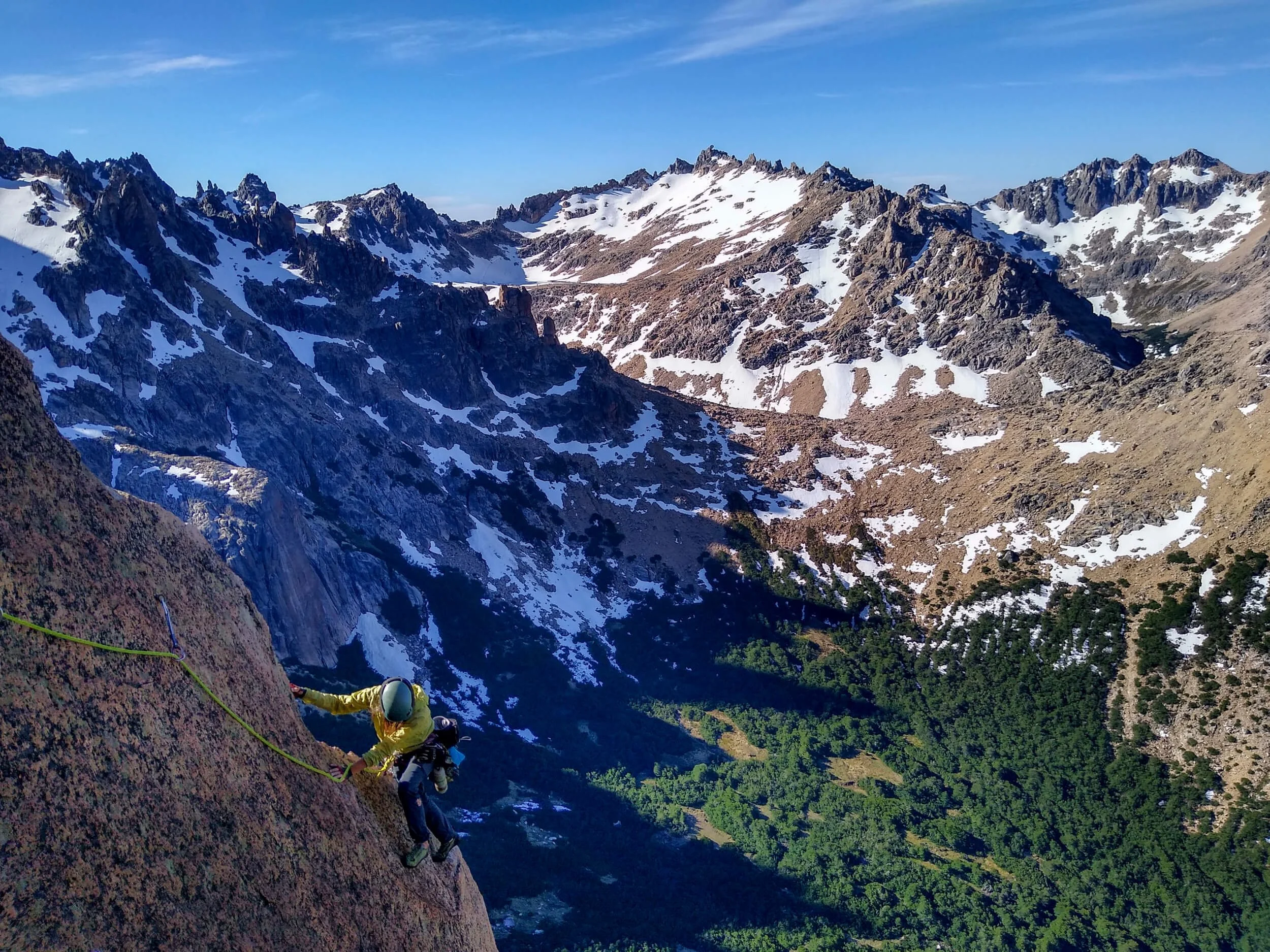
Climbing Objetivo Luna, on the Cohete Lunar spire in Frey. ©Vianney Lhoumeau
Whether you're planning your first trad trip in Patagonia or looking for long granite classics, this guide covers everything you need to know—from logistics and weather to gear, route recommendations, and local tips I've learned after hundreds of climbing days in Frey.
Refugio Frey is one of the world's best destinations for trad climbing in Argentina, offering hundreds of granite routes from beginner-friendly multipitches to world-class crack climbs.
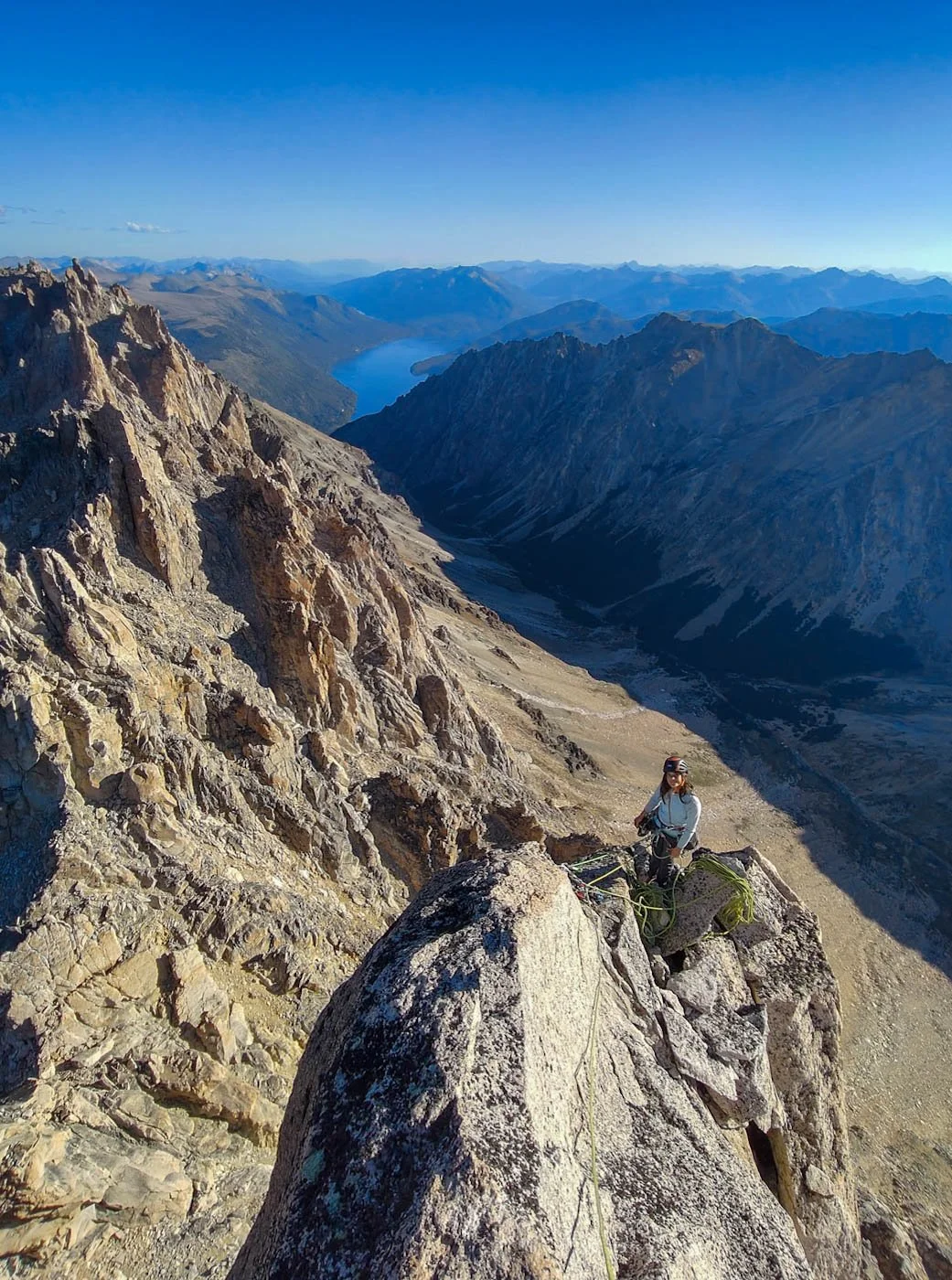
The best view in Refugio Frey from the summit of Torre Principal after climbing NoTeolvidaremos (5.12a / 7a+). © Vianney Lhoumeau
Table of Contents
1. Why Frey Is Special
2. Planning Your Climbing Trip
3. Weather & Best Time to Visit
4. Logistics
5. Life at Refugio Frey
6. The Climbing
7. Recommended Climbing Rack
8. Grades & Protection
9. Personal Tips & Tricks
10. Best Climbs in Frey
11. Rock Climbing Around Bariloche
12. Don't Limit Yourself to Frey
13. Final Thoughts
Getting Oriented
Before diving into the guide, take a look at the panorama below. It shows the main climbing areas around Refugio Frey and will make it much easier to follow the route recommendations throughout this article.
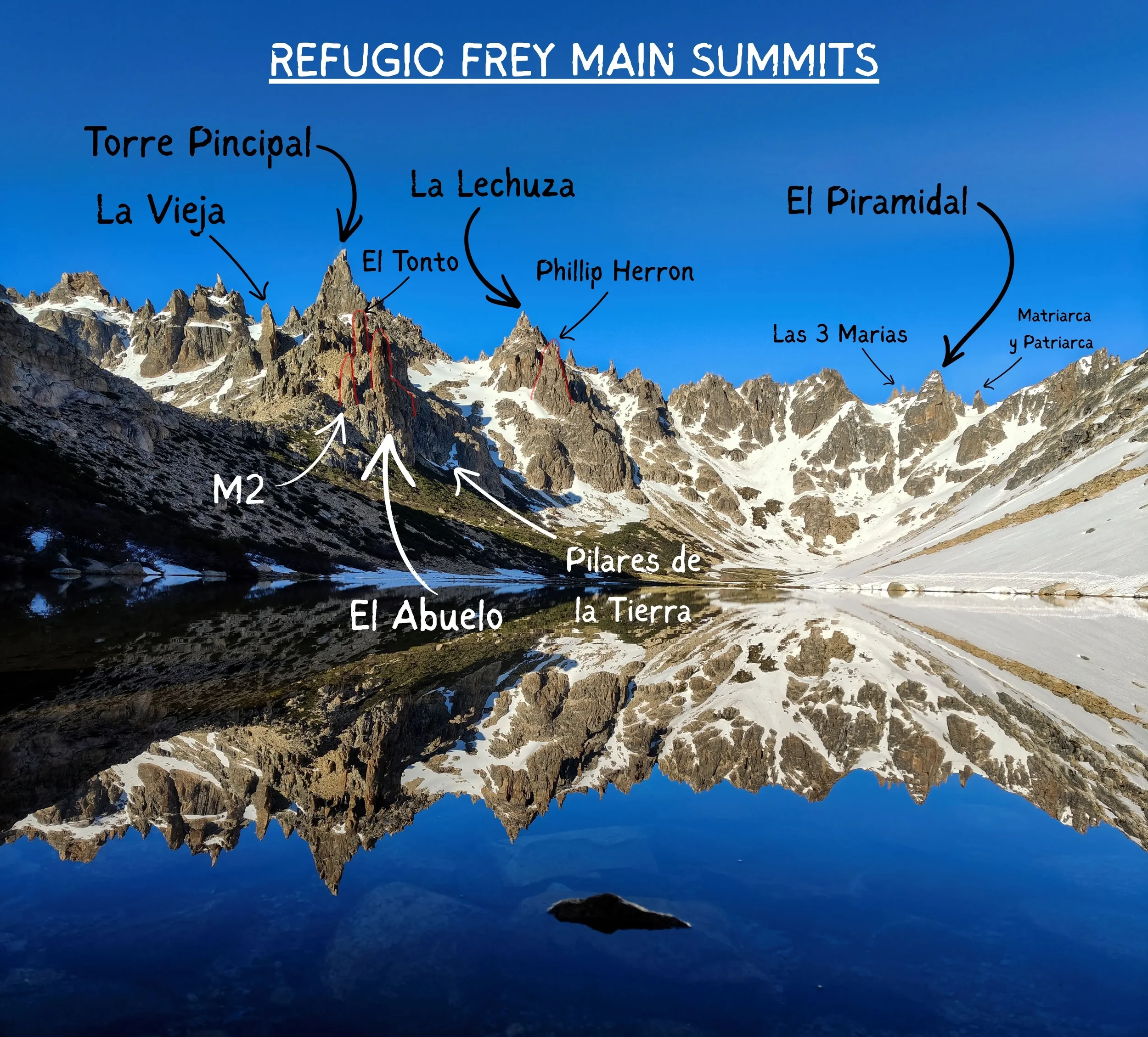
The main granite spires surrounding Refugio Frey. Many of the routes mentioned in this guide are located on these peaks. © Vianney Lhoumeau
Why Frey is special
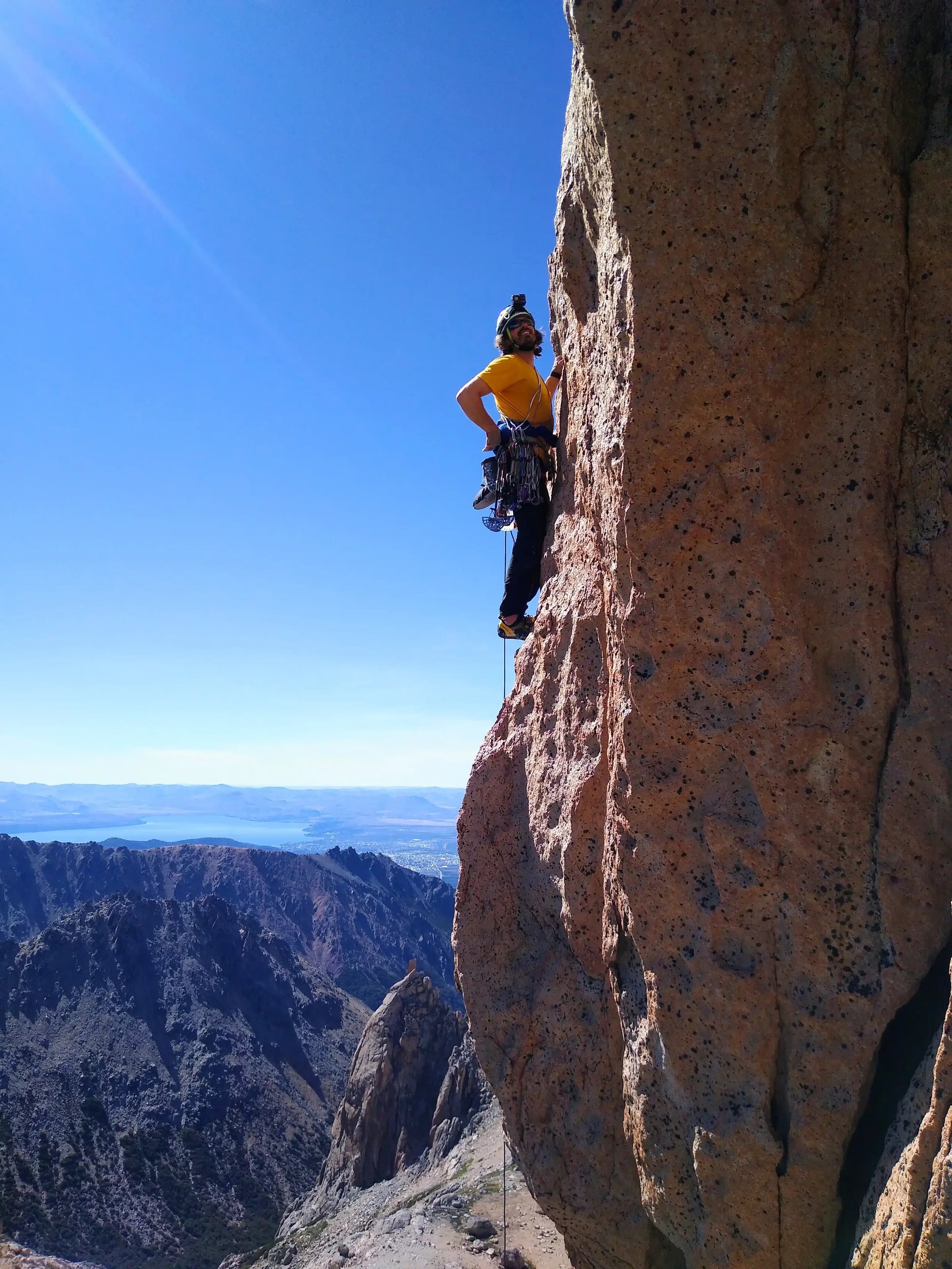
Matt Segal climbing the mega classic route Imaginate (5.10b / 6a+, 140m) on Aguja Campanile - ©Vianney Lhoumeau
Few climbing destinations in the world offer the same combination of accessibility, variety, and breathtaking scenery as Frey. After just a half-day hike from Bariloche, you'll find yourself surrounded by granite towers rising above turquoise alpine lakes, with more than 500 routes minutes away from the hut.
But Frey is much more than a world-class climbing destination—it's one of the birthplace of Argentine climbing. Since the 1930s, generations of climbers have come here to develop their skills on its granite walls. Long before El Chaltén became internationally famous, Frey was the training ground for many of Argentina's pioneering alpinists. Climbers honed their crack climbing, route-finding, and multi-pitch techniques here before taking on the bigger, more committing objectives in Patagonia's Southern Icefield.
Today, that tradition is still alive. Whether you're climbing your first multi-pitch route or preparing for objectives in El Chaltén, Frey remains one of the best places in South America to build experience on high-quality granite. The climbing is incredibly varied, from delicate slabs and technical face climbing to splitter cracks and steep overhangs, with routes suitable for every level. The rock is one of the best that you can climb on in your life. Top quality orange granite.
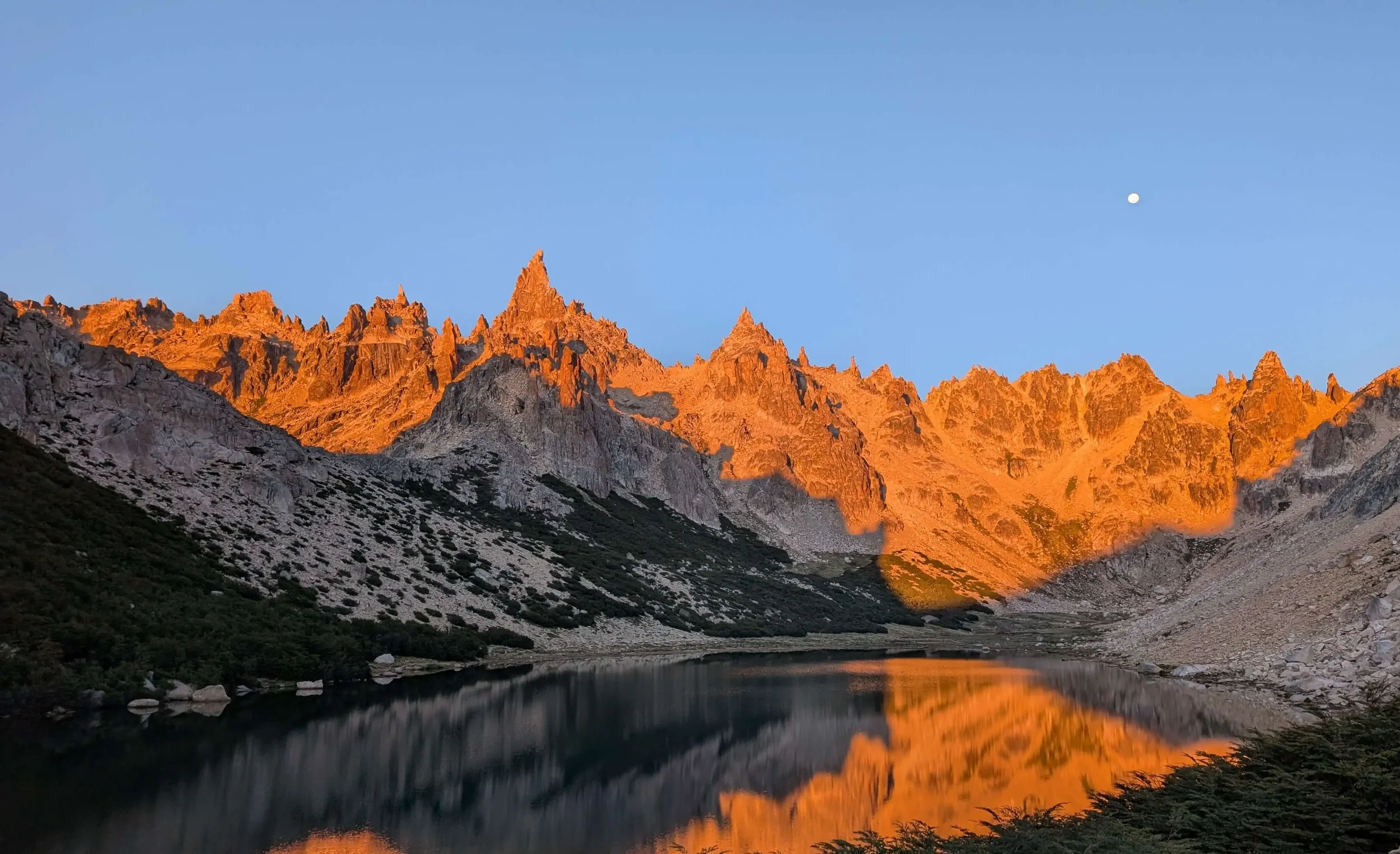
What truly sets Frey apart, however, is its atmosphere. Evenings are spent sharing stories with climbers from around the world at the mountain hut, watching the last light hit the granite spires above Laguna Toncek, and planning the next day's adventure. It's a place where climbing history, mountain culture, and unforgettable routes all come together.
Frey has become our second home. Even after hundreds of days spent climbing its granite walls, we never get tired of returning. Every visit reminds us why we fell in love with those Patagonian mountains in the first place.
Granite Climbing in Argentina Doesn't Get Better Than This.
If you'd like to discover Frey with a local climbing guide, we also offer guided climbing trips and trad climbing courses.
Planning Your Frey Climbing Trip
Frey is one of the best places in Patagonia to learn and enjoy multi-pitch climbing, with routes ranging from two pitches to long alpine linkups.
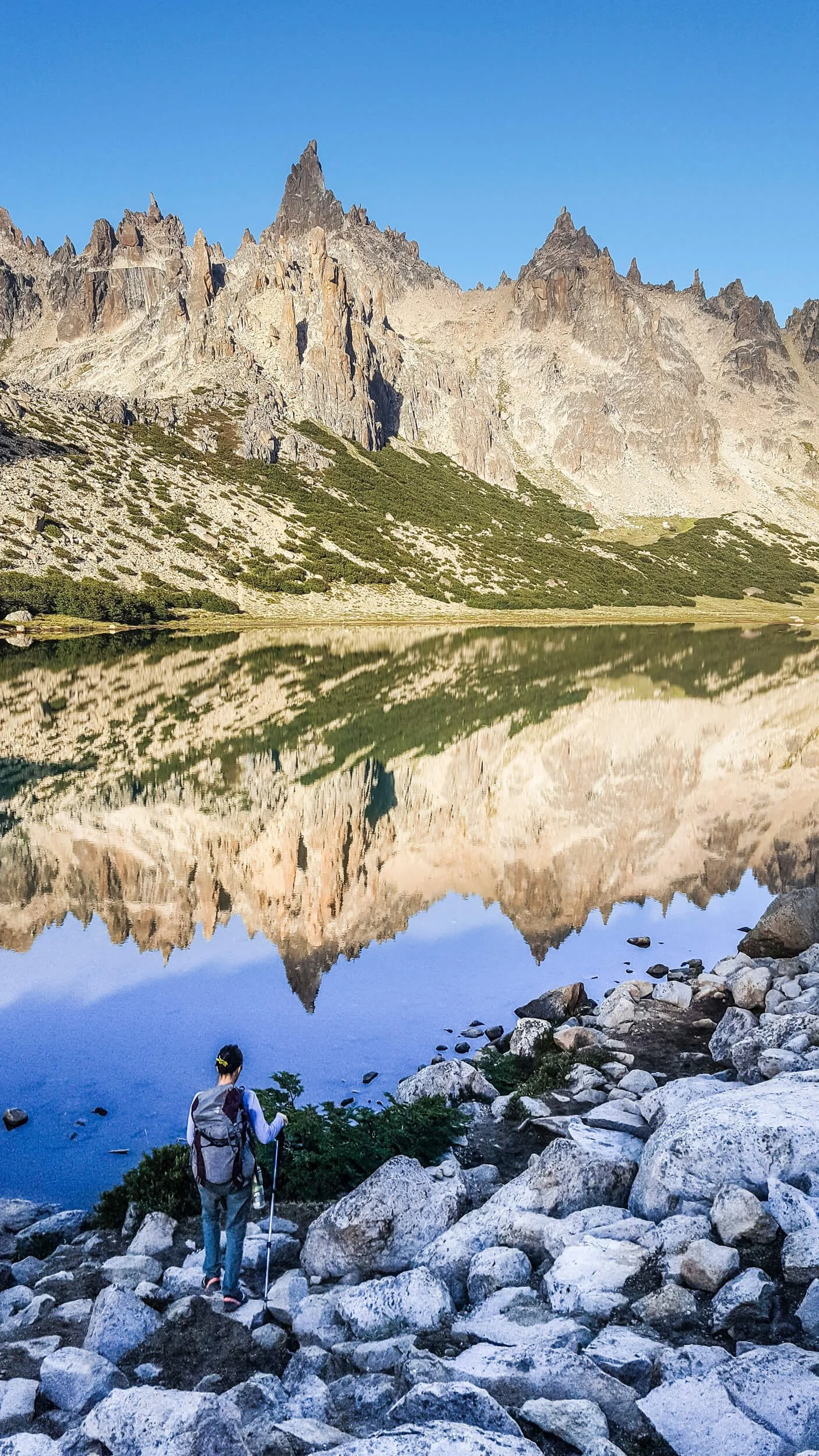
Climber on her way to climb Aguja Piramidal ©Vianney Lhoumeau
Best time to visit
The climbing season in Frey typically runs from November to April, with the best conditions usually found between December and March.
January and February offer the warmest temperatures and the longest days, but they're also the busiest months. If you prefer a quieter experience, December and March are excellent choices, with fewer people and generally great climbing conditions.
Patagonia's weather is famously unpredictable. Even in the middle of summer, it's not uncommon for temperatures to drop suddenly, bringing strong winds, heavy rain, or even snowfall. Always pack warm layers and waterproof clothing, regardless of the forecast. If you're planning a long multipitch route, getting an early start is usually your best bet.
How many days should you stay?
That depends on your goals, but I'd recommend spending at least three days in Frey. That gives you enough time to enjoy a couple of classic routes, explore the different climbing sectors, and still have some flexibility if the weather doesn't cooperate.
If you're short on time and have upper fit legs, Frey also makes for an excellent day trip. Strong and fast hikers can reach the refuge, climb a route or two, and return to Bariloche in a long day. On the other hand, if you're passionate about granite climbing, it's easy to spend a week—or even longer—without running out of quality routes.
Personally, I think five days is the sweet spot for a first trip. It's enough time to climb several classics, enjoy the unique atmosphere around the refuge, and leave feeling like you've truly experienced one of Patagonia's most iconic climbing destinations.
You can stay at the hut for a few days, climb and enjoy the place, leave all the heavy climbing gear there and go down to Bariloche city for a few sport climbing and beach days. And when you are recharged, go back up the trail with more food to climb a few more days up there.
If you're visiting Patagonia for several weeks, Frey and Cochamó complement each other perfectly. Frey is easier to access and ideal for shorter trips, while Cochamó rewards climbers who can spend more time waiting for good weather windows and tackling longer objectives.
Living at Refugio Frey
Can you camp at Refugio Frey?
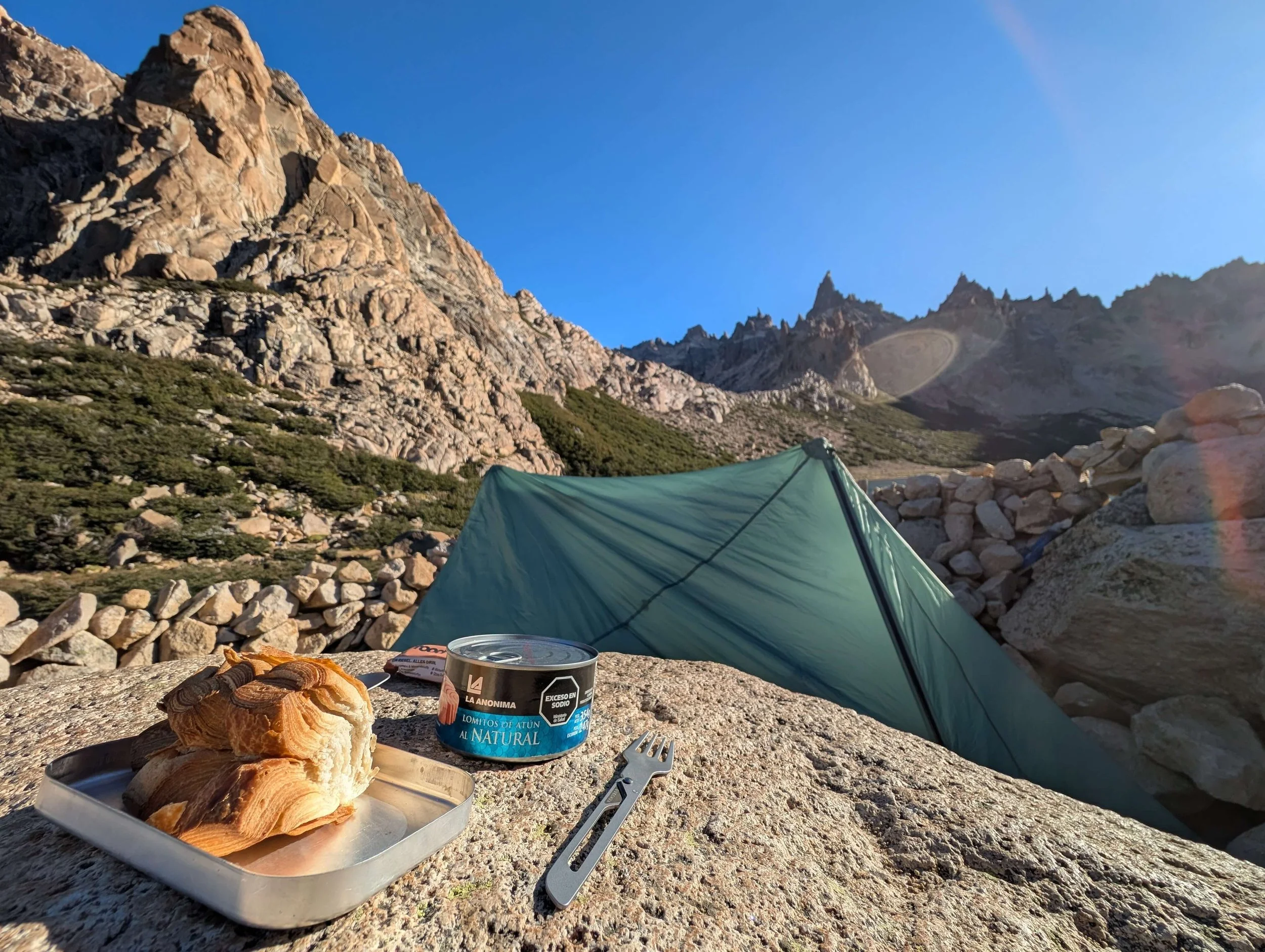
Getting your daily protein before tackling some Frey’s classic climbs ©Sebastian Carreño
Yes! Frey has a designated campsite next to the refuge, and it's a great option if you want to keep costs down or simply enjoy sleeping under the stars.
Camping at Frey is free. Campers have access to the refuge bathrooms and a dining room where you can eat your meals. However, cooking inside the hut is not permitted, so you'll need to prepare your food outside in the designated areas.
Frey Camping Guide
Keep in mind that you'll be camping in the alpine. Even in the middle of summer, nights can be cold, while sunny days can be surprisingly warm. Strong winds are also common, and they have a well-earned reputation for destroying tents. I've seen high-quality mountain tents blown away while their owners were out climbing.
“On particularly windy days, placing a few heavy rocks inside the corners of your tent before leaving can help keep it in place.”
Choose your campsite carefully and make sure your tent is securely anchored. I recommend bringing a few meters of cord so you can reinforce the guylines with large rocks, as tent pegs alone are often not enough. Finally, don't leave shoes, clothes, or other gear outside—anything not secured can easily end up halfway across the campsite.
Although camping is free, it's always appreciated if you leave a tip for the hut keepers. They work hard to maintain the refuge, keep the bathrooms clean, and make Frey such a welcoming place for everyone.
Cooking
Making fires is strictly prohibited throughout Nahuel Huapi National Park. Northern Patagonia experiences devastating wildfires every summer—don't be the person who starts one.
Cooking is not allowed inside Refugio Frey, so bring your own stove and cooking setup. If the weather turns bad, you can eat inside the hut's annex, where you'll be sheltered from the elements.
Wind can be a challenge, so bring a windscreen for your stove or build one with rocks.
Propane/isobutane canisters for backpacking stoves are easy to find in downtown Bariloche at most outdoor gear shops.
If you're using a white gas stove, you can buy “solvente” at paint or hardware stores (search for Pintureria on google). Look for Solvente N°3 or higher, which burns well in white gas stoves.
Store your food in the shade, inside dry bags or duffel bags, to keep it safe from birds, rats, and foxes while you're out climbing.
Even if you're camping, you're welcome to have breakfast or dinner cooked by the hut keepers, enjoy a local craft beer, or try their famous homemade pizzas.
The portion served for dinner in the hut are generous and will give you the right amount of energy after a long day on the wall. Delicious bread is baked every day in the hut and they also prepare dessert, having dinner in the hut is definitely a treat for your tongue.
Trash & Toilets
Everything you bring into Frey must be packed back out with you. This includes all packaging, cans, bottles, and even empty beer bottles purchased at the hut. Plan on carrying all your trash back to Bariloche.
“If nature calls on the approach, follow Leave No Trace principles. We all rely on Patagonia’s streams for drinking water, so keeping them clean is everyone’s responsibility.”
Organic waste can be disposed of in the designated compost bin at the hut.
There is no toilet paper in the bathrooms, so be sure to bring your own.
Water
At Refugio Frey, you can refill your water bottles with water from Laguna Toncek, which is treated by the hut using bleach and is considered safe to drink.
If you're hiking to the refuge or spending long days on the walls, bringing a water filter is a good idea. There are usually several streams along the approach and on the way to many climbing sectors, especially in spring and early summer. However, keep in mind that some of these streams may be contaminated by human activity. Filtering your water is the safest option.
Avoid drinking directly from Laguna Toncek or nearby streams without treating the water first.
Showers
There are no showers at Frey—but after a few days in the mountains, everyone smells like a dirtbag, so you'll fit right in!
If you decide to wash yourself, please don't use soap in the lake or streams. Even biodegradable soap contaminates the water. If you need to wash, carry water away from the lake and use as little soap as possible, following Leave No Trace principles.
Clothing
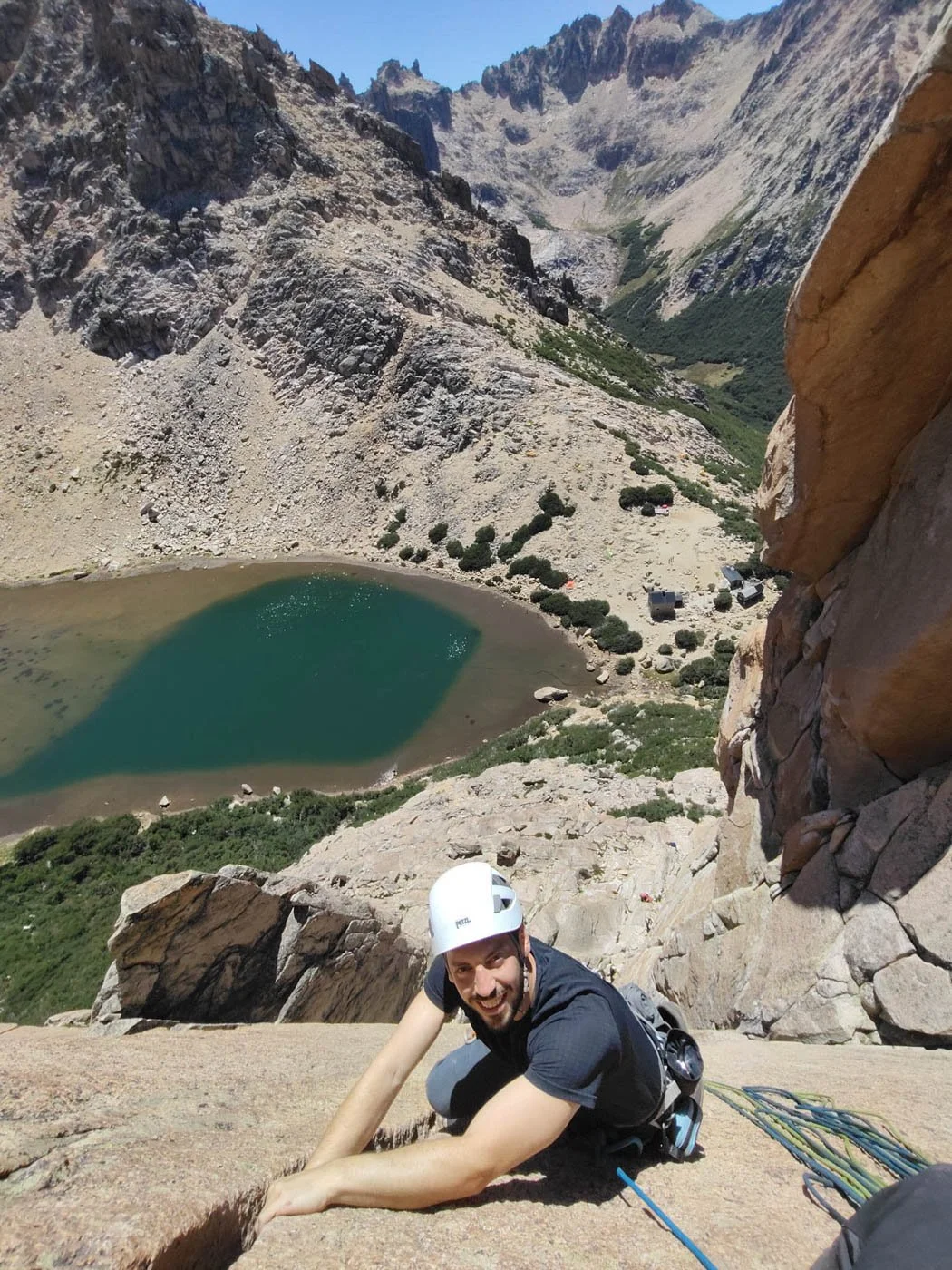
Climber on the Classic Fisura de Jim, Aguja Frey - ©Vianney Lhoumeau
Even in the middle of summer, the weather in Frey can change quickly. You might climb in a T-shirt during the day and wake up to frost the next morning.
Summer
This is what I typically bring:
Wind-resistant pants
Long johns (it can get surprisingly cold at night)
Sun hoodie
Lightweight fleece
Lightweight down jacket
Lightweight rain jacket or windbreaker (if I'm only going for one or two days and there's absolutely no rain in the forecast, I'll often leave the rain jacket at home and just bring a windbreaker)
Buff
Sunglasses and a sun hat
If colder temperatures are expected, I'll also pack an extra down jacket or a lightweight insulated vest.
Spring and Fall
I bring everything from my summer kit, plus:
Warm beanie
Warmer down jacket
Primaloft jacket or vest
Extra warm socks
Loose-fitting crack gloves (tight gloves restrict blood circulation and make your hands colder)
A few toe warmers. I often stick them inside my climbing shoes or strap them to my wrists to help keep my hands warm on cold days.
Warm gloves
Internet, phone signal, and charging devices
There is no Wi-Fi or reliable cell service at Refugio Frey. If you need to contact someone, you'll have to hike to higher ground. Fortunately, there are a few spots with surprisingly good 4G reception.
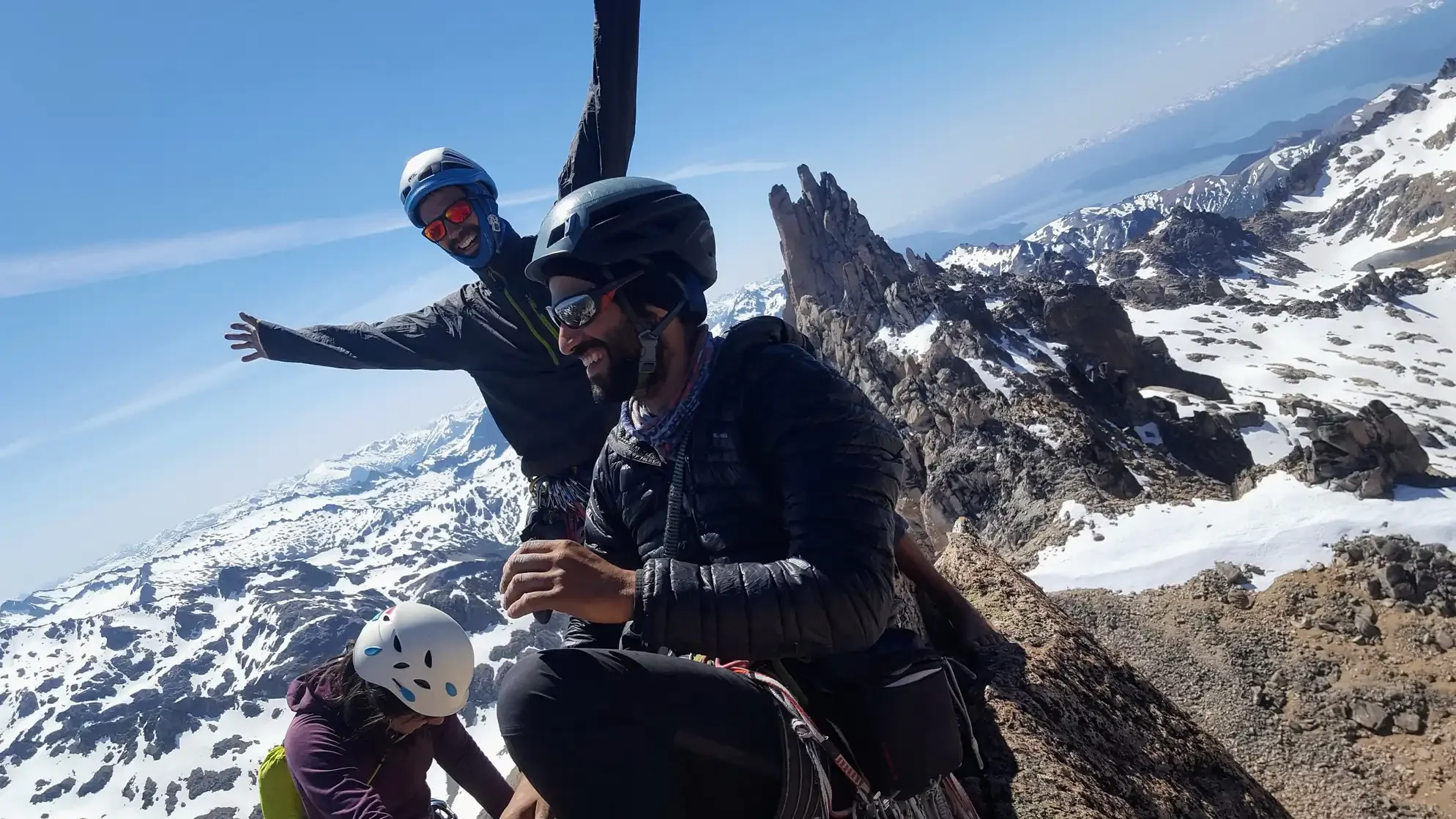
Summit celebration at the top of Aguja Campanile
The closest and easiest place to get a signal is Pico Bara, about 30 minutes from the refuge. Hike towards Col Parotida (the approach used for Aguja Abuelo and M2). Once you reach the col, turn left (instead of going right to El Abuelo) and follow the cairns along the ridge for another 10 minutes, until you have a clear view of Bariloche. In most cases, you'll find a strong phone signal there.
You might also get phone service from the summit of some of the spires. That said, I've always felt it's a shame to spoil such a beautiful summit by catching up on stressful messages from the outside world. Enjoy the view—you can check your phone when you're back at the refuge.
The refuge may allow you to charge your phone, depending on the time of year and how busy it is. Electricity is generated by a small hydroelectric turbine, so charging isn't always available or guaranteed. We recommend bringing a power bank and, for longer stays, a small solar panel if you rely on electronic devices.
Emergency communication and rescue
All mountain rescues in Bariloche are carried out by volunteers by foot. Come well prepared, plan your trip carefully, and develop solid self-rescue skills to minimize the need for outside assistance.
An emergency helicopter is rarely available in Bariloche, you should never rely on it. During the summer, it is often deployed to fight wildfires.
“Rescues are usually conducted on foot and can take many hours, or even longer depending on the location and weather. ”
Every group should carry a well-stocked first aid kit and know how to use it.
If you don’t know about first aid, plan on taking a WFR course before your trip. If you are Spanish speaker you can take both the Wilderness First Responder or the Wilderness Advance First Aid course in Bariloche with Expertia Capacitahttps://expertiacapacita.com/
You can make a donation to the Search and Rescue team here : https://www.clubandino.org/el-cab/comision-de-auxilio-cax/
VHF Radio :
For any mountain trip in Patagonia, I strongly recommendcarrying a VHF radio, even if you already have a satellite communicator such as an InReach.
Consumer two-way radios, such as Rocky Talkies, cannot communicate with local rescue services and should not be considered an emergency communication device.
In the event of an accident, a properly programmed VHF radio allows you to contact the National Park or rescue services directly, often resulting in a much faster response than activating an SOS through a satellite messenger.
Before your trip, learn how to operate your radio, program the emergency frequencies, and carry a spare battery.
“A VHF radio lets you contact rescue directly—often much faster than an SOS messenger.”
EMERGENCY VHF FREQUENCIES
CAX (Mountain Search and Rescue Volunteers): 148.450 MHz
ICE (Parques Nacionales – Fire, Communications and Emergency): 155.675 MHz
Satellite Communicators (InReach and Similar)
Satellite communicators remain an excellent backup and allow you to send messages when there is no cell coverage.
If you carry an InReach or a similar device, you can also contact CAX directly to request assistance.
CAX Satellite Messenger : comisiondeauxiliocab@gmail.com
Leave Your Trip Plan
Before heading into the mountains, share your itinerary with someone you trust. Include your route, group, and expected return time. If your plans change, let them know. This information can significantly speed up a rescue.
Insurance
Before heading into the mountains, it's worth taking out rescue insurance that covers climbing, mountaineering, search and rescue, and body recovery.
Rescue missions in Bariloche are carried out by volunteers who donate their time, and also the national park, but the system still relies on funding. Insurance contributions help pay for rescue equipment, medical supplies, training, and the many costs involved in keeping the team ready to respond.
Weather in Refugio Frey
Patagonia's weather has a reputation for being unpredictable, and Frey is no exception. It's not unusual to experience warm sunshine, strong wind, rain, and even snow—all in the same day.
That said, don't let the forecast discourage you. I've had some of my best climbing days after forecasts that looked terrible. Mountain weather changes quickly, and forecasts are often less accurate than they are in the valleys. Instead of fixating on a specific route, be flexible and choose an objective that suits the conditions. That's usually the secret to having a great day in Frey. You can gently ask the hut keeper to have a look at the forecast before you lunch on any comited route.

How fast does the weather change?
Weather in Bariloche can change fast—really fast. A day can start feeling like winter, turn into summer by midday, and end with a spring storm.
Always check the forecast, but be prepared for worse conditions. Weather forecasts in Patagonia are far from perfect, so I wouldn't put much trust in anything more than five days out.
Where to Check the Weather Forecast
I personally use Windguru and have found the GFS model to be the most reliable for Frey. That said, I always compare it with the other forecast models. If several of them are predicting rain or a storm, I take it seriously.
No forecast is perfect in Patagonia, so use them as a guide rather than a guarantee.

View from the hut at sunset after a summer afternoon storm. Torre Principal is the highest spire, ©Vianney Lhoumeau
Wind
Wind is probably the biggest weather factor in Frey. While it can make climbing uncomfortable, the granite towers often provide excellent shelter. If one side of a spire is being blasted by the wind, there's a good chance you'll find calm conditions on another face.
I've climbed on days when the wind was so strong it held my alpine draws straight out, making them almost impossible to clip. I've also been blown off balance on easy slab sections. Those aren't good climbing conditions. Anyone who says otherwise probably doesn't remember them as they really were. Strong winds make climbing less enjoyable, increase the risk of a fall, and can make rappelling particularly unpleasant.
On days like that, I usually choose routes on sheltered faces or switch to single-pitch climbing.
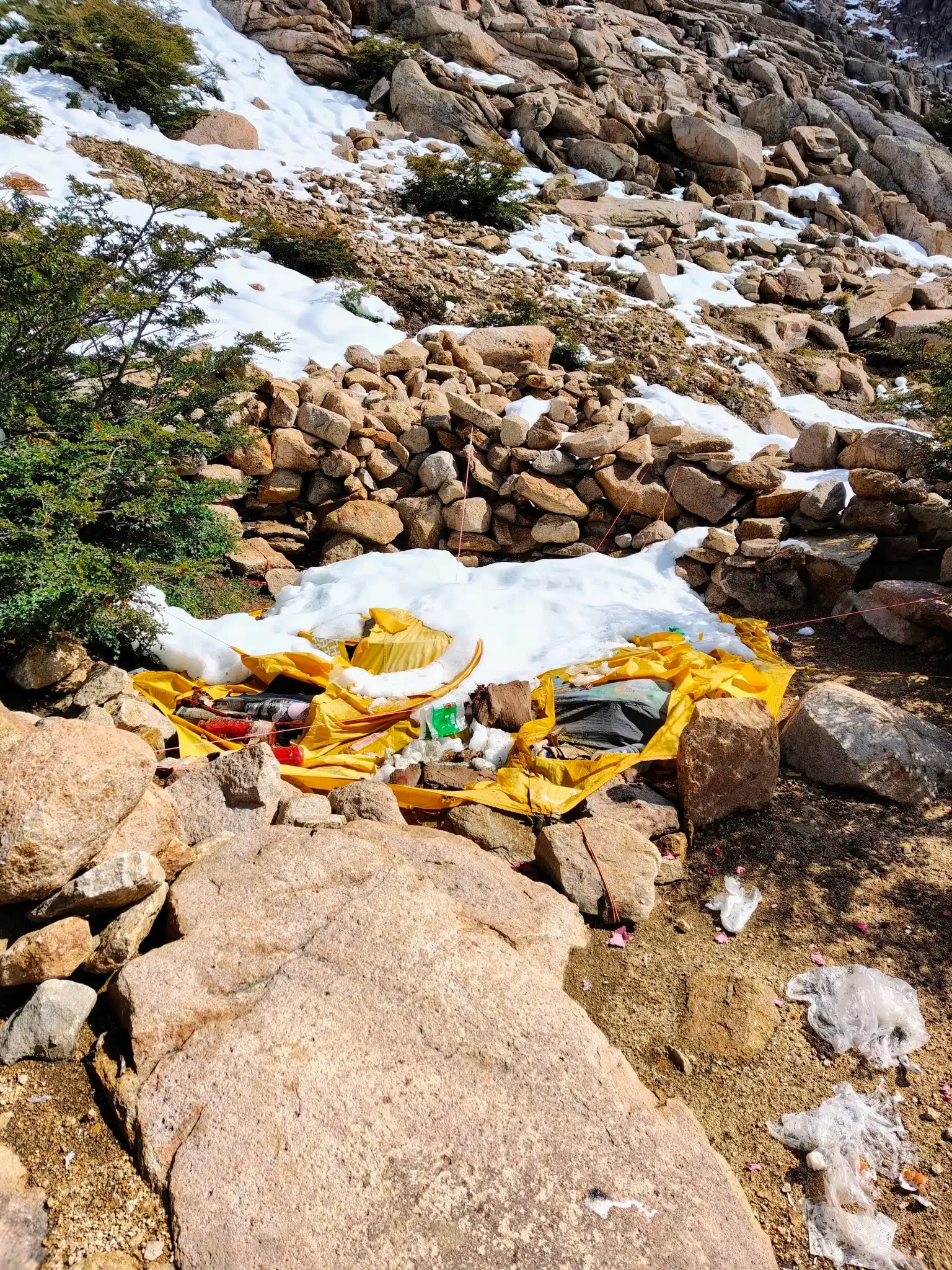
This tent was left up during a wind and snowstorm in early March in Frey - ©Vianney Lhoumeau
In Frey, the prevailing winds usually come from the southwest, west, or northwest. East-facing walls are often the best choice when it's windy, but don't overlook the lower sectors of the valley. Areas such as Pilares de la Tierra and La Tapia are naturally more sheltered and can offer excellent climbing when the upper spires are being battered by the wind.
Check the forecast, look at the wind direction, and make your best guess. More often than not, you'll find somewhere comfortable to climb.
Rain
The granite dries surprisingly quickly. After a light shower, many routes are climbable again within a few hours, especially those exposed to the sun and wind. Crack systems can stay wet longer, so if it has rained recently, face climbs are often your best bet.
Sun and Shade
During the middle of summer, temperatures can become surprisingly warm, especially on sun-facing walls. Planning your day around the sun makes a huge difference.
And remember, you're in the Southern Hemisphere: north-facing walls get the most sun, while south-facing walls stay in the shade. Choosing the right aspect can make all the difference.
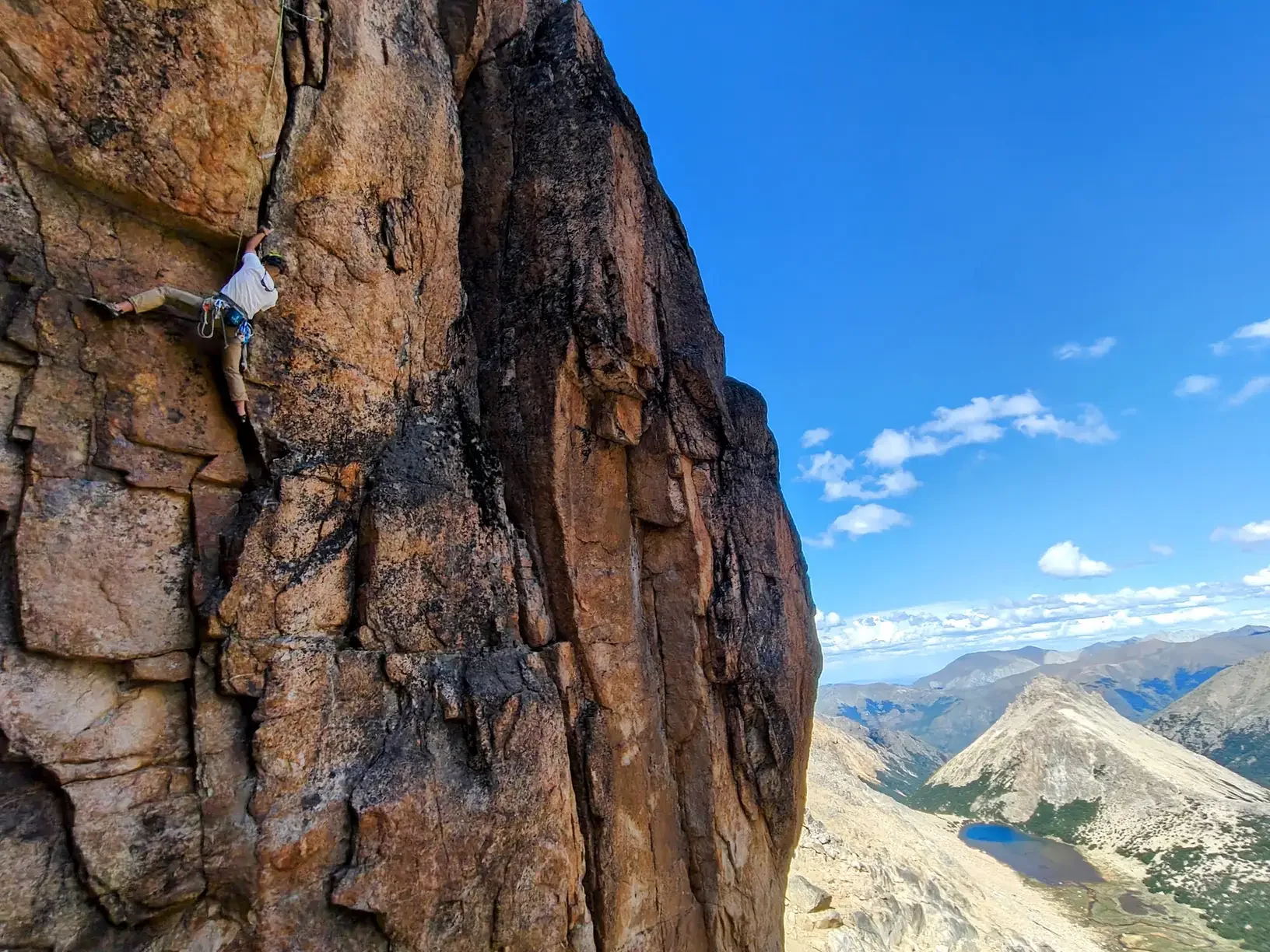
Opening new routes on the south face of Aguja Matriarca during a heat wave - ©Vianney Lhoumeau
Summer Days
On particularly hot days, I often climb weast-facing walls in the morning and move to east-facing routes in the afternoon. Combining two climbs on the La Vieja spire like Surafricana (North Face) in the morning and Julie Pot de Colle (East Face) in the afternoon is ione of my favorite combination.
If you're planning to climb a north-facing wall (such as Aguja Frey) on a hot summer day, get an early start. Otherwise, you can end up baking in the midday sun.
Starting early also means you'll do most of the approach in the shade, which is far more pleasant on hot days. Better yet, you'll finish climbing earlier and still have plenty of time to relax by the lagoon in the shade before dinner.
Chasing the Sun
On cold days, I do the opposite of what I'd do in summer and try to maximize my time in the sun. Sometimes, simply starting an hour or two later makes all the difference. Instead of freezing your hands on the first pitch, you can begin climbing once the wall has warmed up.
Don't be fooled by the forecast. Even if the temperature is only 6°C (43°F), standing in the Patagonian sun on a calm day can feel warm enough for T-shirt weather. On the other hand, the 20°C (68°F) in the shade with a strong wind can feel absolutely freezing.
When planning your day, don't just look only at the temperature—consider the wind, cloud cover, and whether your route will be in the sun or the shade. Those factors often have a much bigger impact on how comfortable you'll be.

Frozen Laguna Toncek during spring time
Cold Conditions
Even in January and February, mornings can be close to freezing. If you're planning an early start or climbing long shady routes, don't underestimate how cold your hands can get.
In spring and fall, I always carry extra insulation, and I often use disposable hand or toe warmers to keep my hands functional between pitches. I also pack a spare base layer for my upper body so I can change into something dry at the base of the climb after the approach.
I usually climb in pants with long johns underneath. If my upper body gets too warm, I can always remove a layer, but once the climb has started, taking off your pants to add or remove long johns simply isn't an option.
Spring Snow Conditions
During spring, trekking poles are almost mandatory for crossing the steep snow slopes that often remain on the approach. I always wear gloves and long sleeves when crossing these snowfields—they can save your skin if you slip.
Gaiters are also useful. Most of the time I just wear lightweight trail-running gaiters and accept that my feet will get wet. Stiff approach shoes make it much easier to kick steps into firm snow, and early in the season I sometimes even bring lightweight trail crampons for extra security.
Logistic
How to get to the trailhead
Frey is located in Nahuel Huapi National Park, about 20 km (12.5 miles) from downtown Bariloche. The trailhead is easily accessible by car, taxi, or public transportation.
Trailhead coordinate : 41°10'12.1"S 71°26'32.8"W
By Bus
The easiest and most affordable way to reach the trailhead is by taking city bus number 55, marked "Cerro Catedral." The bus departs from downtown Bariloche and terminates at the Cerro Catedral ski resort, where the hike to Frey begins.
Simply stay on the bus until the last stop. From there, the trailhead is just a short walk from the parking area.
The Approach to Refugio Frey
There are three ways to reach Frey:
From Cerro Catedral (recommended): The classic and quickest approach. The trail is 10 km (6.2 mi) with approximately 700 m (2,300 ft) of elevation gain and takes 3 to 5 hours, depending on your pace and the weight of your pack.
From Lago Gutiérrez: A longer but quieter alternative through beautiful native forest. This route is approximately 16 km (10 mi) and usually takes 5 to 7 hours. It's a great option if you're staying in Villa Los Coihues.
Via the Cerro Catedral lifts: During the summer, you can take the lifts to the upper mountain and hike to Frey along the ridge. This option significantly reduces the elevation gain while offering spectacular panoramic views. The ridge traverse is more exposed and less obvious than the standard trail. Lift operations vary throughout the summer, so be sure to check the schedule and prices before planning this option HERE .
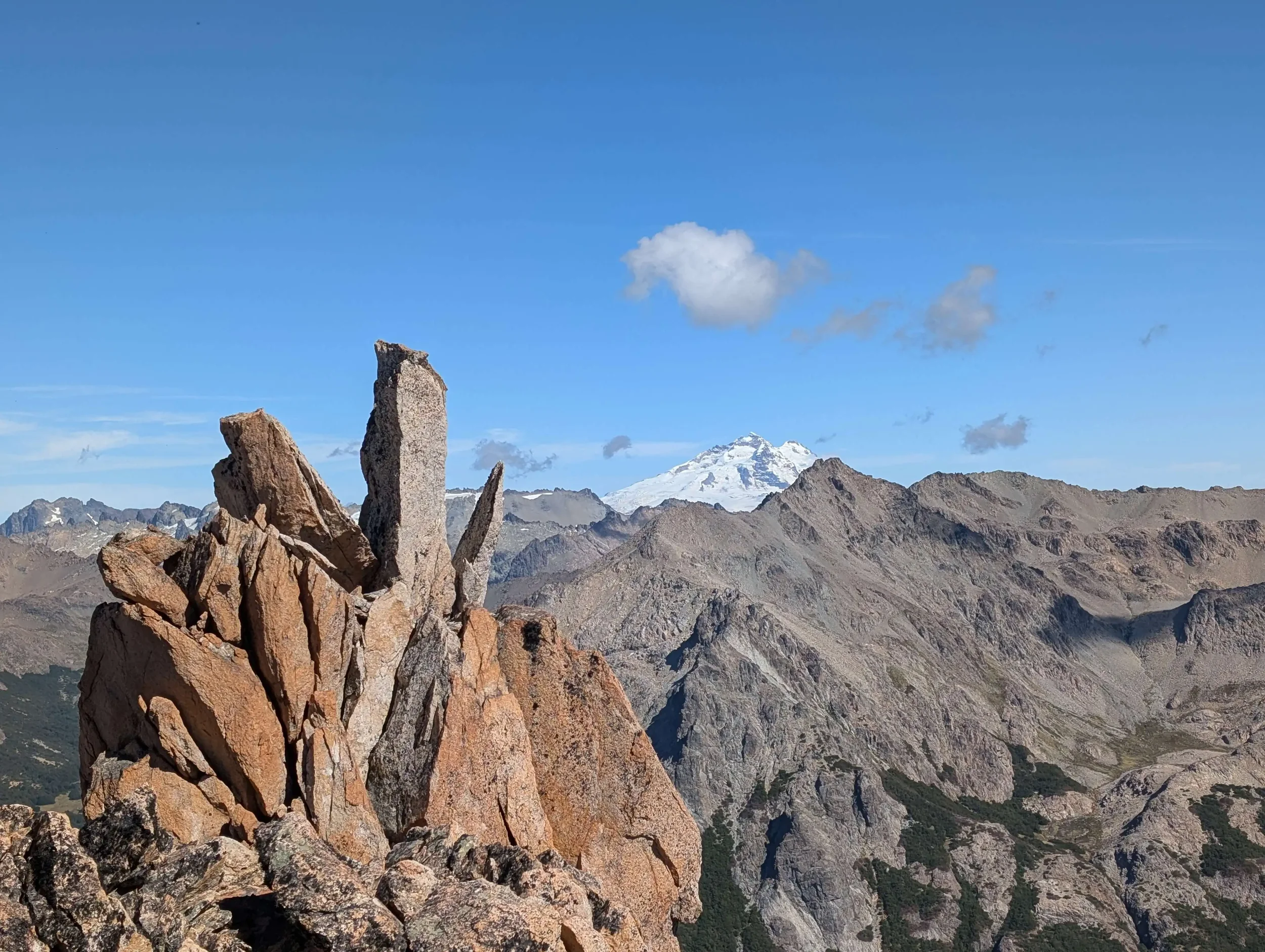
View of Mount Tronador while hiking from the ski lift to Refugio Frey © Vianney Lhoumeau
Hiring a Porter :
If you're planning a longer stay or simply don't want to carry a heavy pack, you can hire a porter to transport some or all of your gear to Refugio Frey. Porters charge by the kilogram, so the cost depends on how much equipment you need to carry.
Be sure to arrange the service in advance. Ezequiel is one of the porters who regularly works at Frey and can be contacted via WhatsApp at +54 9 294 481 3728. I've worked with Ezequiel on several occasions, and he's always been reliable and easy to coordinate with.
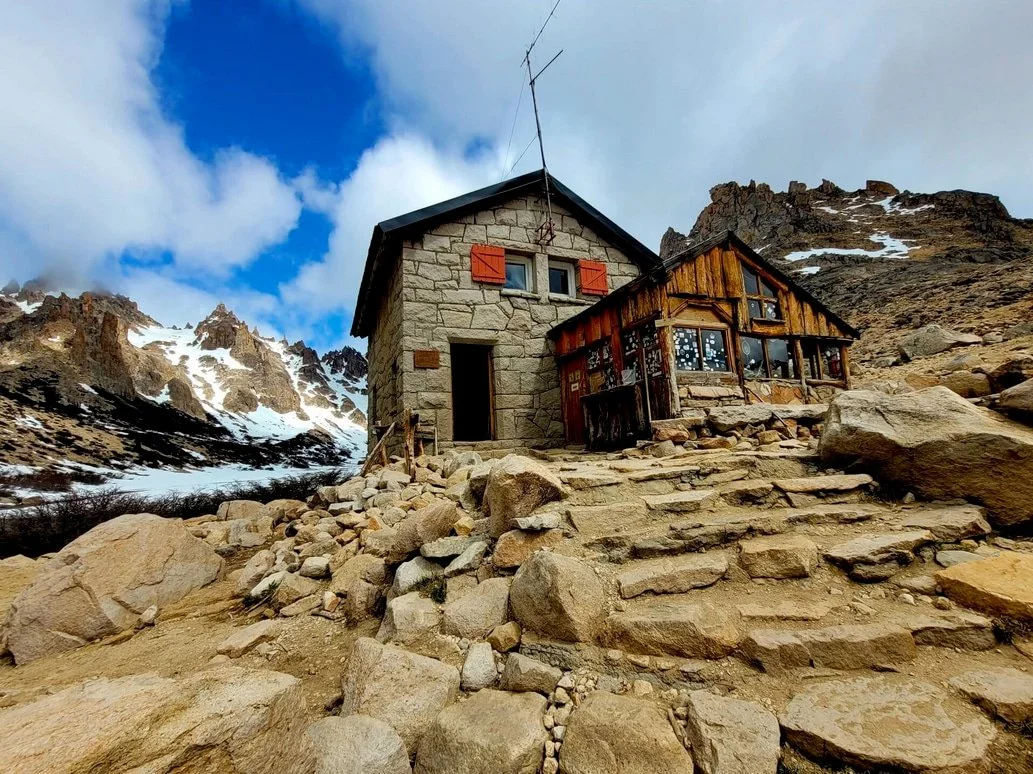
Do you need to book the refuge?
Yes! Whether you're planning to stay in the hut or camp, a reservation is required.
Camping spaces are limited, and reservations can only be made up to 7 days in advance. If you're visiting during the peak summer season, we recommend booking as soon as reservations open.
To reserve a bed in the hut or a camping spot, visit the official Refugio Frey reservation page.
Registering in the National Park
Registration is mandatory for anyone climbing in the Frey area of Nahuel Huapi National Park.
Complete the online registration form before your trip:
https://forms.gle/RVXEUJFyfnDymHdf8
At the time of writing, there is no dedicated registration form for climbers in Frey (only for the crack climbing area known as La Biblioteca in an other part of the park). Climbers should therefore complete the standard hiking registration form.
When asked "In which area of the National Park are you planning to do your hike?", select Centro, which includes the Frey area.
Guide book
If you're planning to climb in Frey, I highly recommend buying Rolando Garibotti's guidebook. The latest edition was published in November 2024, making it the most up-to-date and comprehensive guide available. It covers more than 600 routes, with detailed photo-topos, route descriptions, descent information, recommended gear, and historical notes.
You can order the guidebook online from the official Patagonia Vertical website: https://www.pataclimb.com/guidebook/guidebook_frey.html
Or in Bariloche shop :
- La Pecera, Mitre 260 (at the back end of the gallery)
- JG Deportes, Diagonal Capraro 1081
- Librería Cultura, San Martin 243
- Librería Literal, Elflein 115
- Refugio Frey (can be out of stock in the hut)
Mountain Project also guive some helpfull information and linkup suggestion, but most of the routes are not on the website.
If you'd rather spend more time climbing and less time figuring out logistics,
we offer guided climbing days, multi-day trips, and trad climbing courses in Refugio Frey.
What Is Climbing in Frey Like?
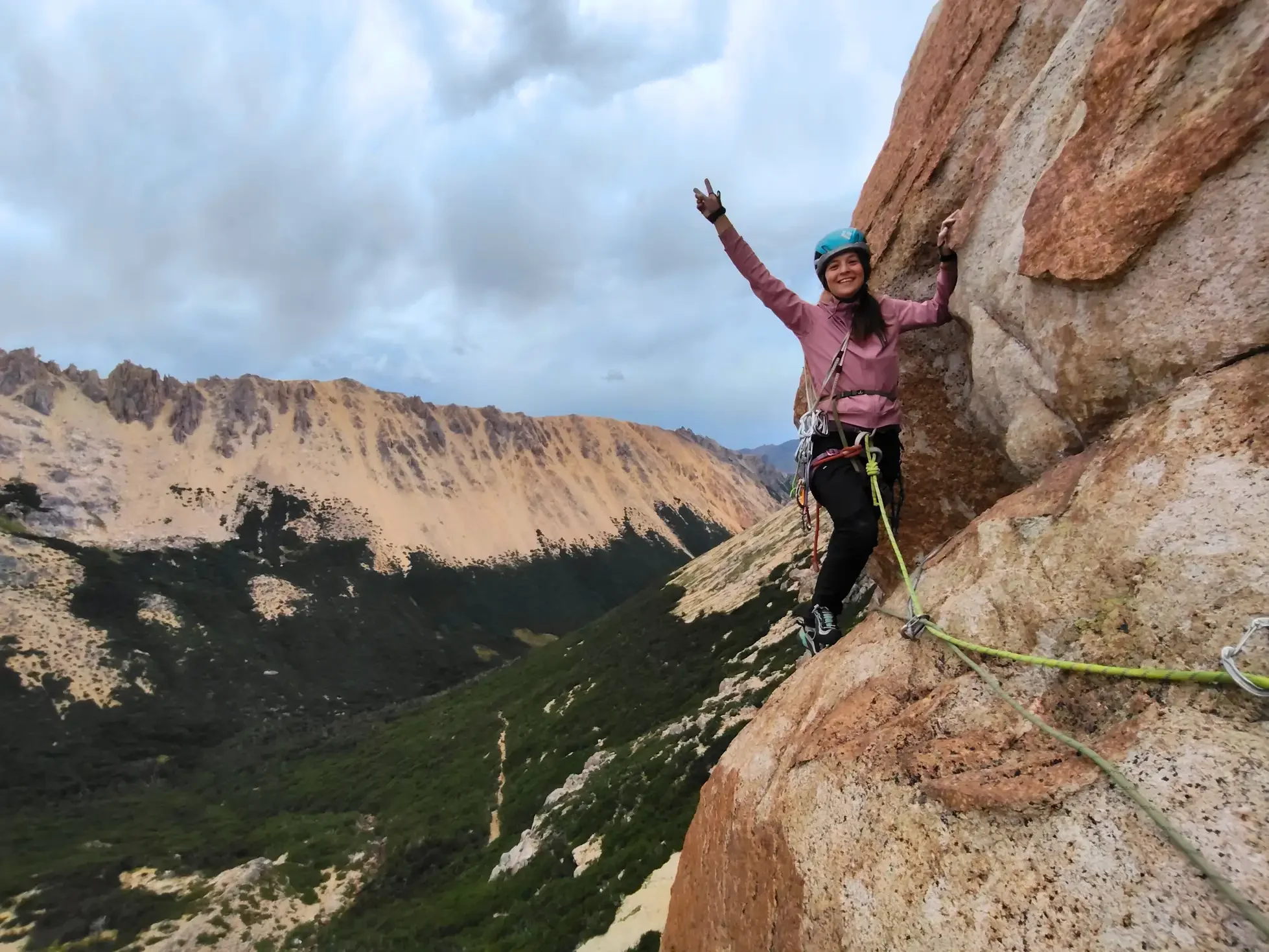
Quick ascent of Sifuente-Monti route on Aguja Frey before an afternoon storm - © Vianney Lhoumeau
Climbing in Frey is a unique mix of face climbing, crack climbing, and technical slabs on some of the best granite I've ever climbed. From positive crimps and wind sculpted huecos to perfect hand and finger cracks, you'll use almost every climbing technique in your arsenal.
Be prepared to clip bolts as well as place traditional protection. While the rock is generally excellent and extremely solid, you'll occasionally encounter a few loose sections, especially on less-frequented routes.
Some of the most popular routes, particularly on Aguja Frey, have become slightly polished over the years. You'll also find naturally polished slabs left behind by the glaciers. Fortunately, these sections are limited and don't take away from the outstanding quality of the climbing.
“If you’re new to trad or multi-pitch climbing, Frey can feel intimidating. Hiring a guide is a great way to learn the local climbing style, improve your skills, and safely enjoy some of the area’s classic routes.”
The Versatile Frey Climbing Rack
Rope :
Over the years, I've found that a single 70 m rope is my favorite setup for climbing in Frey. By using long slings to manage rope drag, I can comfortably climb the vast majority of routes with a single rope. Many of the spires can also be rappelled with a single 70 m rope, although a few require two 60 m ropes. For those routes, I usually carry a lightweight tag line.
If you prefer climbing on half ropes, they'll also work very well in Frey. They're particularly useful on wandering pitches, reduce rope drag, and make long rappels more straightforward.
“I wouldn’t recommend bringing an ultra-thin single rope. Frey’s granite is rough, and ropes tend to wear quickly.”
Personally, I rarely use anything thinner than 9.4 mm. The extra durability gives me more confidence, especially when the rope is running over arêtes or rough granite. Since the approaches are relatively short, I don't think the weight savings of a "dental floss" rope are worth the reduced lifespan.
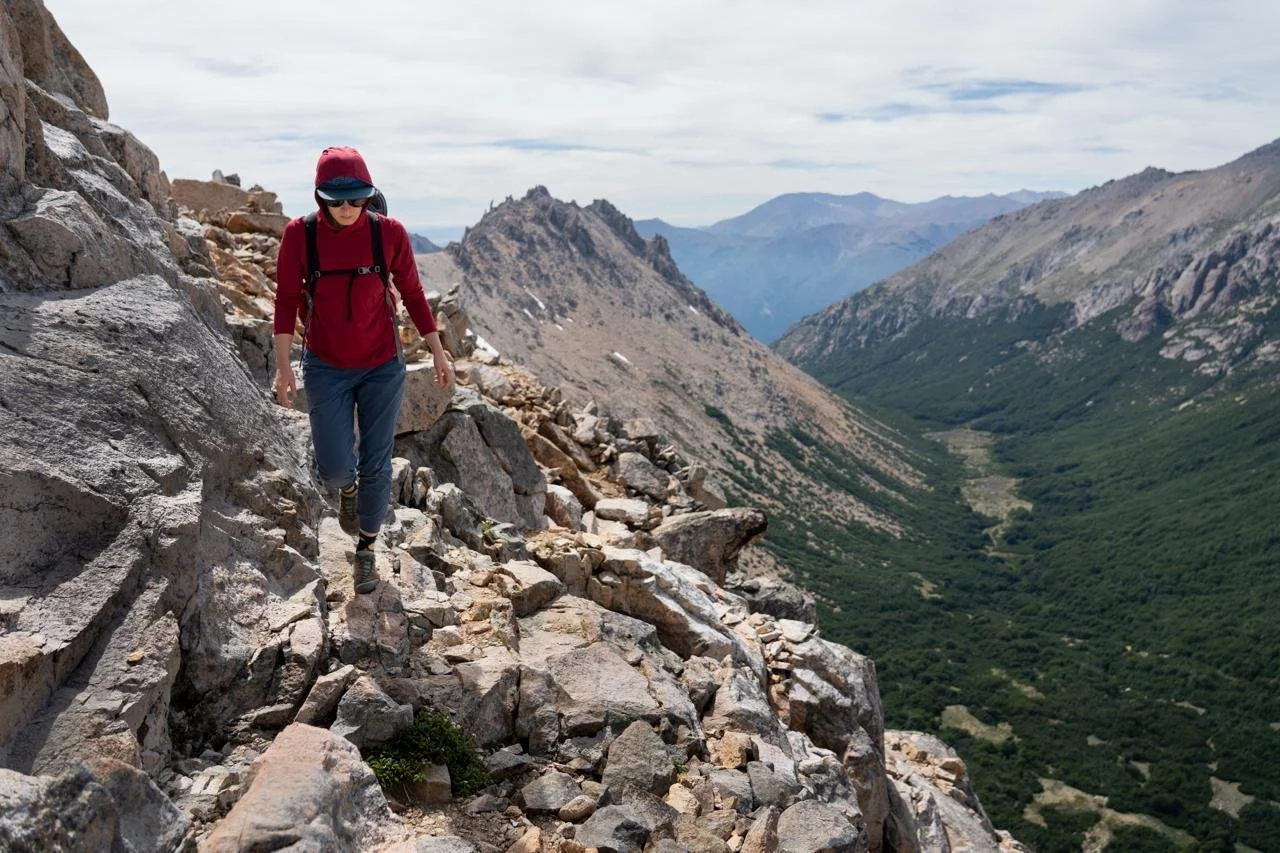
Coral on the approach to climb Surafricana on Aguja La Vieja, Frey. © Nelson Klein
Protections :
If you're spending a full week in Frey, it's worth bringing a complete rack so you can climb a wide variety of routes. If you're only planning to climb one or two specific routes, check the guidebook and bring the recommended gear—plus a few extra pieces. It's always nice to have a little more protection than you end up needing, especially on an unfamiliar route.
If I want the flexibility to climb almost anything during a week in Frey, this is the rack I usually bring:
Double rack from 0.3 to #3
Single 0.1, 0.2, #4, and #5 (if you have one and you plan to use it)
A full set of micro nuts and medium-sized nuts
Personally, I prefer carrying extra small cams rather than doubling up on the larger sizes. They're lighter, and I trust good microcam placements, so this setup gives me the flexibility I need without adding unnecessary weight.
Slings and quick draw :
This is the selection I usually carry:
5 lightweight quickdraws for bolts and pitons.
5 × 60 cm alpine draws (60 cm slings with two carabiners). They're versatile and can be used on both bolts and gear.
2 × 60 cm slings with one carabiner.
2 × 120 cm slings with one carabiner. Perfect for slinging horns or blocks, or extending gear placements to reduce rope drag.
1 × 240 cm slingor4 m of 6.5 mm cord. Very useful for building anchors, equalizing widely spaced pieces, or slinging large boulders.
Bailing tat or cord and a small knife to reinforce anchors or directly change old anchor cordalette
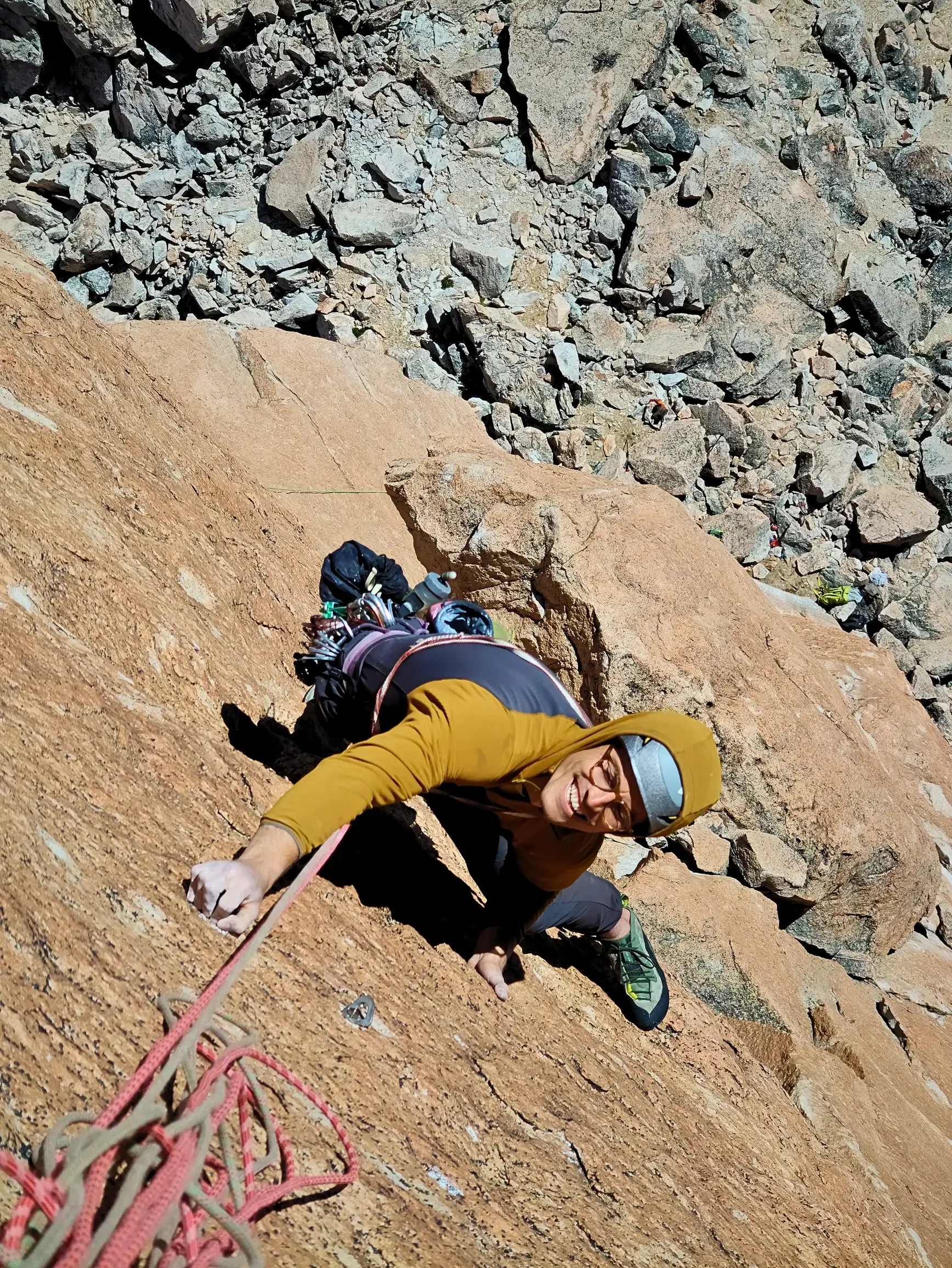
Adam crimping on the slightly run out Descansa en Paz (6b+ / 5.10d). Aguja Campanile, Frey - © Vianney Lhoumeau
Shoes
Approach shoes : A good pair of approach shoes with sticky rubber is essential in Frey. Many approaches involve scrambling over boulders or easy third-class terrain, and several descents require short sections of easy downclimbing. That's where quality approach shoes really make a difference.
Climbing shoes : Personally, I prefer climbing shoes that excel at edging. I want a pair that's comfortable enough to wear for several pitches, but precise enough that I can confidently stand on small edges and crimps.
Although Frey has plenty of crack climbing, I don't mind using shoes that favor edging over crack performance. Long, continuous splitter cracks are relatively uncommon, and many routes combine face climbing, slabs, and cracks on the same pitch. For me, a well-balanced all-around shoe is the best choice.
Grades & Protection
Frey has a reputation for being sandbagged, and I think there's some truth to it. Personally, I find the slab and face climbing grades to be fairly stiff, while the crack climbs generally feel quite fair.
Another thing to keep in mind is that many of Frey's bolted routes are runout. It's not unusual to find a 45 m pitch protected by only six bolts, and some easier sections are surprisingly exposed. Argentine first ascensionists were often very bold and placed only as many bolts as they felt were absolutely necessary. As a result, a fall on some routes could have serious consequences.
In his guidebook, Rolando Garibotti uses an exposure rating from E1 to E4, where E1 indicates relatively safe climbing and E4 approaches free solo territory. While this system is very helpful, don't rely on it alone. Some E2 routes can still feel quite committing, especially if the runout is on easier terrain where a fall would be unacceptable.
If you're climbing near your onsight limit, I strongly recommend talking to other climbers at the refuge before choosing your objective. Start with a few easier routes to get a feel for Frey's style and grading before stepping up the difficulty.
If you'd rather avoid long runouts, look for routes that follow crack systems. They generally offer more opportunities to place protection and are often less committing than the face climbs.
Rebolting
Some older routes are still equipped with spit bolts—very short expansion bolts that no longer meet modern standards. Local climbers have been working for years to replace them with safer hardware, but rebolting in Frey is a slow process that requires hauling heavy equipment into the mountains.
If you'd like to support this effort, consider making a donation to the local climbing association AEBAR https://aebar.com.ar/ . If you're traveling from abroad, another great way to help is by bringing bolts or hangers with you. Feel free to get in touch with us or the local association if you'd like to contribute.
If you're looking for more route recommendations, check out my article 25 Best Climbs in Frey, where I cover classics from 5.7 to 5.13.
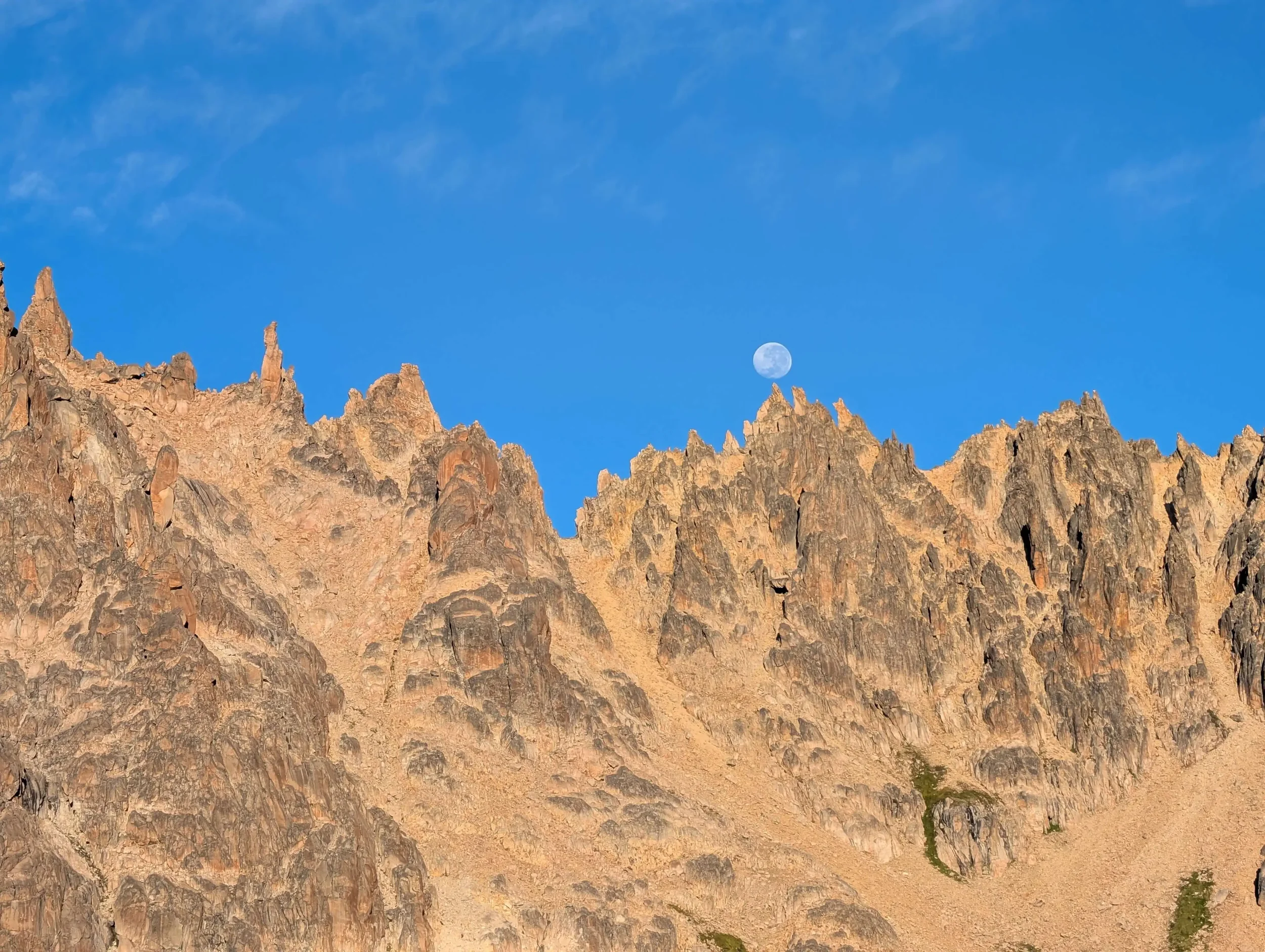
Frey's sea of orange granite offers endless climbing possibilities. © Sebastian Careño
Personal tips & trick
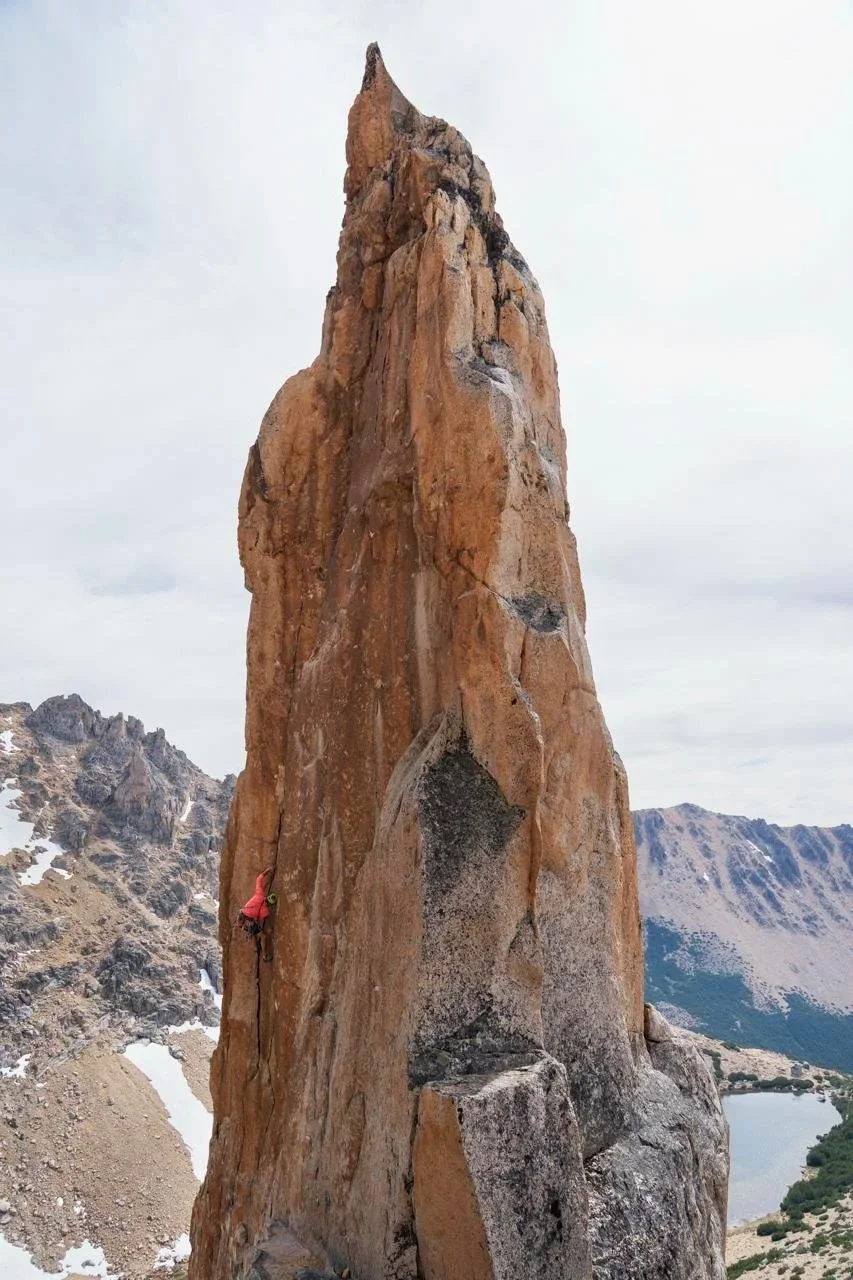
Myself climbing the so good single pitch Socotroco on Aguja M2 - © Nelson Klein
When I'm climbing for fun rather than guiding, I like to travel as light as possible. After hundreds of days in Frey, I've found that it makes the experience much more enjoyable.
Most routes are short enough that I almost never climb with a backpack on. When I'm leading, I carry a lightweight windbreaker, a down jacket compressed into a stuff sack, and a 500 ml water bottle, all clipped to my harness. My second usually carries a small stripped-down first aid kit, headlamps, a VHF radio, and a 1 L water bottle in a small bag clipped to their harness. I stash snacks in my pockets or inside my approach shoes.
Before leaving the base of the climb, I make a point of drinking plenty of water and eating a proper snack to top up my energy. If we're climbing a longer route or the weather is colder, I'll bring a lightweight running vest to carry extra clothing without the bulk of a traditional backpack.
This system obviously isn't suitable for every climb or every team, but for most routes in Frey, I find it keeps us moving efficiently and makes the day much more enjoyable.
“At the end of the first day, I’ll often stash my ropes and climbing gear under a boulder at a discreet spot along the approach so I can pick them up on the way to the next climb.”
If I'm climbing for two days in a row, I try to choose objectives that are close to one another or at least share part of the approach. At the end of the first day, I'll often stash my ropes and climbing gear under a boulder at a discreet spot along the approach so I can pick them up on the way to the next climb.
There are plenty of good places to safely hide gear, and carrying a few kilos less for the first 30–60 minutes of the approach can make a noticeable difference. Sometimes, that's the little boost you need to feel fresh enough to send your project.
Best Climbs in Frey : if I Only Had 3 Days to Climb in Frey...
These are simply my personal favorites. They combine everything I love about climbing in Frey: beautiful crack climbing, memorable summits, varied movement, and incredible settings.
If you're looking for easier routes, harder testpieces, or just want a longer list of classics, check out my article 25 Best Climbs in Frey, where I've put together recommendations for a wide range of grades and styles.
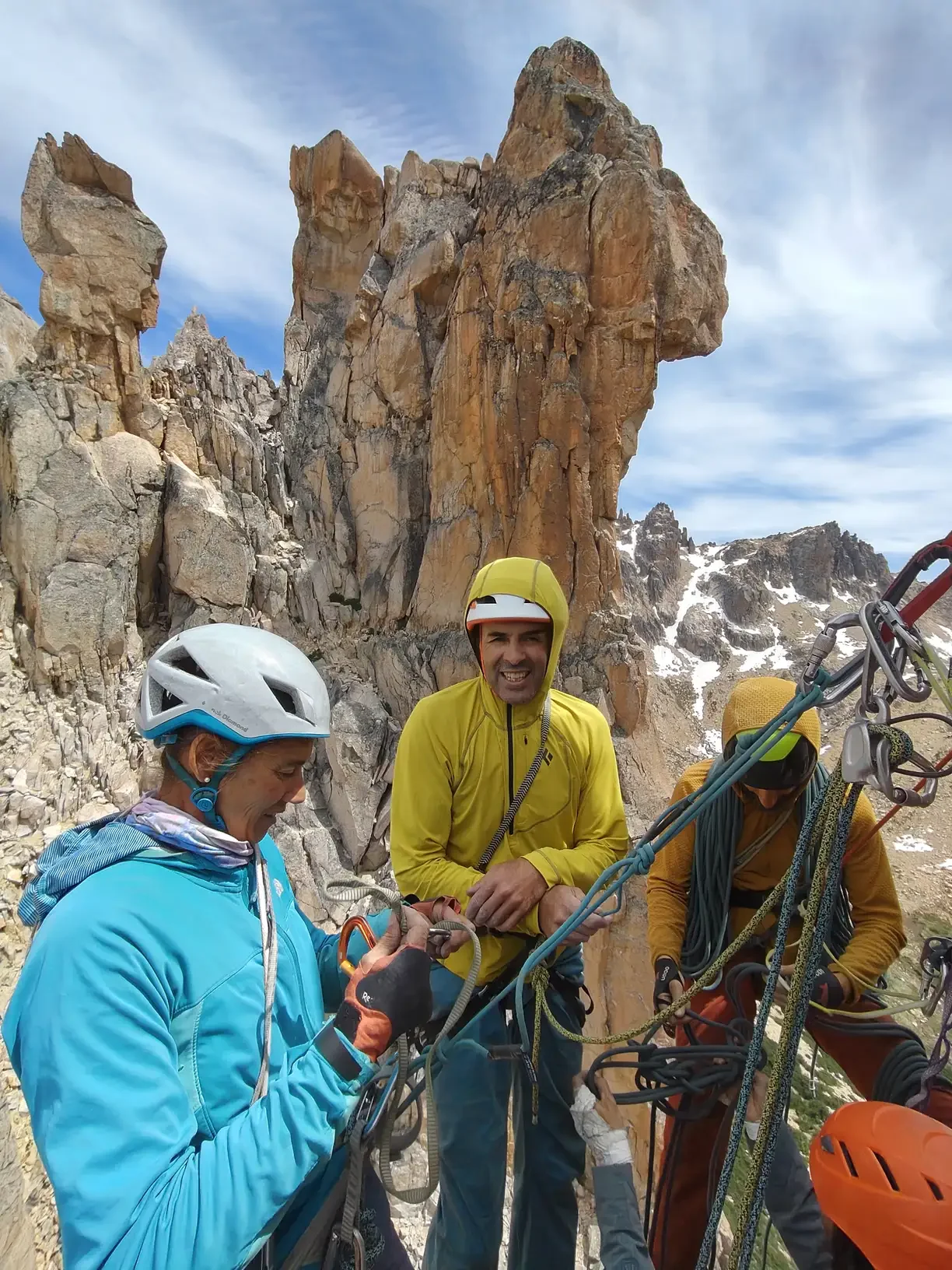
Climbers on the summit of Aguja M2 with El Abuelo in the background - ©Vianney Lhoumeau
Aprendiendo a Volar → Conflicto de Generaciones → Anónimo Yankee (Linkup)
Aguja Abuelo – 6c / 5.11b, 2–3 pitches, 70 m
A fantastic, well-protected linkup if you're looking for a route that's all about crack climbing.
Topo of the linkup available on Mountain Project HERE.
The first pitch, Aprendiendo a Volar, is worth climbing on its own.
The second pitch is an outstanding steep finger crack. I recommend building an intermediate belay in the small alcove at the top of the crack. From there, you can either traverse right to join Anónimo Yankee or continue straight up, following the bolts to the summit on an excellent short 7a (5.11d) pitch.
If you build the intermediate belay, the third pitch traverses right along a crack to join Anónimo Yankee, then climbs straight up before making a short traverse left to reach the summit.
You can rappel from the south side with a single 60 m rope.
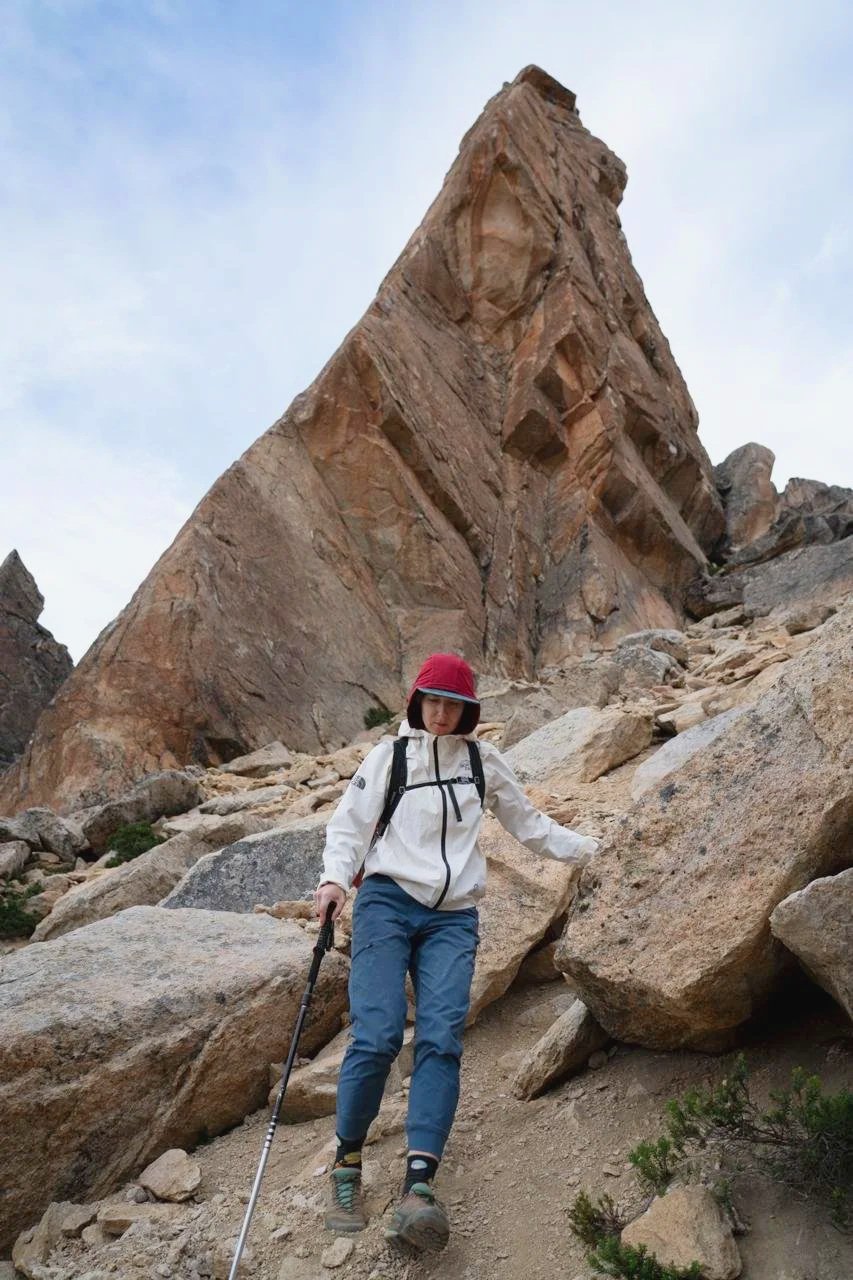
Coral hiking back to the hut, Aguja La Vieja in the background with the Surafricana route - © Nelson Klein
SurAfricana
Aguja La Vieja – 6b / 5.10c, 3 pitches, 70 m (230 ft)
A fun, varied climb with a pumpy second pitch featuring an athletic roof and crack.
Bring a big camalot (#4 or #5) if you are not confortable with offdwidth (after the roof). you can protect with small gear on the side of the OW.
The summit is excellent, with great views over the Campanile valley and Torre Principal.
You can rappel on the back of the spire with a 70 mts rope (carrefull the rappel are almost 35 mts)
On hot summer days, you can combine SurAfricana in the morning, while it's still in the shade, with Aprendiendo a Volar in the evening once the sun has moved off the wall. It's a great way to stay comfortable throughout the day while ticking two of my favorite routes in Frey.
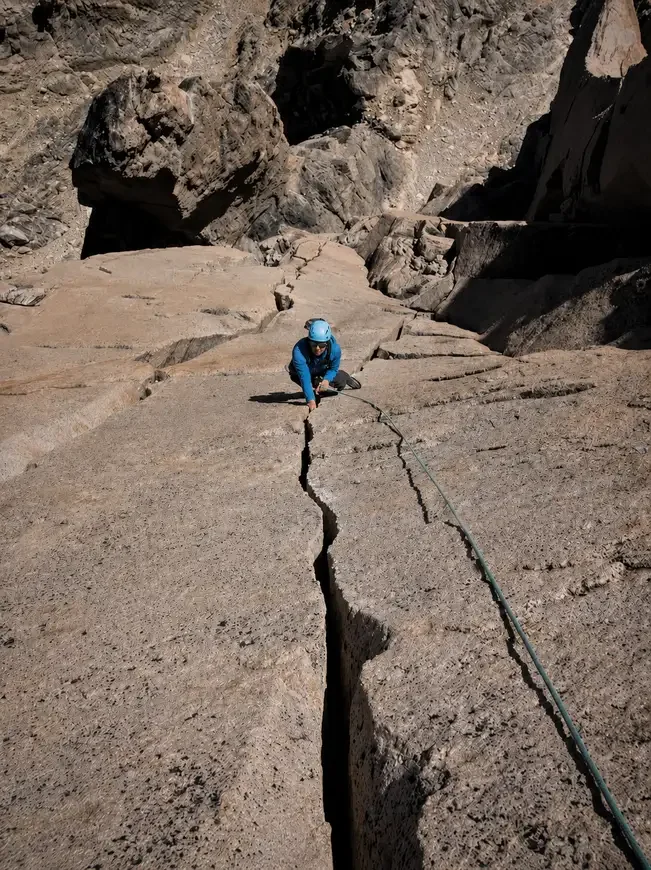
Enjoying the splitter hand to fist crack on Siniestro Total, Torre Principal - DR
Siniestro Total
Torre Principal – 6b+ / 5.11a (E2), 150 m (250 m total to the summit)
One of the longest climbs in Frey, taking you all the way to the summit of Torre Principal.
It's mostly crack climbing, and about as good as it gets. I recommend bringing three #3 Camalots for the stellar splitter hand-fist crack.
It’s worth climbing the 6b+ variation for pitch 1, insted of the 5+ crack.
Bring a few layers for that one, the first time that I climbed it, it was during a warm summer day and I was fairly cold in the shade, the wall get sun only during the afternoon and get wind.

Shawn Raboutou cruising the second pitch of Imaginate - ©Vianney Lhoumeau
Imagínate
Campanile Esloveno – 6a+ / 5.10b, 5 pitches, 130 m
The longer approach is rewarded with a five-star combination of face and crack climbing.
Campanile Esloveno sits in a completely different valley with its own unique atmosphere. There are several streams along the approach where you can refill your water.
Pitch 3 (5+ / 5.9) feels a little runout but is easier than the rest of the route. Take your time looking for gear—it's there.
The final pitch is a true hero climb, weaving between giant wind-sculpted huecos that can be protected by threading slings through them.
“These aren’t objectively the best climbs in Frey—just my personal favorites after spending hundreds of days climbing here.”
Rock Climbing Around Bariloche
If you still have energy after climbing in Frey, you're in luck—Bariloche is one of the best climbing destinations in Patagonia. There are dozens of excellent sport climbing crags within a short drive or bus ride from the city, offering everything from beginner-friendly routes to steep, hard projects, shade or sun.
The most up-to-date information on Bariloche's sport climbing areas, access, and topos can be found on the Escalada Bariloche website: https://www.escaladabariloche.com/

Multi-pitch climbing on Cerro Lopez in Bariloche - ©Vianney Lhoumeau
Cerro López, Multi-pitch climbing in Bariloche
It offers excellent mixed multi-pitch climbing just 25 minutes from downtown Bariloche, in Bahía López. The routes combine fixed protection with trad gear on technical face climbing and friction slabs. Gear placements can be tricky, and some easier sections are runout enough to keep you thinking.
A 30-minute approach with a short section of easy scrambling leads to the walls, which are also accessible by public bus. The stunning views over Nahuel Huapi Lake are a highlight. The north-facing aspect makes it a great spring and autumn destination, though it can get hot in summer until the shade arrives around 3 pm.
La Biblioteca, crack climbing in Pampa Linda
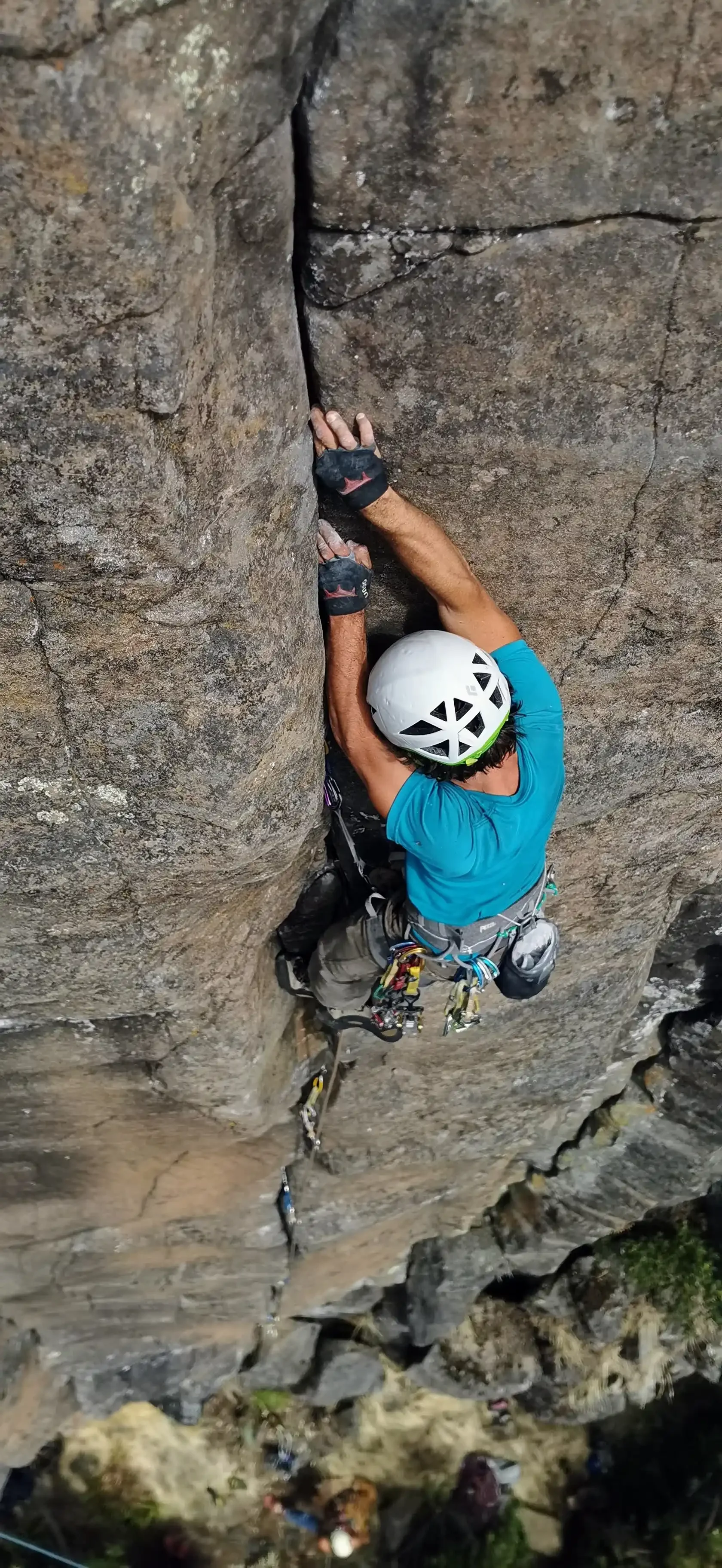
Jere jamming perfect finger crack - ©Daniel Seeliger
La Biblioteca is Patagonia's premier crack climbing crag, located in the Pampa Linda valley beneath Cerro Tronador. Formed by striking basalt columns, the crag offers perfectly parallel cracks ranging from thin fingers to sustained hands and offwidths, making it one of the best trad climbing destinations in Argentina. With around 120 single-pitch routes, grades range from 5.8 to 5.12b (French 5b to 7b), offering something for both experienced crack climbers and those looking to improve their trad skills.
While La Biblioteca can be visited as a day trip from Bariloche, it's well worth spending two or more days to enjoy the variety of climbing. The drive takes about 2 hours (70 km), including 40 km of dirt road. During the summer, the access road is one-way: uphill traffic from 10:00 am to 2:00 pm and downhill traffic from 4:00 pm to 7:00 pm. Outside those hours, traffic is allowed in both directions.
A car or bike is required to reach the crag from Pampa Linda. Camping at the base of the cliffs is not permitted, so climbers must stay at the authorized Camping Agreste or Vuriloche in Pampa Linda, the perfect base for exploring the area. Part of the crag stays shaded beneath the forest throughout the day, making it a comfortable option even during the summer.
Registration with Nahuel Huapi National Park is mandatory before climbing. If you need the guidebook or would like more information about the area, feel free to get in touch. To register click HERE
Don't Limit Yourself to Frey
As much as I love Frey, don't spend your entire trip there. Nahuel Huapi National Park has so much more to offer, from the other mountain huts and the spectacular Frey–Jakob traverse to alpine peaks, beautiful hiking trails, and world-class sport climbing around Bariloche. If you like to kayak, Nahuel Huapi lake is great for that during the days that are not windy.

Crack climbing in La Biblioteca, Pampa Linda, Bariloche Patagonia - ©John Collis
If you have a few extra days, consider exploring another part of the park. Renting a car opens up even more possibilities, including a visit to Pampa Linda, only 70 km away from Bariloche, where you can enjoy spectacular views of Mount Tronador and its glaciers. From there, you can also tackle a rewarding long day hike to Meiling Hut or La Mirada del Doctor, two of the area's most scenic viewpoints.
While you're there, I highly recommend spending a day or two at La Biblioteca.
And don't forget to enjoy Bariloche itself! The city is famous for having some of the best ice cream and chocolate in Argentina, so don't be shy about stocking up on calories before your hiking and climbing days.
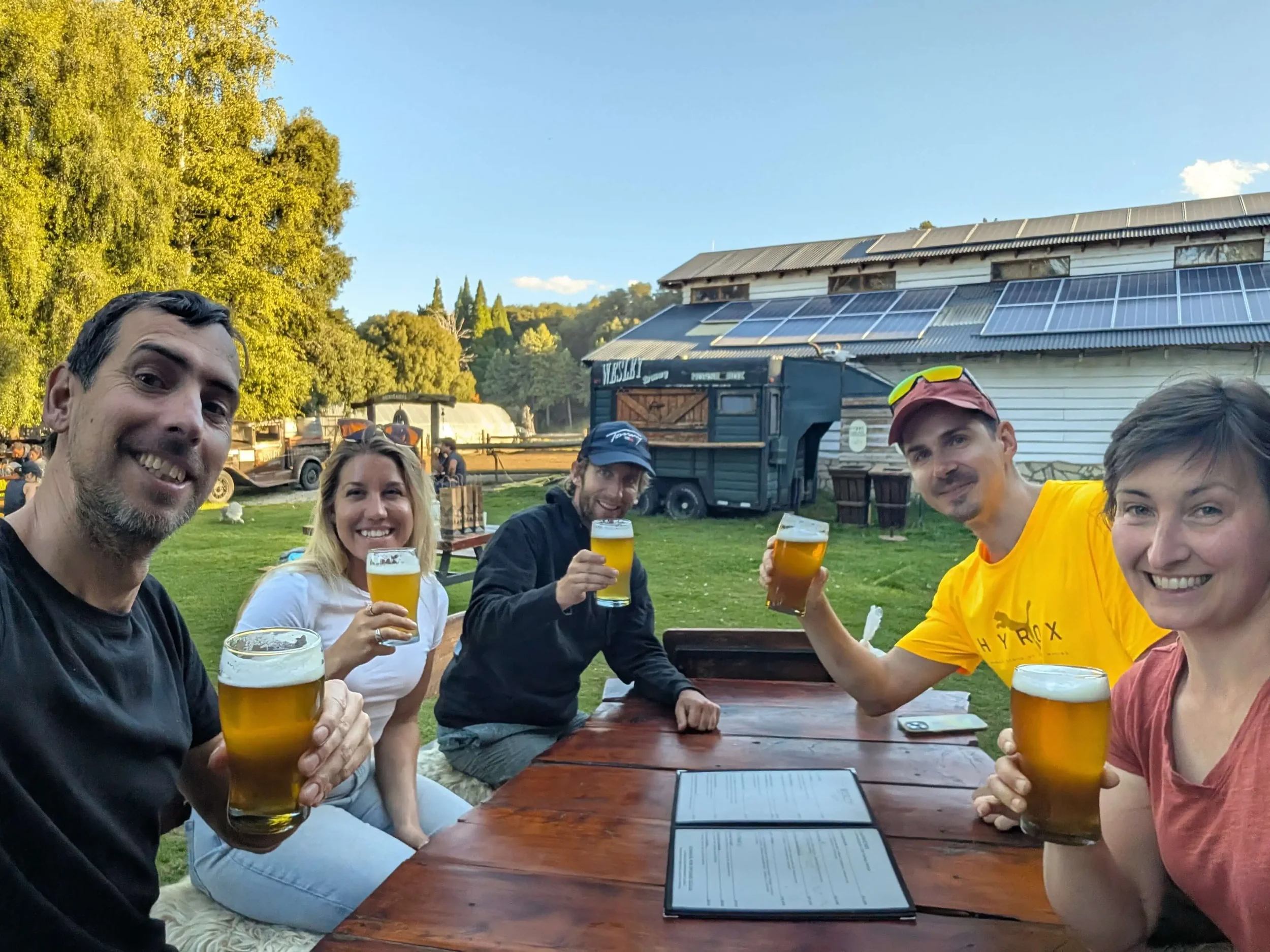
Post trip beer in Wesley - © Sebastian Cardeño
Bariloche is also home to dozens of excellent microbreweries. One of my personal favorites is Wesley, at Km 15.
They brew delicious beer, serve excellent food and wood-fired pizzas, and even have Jauja's famous ice cream on the menu.
The whole place is set on a beautiful farm where you'll often see peacocks, horses, and other friendly animals wandering around. It's the perfect place to relax after a few days in the mountains.
Final Thoughts
I've been lucky enough to climb in some of the world's most famous granite destinations, yet Frey remains one of the places I look forward to returning to every season.
What makes it special isn't just the quality of the climbing—it's the complete experience. You spend your days climbing beautiful granite spires above a turquoise lake, share stories with other climbers at the refuge in the evening, and wake up the next morning ready for another adventure. Few places combine such outstanding climbing with such an unforgettable mountain atmosphere.
Whether you're coming for a long weekend or planning to spend several weeks exploring the area, I hope this guide helps you make the most of your trip. Climb safely, respect the mountains, leave the place cleaner than you found it, and don't forget to look up from the rock every once in a while—the views are just as memorable as the climbing.
If you have questions while planning your trip, feel free to get in touch. I'm always happy to help fellow climbers make the most of their time in Frey.
See you in Frey.
Vianney Lhoumeau
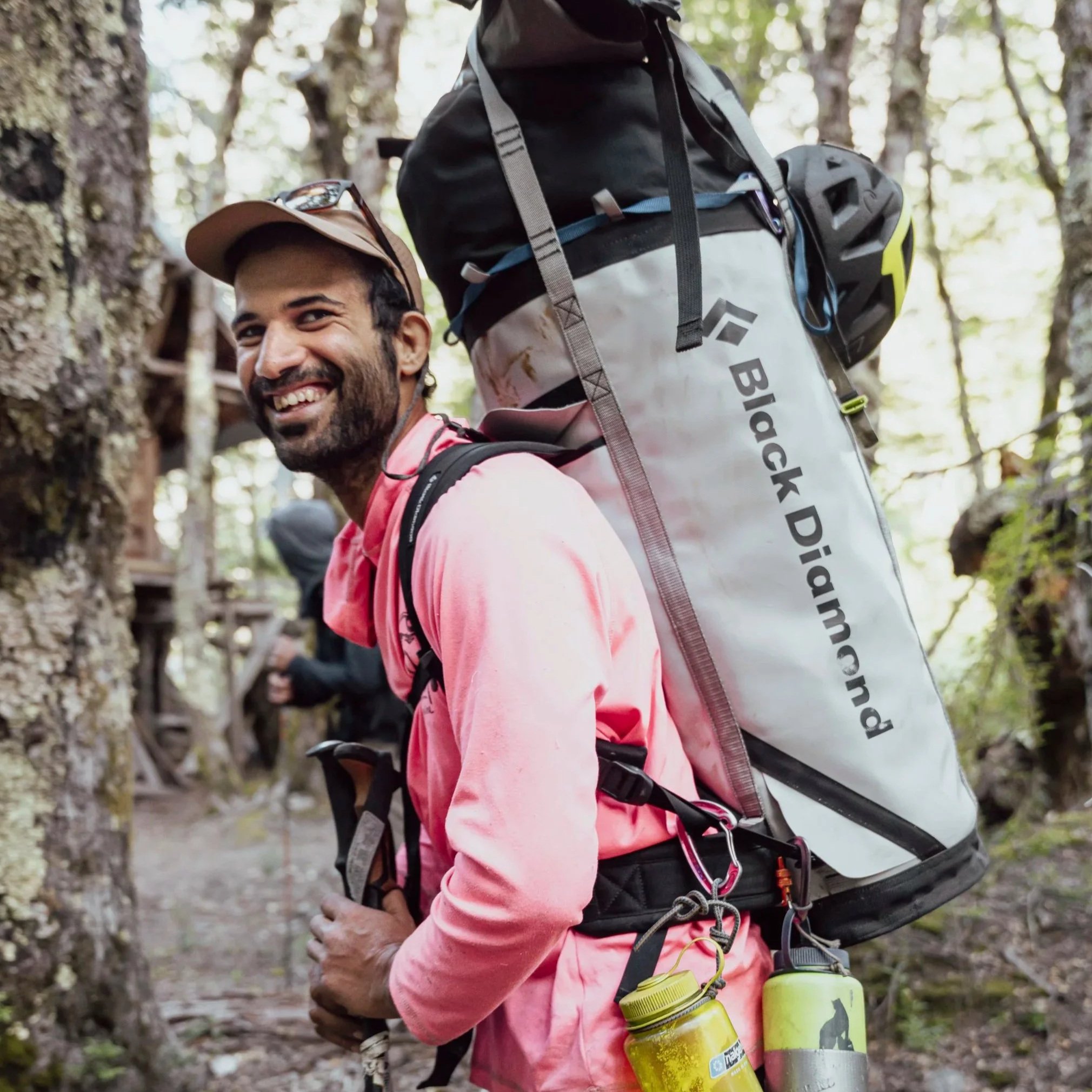
About the Author
Vianney Lhoumeau is an AAGM-certified climbing guide based in Bariloche and co-founder of Peak Patagonia, he guides climbers throughout Northern Patagonia and South America, including Frey and Cochamó. He has spent hundreds of days climbing in Refugio Frey and shares the local knowledge, practical tips, and firsthand experience he has gained over years of exploring the area.
Continue Reading :
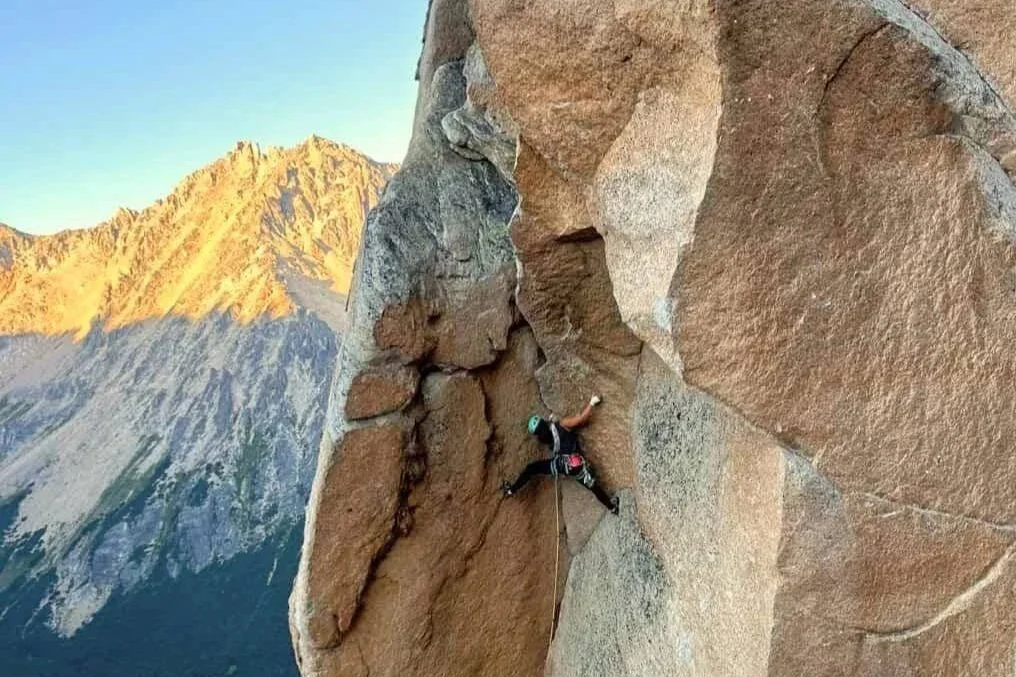

Every year people flock to the south to enjoy one of the most gorgeous mountainous regions on Earth. Here are some ideas for those looking for trips that are just a little more off the beaten path in Chilean and Argentinian Patagonia.