A Climber's Guide to Cochamó: Advice from Several Seasons in the Valley
Why is Cochamó called the Yosemite of South America?
People often refer to Cochamó as the "Yosemite of South America," and it's easy to see why. Towering granite walls rise directly from the valley floor, offering some of the longest and most impressive rock climbs on the continent. Like Yosemite, Cochamó has become a pilgrimage destination for climbers seeking adventure on world-class granite.
But the comparison only goes so far.
Yosemite is Yosemite, and Cochamó is Cochamó.
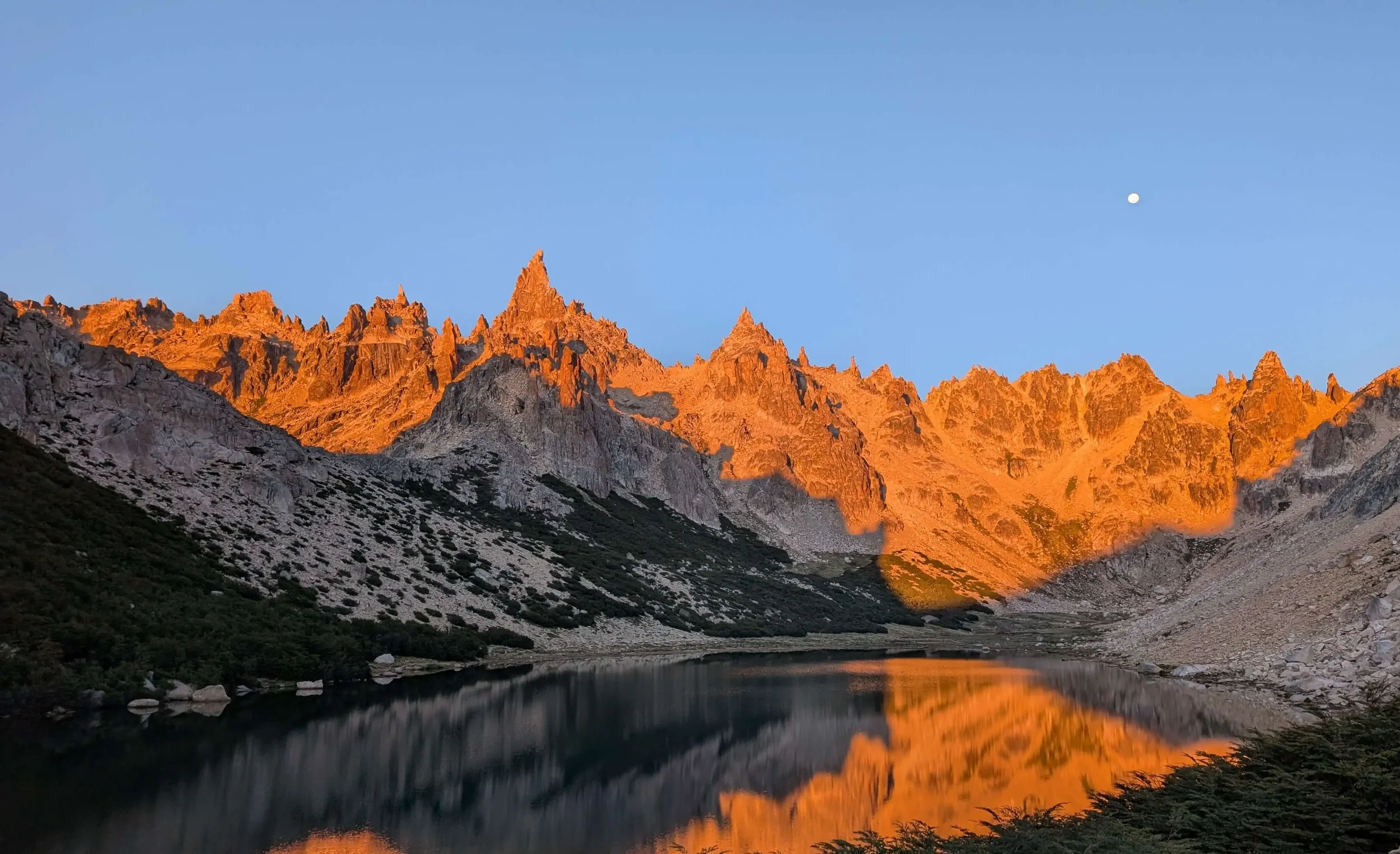
Views of the Milton Adams after the rain from La Junta Campground, Cochamó - ©Vianney Lhoumeau
What makes Cochamó special is not only the size of its walls, but the experience of reaching them. There are no roads into the valley, no traffic, and no crowds lining the base of the cliffs. To climb here, you hike through ancient forests, cross rivers, and carry what you need into a landscape that still feels wild and remote.
The granite may remind visitors of Yosemite, but the atmosphere is entirely its own. Patagonia's unpredictable weather, the deep green rainforest, the long approaches, and the sense of isolation create an adventure unlike anywhere else.
For us, the nickname is simply a useful reference point. It helps people imagine the scale of the valley. But once you arrive, you quickly realize that Cochamó does not need comparisons.
In fact, around the valley you'll sometimes hear the opposite:
"Yosemite is the Cochamó of North America."
How to plan your trip in Cochamó
The biggest mistake we see visitors make is not staying long enough. Cochamó is not a place to rush through. Between the weather, the approaches, the rest days by the river, and the sheer number of climbing objectives, the valley rewards those who give it time.
If possible, plan for at least two weeks, and a month is even better. Not only will you increase your chances of good climbing conditions, but you'll also have the opportunity to experience the rhythm of the valley. The best memories often come from the days between climbs: sharing stories around camp, exploring hidden corners of the forest, swimming in the river on a hot afternoon, or watching the clouds drift across the granite walls.
Horsepack
If your budget allows, consider hiring a horse to carry your gear and food to La Junta Campground. For around USD 50, horses can transport up to 60 kg, making it much easier to bring fresh food and a few comforts item for a longer stay in the valley. Hiking in with only a light backpack also lets you appreciate the ancient forest, rivers, and scenery that make the approach such a memorable part of the Cochamó experience.
The best is to pack 3 bags : 2 bags that weight 25 kg that goes on the sides, and 1 small of 10 kg that goes on the top.
To book a horse send a mail to arrierosvallecochamo@gmail.com
Campground
We recommend booking your stay in La Junta campground ( https://cochamo.com/ ), the people that manage the campground are really welcoming and being climbers they can help you with some route beta. The campground is beautifull and spacious, tents are not to close one from the other, they limit themself to 100 people in the campground when it could host twice as much so people are nt crushed on next to the other
Summer weather in Cochamó can range from warm, California-like sunshine to days of cold rain and storms rolling in from the Pacific. Having a well-organized camp can make a huge difference to your experience in the valley, especially during longer stays.
Bring a sturdy tent and a few tarps. Simple builder's tarps can be purchased inexpensively in Puerto Montt and work well for creating a dry, comfortable camp. We recommend setting up one tarp over your tent for extra protection and another to create a sheltered living area where you can cook, organize gear, or simply relax when the weather turns.
A bivy bag is nice for alpine bivy in the upper valley.
It's also worth bringing around 20 meters of lightweight cord. You'll use it for rigging tarps, drying clothes, and hanging food. When you're away climbing for the day, you'll want to make sure your food stash is protected from animals and the frequent Cochamó rain.
Rainy day in Cochamó - ©Nelosn Klein
La Junta Campground has a small organic vegetable garden, and depending on the season, fresh produce may be available for purchase. It's best not to rely on it, however, and to bring all of the food you'll need from town. Some campgrounds occasionally sell bread, eggs, or other basic supplies, but availability can be unpredictable and prices are generally higher than in town.
When packing for the hike in, keep delicate vegetables and eggs in your personal backpack rather than sending them with the horses. The ride can be rough, and fragile food doesn't always arrive in one piece. In fact, there is an unofficial Cochamó tradition of seeing who can bring the most eggs to La Junta while breaking the fewest. Some carefully pack them in their backpack, others carry them by hand, and a few climbers come up with surprisingly elaborate engineering solutions.
If you run low on supplies, a resupply trip is always possible during a rest day or a stretch of bad weather. The town of Cochamó is about 13 km from the trailhead. Leave camp early, hike out, and you'll usually have a good chance of hitchhiking into town once you reach the road. It's a long day, but sometimes a fresh load of food and a good meal in town are well worth the effort.
Climbing Gear
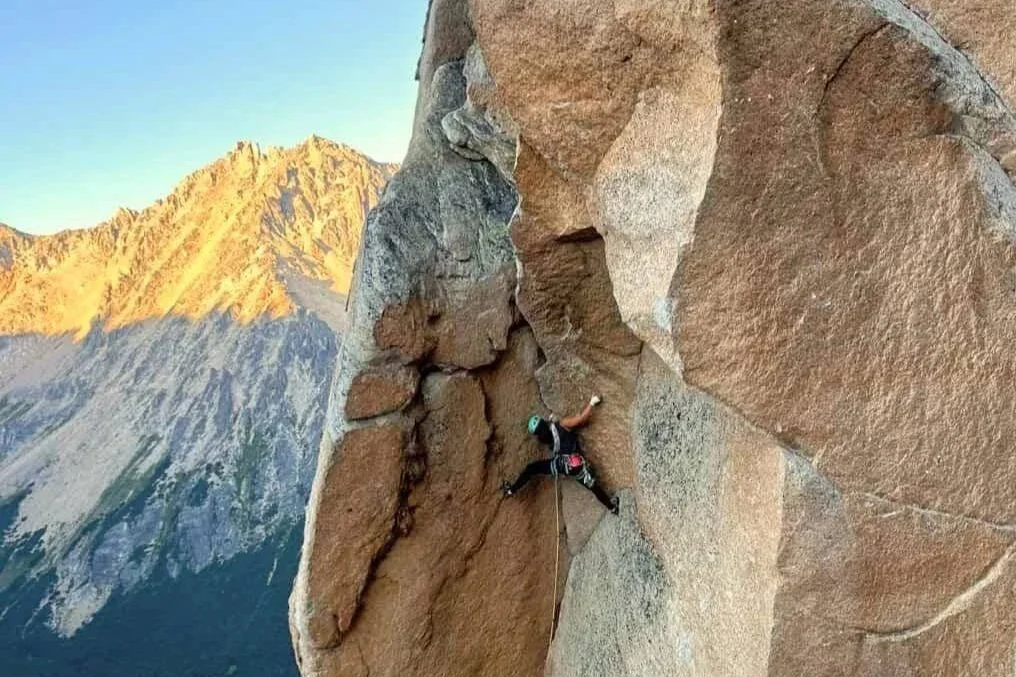
Jose Luis Hartmann AKA Chiquinho, Climbing is own route “El Velho Alerce” in Trinidad - Cochamó ©Vianney Lhoumeau
Ropes
The rappel ususaly are betweeen 45 and 60 meters, so you can choose between double or single rope with tag line as long as they let you do 60 meters rap. Being granite I would not go under 9.1 mm for single rope, to have that extra protection for the abrasive granite. Having dry ropes can help, as it’s quite commun to be rained on or have your ropes fall into a pool of water while rapeling. I have personaly have a preference for 60 meters single 9.4mm rope with a lightweight tag line, as the pitch are usually pretty straight forward and I tend to haul a small bag with food and water.
Rack
Caro Wilson choosing here gear for Camp Farm
If you want to be sure to be abble to climb any route : Double rack from #.2 to #3, Single offset from .2 to .75, Single from #4 to #6
I would definitly advice a rack of offset, Cochamó have its fare share of butt cracks that can be sketchy without offset. A few route can require triple .75, #1, #2 or #3. And / or double #4 and #5. Sometimes you can ask to fellow climbers that they lend you some gear.
A rack of offset nuts and micro offset / bras nuts is usefull.
13 Alpine Draws + 2 120cm slings with binners to extend gear (some pitch have 12 to 13 bolts to clip)
Other
Shoes : From technical friccion slabs to perfect crack through steaming corner and techy face climbs, you will use all the tricks in the book. A allraound shoe that can be good a steaming and edging would do the trick. It can be hot, especialy in the sun, your feet are gonna swell
Crack gloves
Nut tools
Approach shoes with good grip
Extra cordalette or tat to reinforce anchors
If you can, bring stainless steal quick links to renew some rap lines. Also you can donate stainless steel hangers and bolts for rebolting routes in Cochamó (you can give them to the people working in La Junta campground)
David climbing the fourth pitch of Camp Farm in Cochamó
Clothing
Good rain gear : Rain jacket and optional rain pants
Synthetic puffy : I usually bring 2, one lightweight for climbing and a extra one or vest that I combine with the other one at night or during cold days
Quick drying pants
Shorts for the approach and rest days
Sun hoody
Rubber boots or extra trail running shoes for rainy days and aproach to base camp (you get only one pair of shoes totally wet and keep one dry for climbing days)
Other
There is no search and rescue team in Cochamó, you depend on the other climbers, campsite workers and visitors of the valley for a rescue. So be well prepared for self rescue and bring good comunication equipment. Both satelital and VHF Radio. I advice strongly to get an international insurance that cover climbing and search and rescue.
Inreach
VHF Radio
Complete First aid Kit : Epipen, Samsplint… There is quite a lot of yellow Jacket (a kind of wasp) in the valley, some people are alergic, some are not and can get alergic after a few bites
Wagbags
Poop Tube if you plan on sleeping on the wall
Water filter : During the summer water flow can lower a lot, especialy in the Anfifteatro, a water filter can come handy
Dromedary 4 lts or more
Cash
Climbing the route Homosanta Cochamo - ©Vianney Lhoumeau
Best climbing routes in Cochamó
Moderate Route
Apnea : 6a+, 60m : Beautifull 2 pitches route next to the campgroung, good option for the first day, to get used to the style
El Filo La Aleta de Tiburon, 6b : Trad, 1500 ft (455 m), 10 pitches. I would advice climbing the first 6 pitch and call it a day. That would be 6a and around 260m
Onomatopeya 5.10 / 6a+ : Trad, 450 ft (136 m), 4 pitches
Sweet and Bitter Fruit 5.10c / 6b : Trad, 600 ft (182 m), 4 pitches
Spicy routes
No Hay Hoyes 5.11a / 6c : Trad, 650 ft (197 m), 6 pitches . Shorter but beautifull crack climb
E.Z. Does It 5.10+ / 6b+ Trad, 1400 ft (424 m), 9 pitches : Great way to get to the top of Trinidad!
Las Manos del Dia 5.11+ / 7a 1800 ft (545 m), 12 pitches : One of the best route on granite, a leasure for crack climbers. All the pitches are good less one 5.8 pitch. I would advice bringing 2x #5 and 1x #4 (the topo say 2x#4 but I am pretty sure it was the old camalot that were #4 and a half)
Al Centro y Adentro 5.11d / 7a 1500 ft (455 m) : If you like slab, bobmbey chimney, offwidth, dihedral and more slabs climb it!
Todo Cambia 5.11c / 6c+ 1500 ft (455 m), 9 pitches : Pure crack climbing! Epic endurance pitch 2. Bring 3x #.75 and 3x #3
Positive Affect 5.12b / 7b 3000 ft (909 m), 19 pitches : Do you like dihedrals? Or more exactly, do you like right facing dihedral for thousands of feets? Are you a teaming ninja? That route is for you! there is a huge ledge for a bivy on pitch 6. Poop tube or wagbag mandatory.
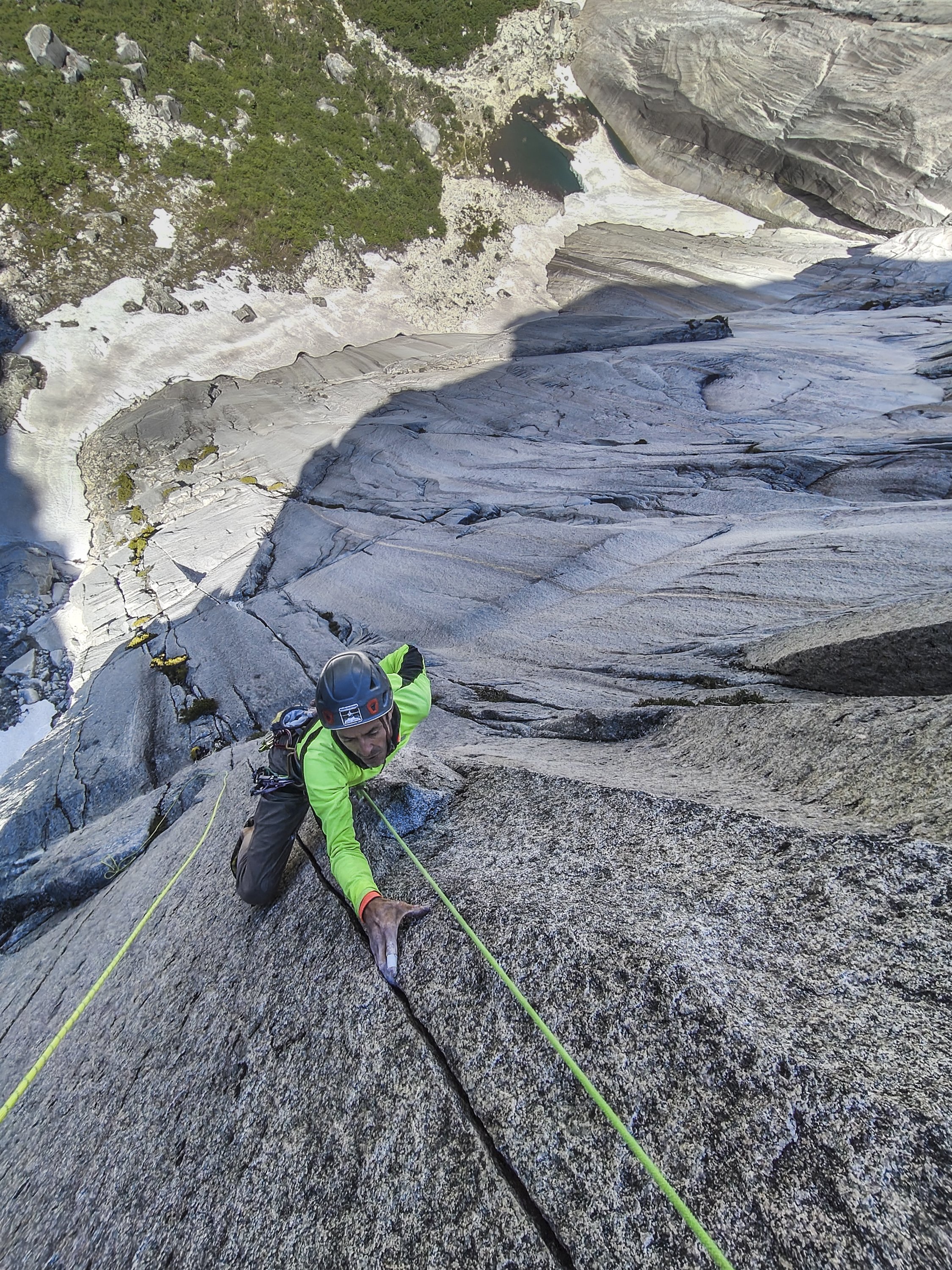
Nelson Klein climbing Excelente mi teniente in Anfiteatro ©Vianney Lhoumeau