My 25 Favorite Climbs in Refugio Frey
Written by Vianney Lhoumeau
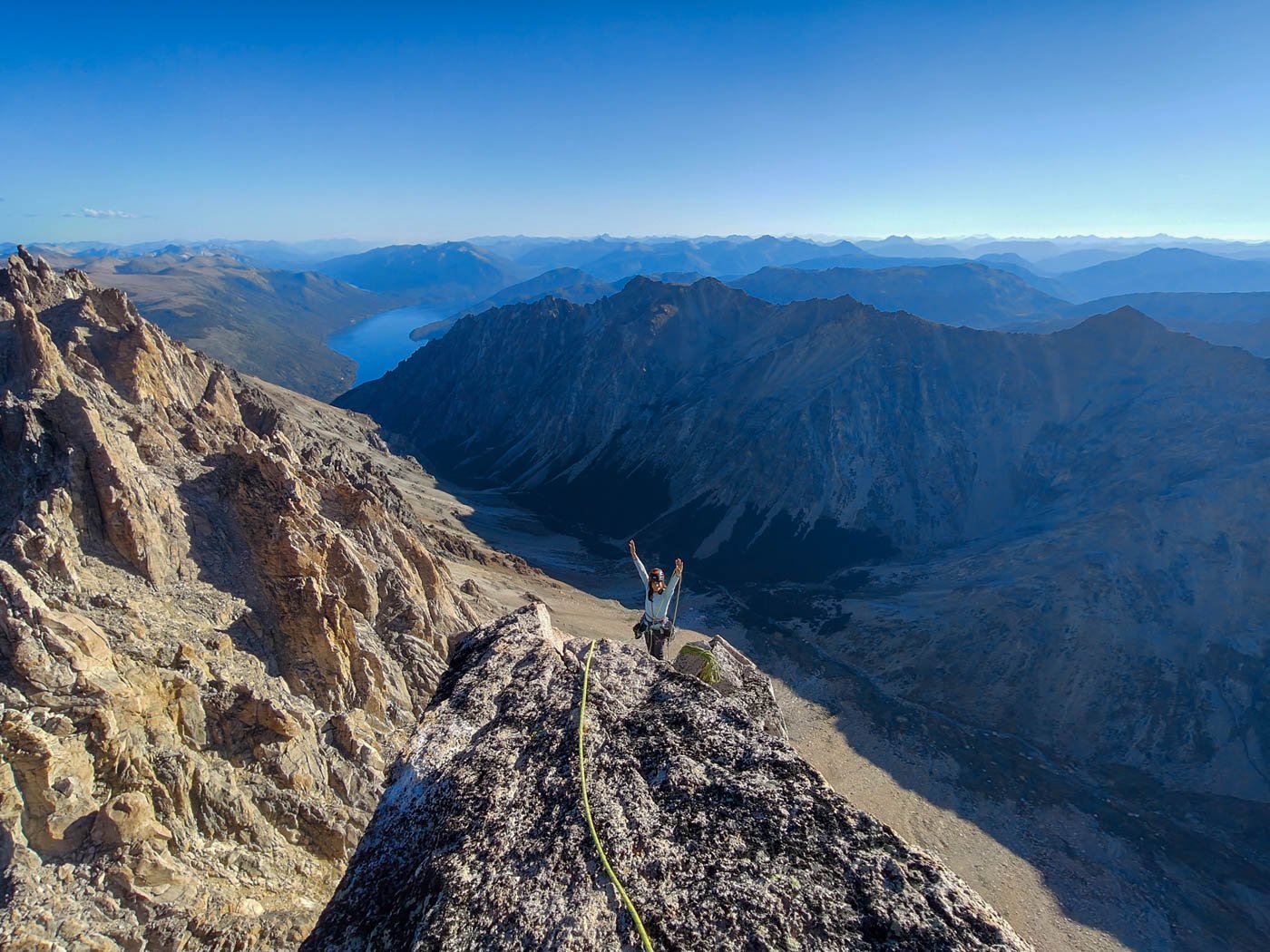
One of the best view in Northern Patagonia from the top of Torre Principal! © Vianney Lhoumeau
These are my favorite routes in Frey, covering grades from 5.9 to 5.12. Some climbers will probably disagree with parts of this list—and that's perfectly fine. Frey has hundreds of routes, and there are plenty of classics that could easily have earned a place here.
I've climbed every route featured in this guide while exploring Frey over many seasons, as a local climbing guide based in Bariloche. These recommendations come from firsthand experience.
After spending years climbing in Frey, I've learned to appreciate both its world-class crack climbing and its technical face climbing, even if my heart still belongs to cracks. This list reflects not only what I think are the best individual routes, but also the combinations that make for the best climbing days.
Frey isn't famous for long routes. Instead, it offers an incredible concentration of high-quality pitches. Sometimes the best experience isn't climbing a single route, but linking together the best pitches from several routes or climbing two shorter routes in the same day. Throughout this guide, I'll share a few of my favorite link-ups and combinations.
But Frey is about much more than the climbing itself. It's the evenings at the hut after a long day on the rock, the quiet walks through the lenga forest, drinking mate next to the lakes, and the calm that settles over the valley once the day-trippers have left. For those who take the time to slow down and enjoy it, Frey is much more than a climbing destination—it's a place you'll want to return to again and again.
For detailed topos and route information, I highly recommend Rolando Garibotti's Frey – Guía de Escalada. It's the definitive guidebook to the area and an essential companion for anyone planning to climb in Frey. More informations HERE.
Planning your first trip to Frey? Before choosing your objectives, I recommend reading my Climber's Guide to Frey, where you'll find everything you need to know about the approach, weather, gear, the hut, camping, route registration, climbing logistics, and plenty of local tips to help you make the most of your trip.
If you'd rather explore Frey with a local guide, aren't yet confident placing traditional protection, or simply want to improve your crack climbing and multi-pitch skills, I'd be happy to help. I offer guided climbing days, multi-day trips, and trad climbing courses tailored to your experience, whether it's your first visit to Patagonia or you're looking to tackle some of its biggest classics.
Aguja Frey
The birthplace of climbing in Frey, Aguja Frey is home to some of the area's oldest routes and remains one of the best places to experience classic Frey’s granite. From friendly moderates to sustained technical pitches, every route here finishes on a summit overlooking Laguna Toncek just a few minutes away from the hut.
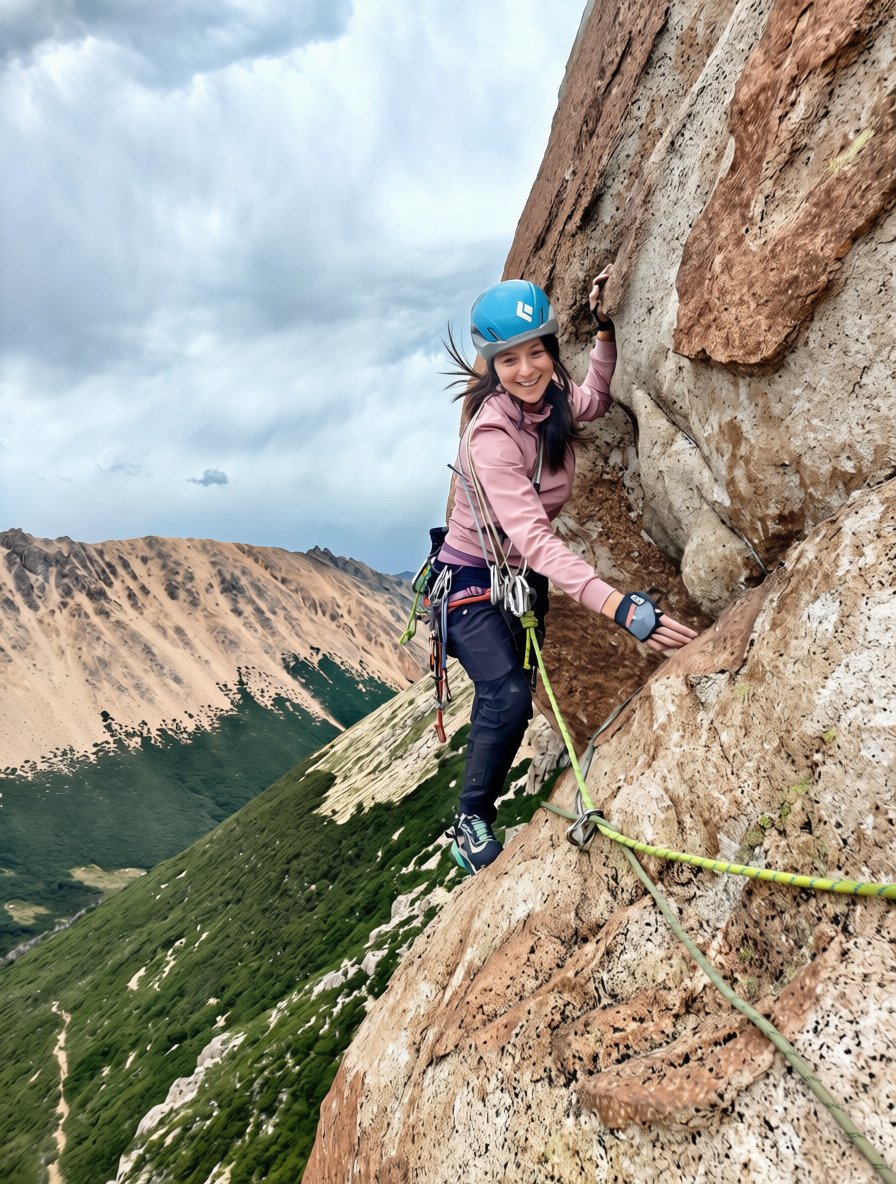
Agus (one of Frey hut-keepers) traversing on the third pitch of Sifuente-Monti © Vianney Lhoumeau
Sifuente Monti
Grade: 5.9 (YDS) / 5+ (French)
Length: 91 m (300 ft)
Pitches: 4
Orientation : North
Why climb it: One of Frey's best moderate crack climbs 10 minutes away from the hut.
Best for: Climbers looking for a classic introduction to Frey's crack climbing.
The route starts with an easy warm-up in a right-facing corner before arriving at the business: a long and sustained second pitch featuring excellent hand cracks and enjoyable corner climbing. At the fork, take the left-hand variation for the classic 5.9 line, then continue past a huge detached flake to a 2 bolts belay.
The third pitch changes character, with a nice crack protected with old pitons (don’t trust them 100%, double up placing your own gear) leading to an exposed traverse beneath a roof before a comfortable belay. The final pitch is the highlight of the route—a stunning crack combining secure jams with huge jugs before a fun and committing move onto the summit.
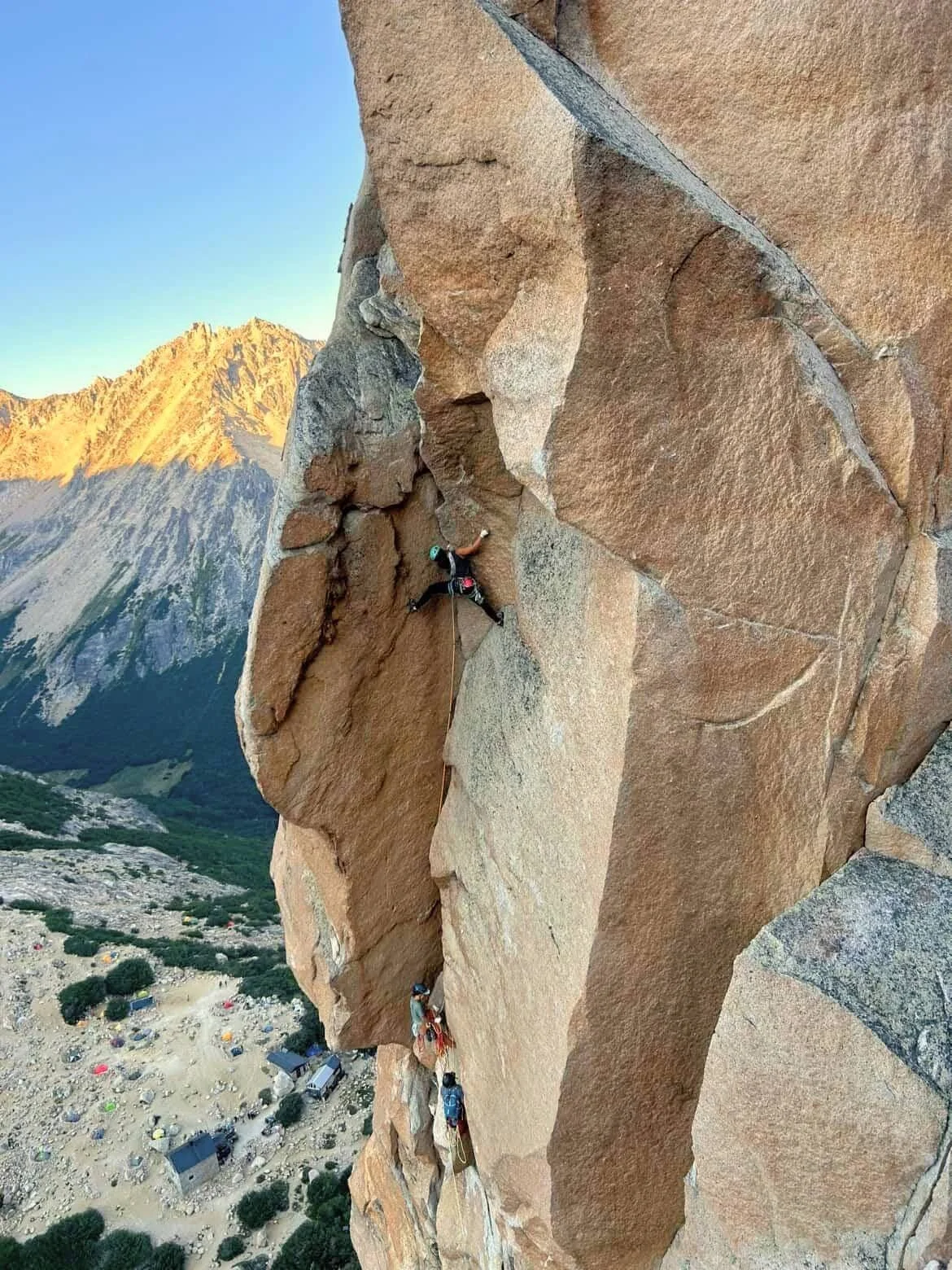
Abril Fontana climbing the “hero pitch” of Lost Finger, a steep thin-hand crack! © Abril Fontana
Lost Finger
Grade: 5.10c (YDS) / 6b (French)
Length: 91 m (300 ft)
Pitches: 3
Orientation : West
Why climb it: One of the best crack routes close to the hut, with an unforgettable final pitch.
Best for: Climbers comfortable on sustained cracks.
The opening pitch gets straight to the point with enjoyable finger locks and a short bulge before easing into more relaxed crack climbing. The second pitch is more adventurous, beginning with an exposed traverse to the right before continuing up and left. Be sure to use long slings to reduce rope drag.
The final pitch is worth the approach on its own. Sustained thin hands lead up a slightly overhanging splitter crack before a satisfying pull over the lip gives way to easier climbing and the rappel anchor.
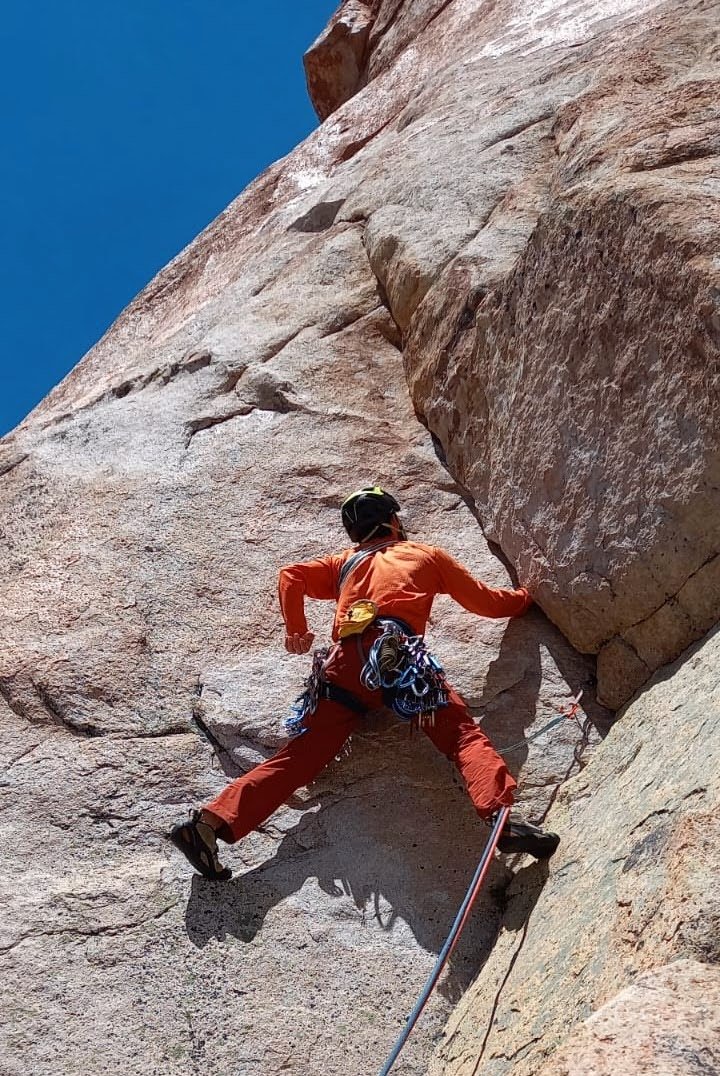
Fede ready to cruise the first pitch of Trilogia © Abril Fontana
Trilogía
Grade: 5.10c/d (YDS) / 6b+ (French)
Length: 76 m (250 ft)
Pitches: 3
Orientation : North
Why climb it: A brilliant link-up combining the best pitches of three different routes.
Best for: Climbers looking for varied, adventurous climbing with a little route-finding.
One of the most creative link-ups in Frey, Trilogía combines the best pitches of three different routes into a sustained and varied climb. Start with the excellent first pitch of Lost Finger, then continue onto the second pitch of Peor es Casarse, where careful gear management is rewarded through a thin, airy section with some runout climbing.
The final pitch is the highlight, weaving through an incredible crack system before finishing with technical slab climbing. If you're feeling strong, tackle the direct roof; otherwise, the easier crack variation on the left is still excellent.
A standard rack is sufficient, but make sure to save a #0.75 Camalot for the upper part of the second pitch, where the protection becomes more spaced.
Aguja M2
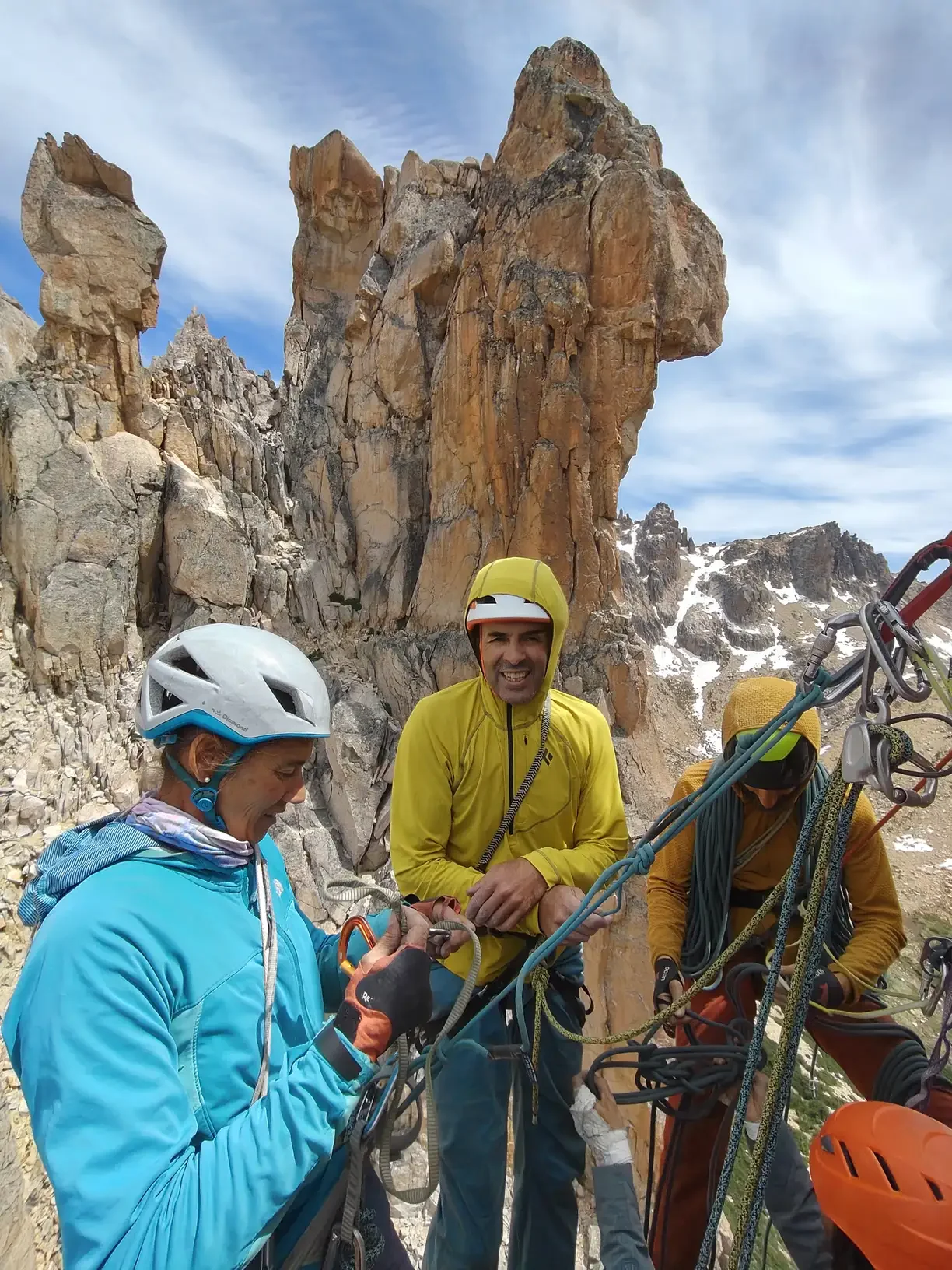
A guides' day off. Somehow we all still ended up in the office on the top of Aguja M2 © Vianney Lhoumeau
Although smaller than many of Frey's famous summits, Aguja M2 packs an impressive amount of quality climbing into a compact wall. If you're looking for excellent single-pitch crack climbing or a shorter day without sacrificing quality, this is one of the best places in the cirque.
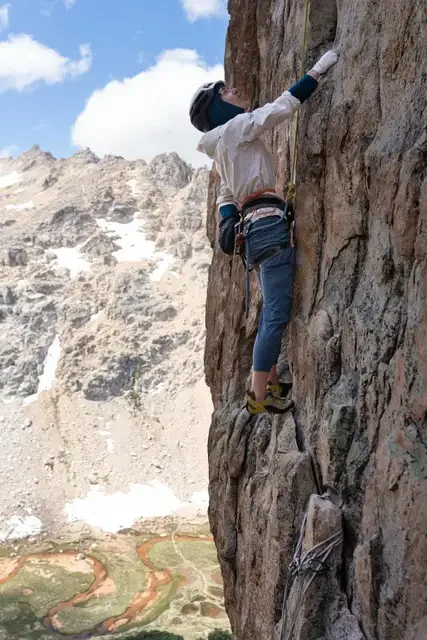
Coral climbing the airy opening pitch of Del Diedro on Aguja M2. © Nelson Klein
Del Diedro
Grade: 5.9 (YDS) / 5c (French)
Length: 27 m (90 ft)
Pitches: 1
Orientation : West - get some sun in the afternoon. It’s usually windy at the base.
Why climb it: One of Frey's finest moderate single-pitch cracks.
Best for: Climbers looking for a classic warm-up or an introduction to Frey's trad climbing.
A short but outstanding corner climb on flawless granite. The opening moves are slightly bold before the route settles into beautiful, sustained dihedral climbing with perfect jams and elegant stemming.
Despite its modest length, Del Diedro is one of the highest-quality moderate pitches in Frey and well worth seeking out.
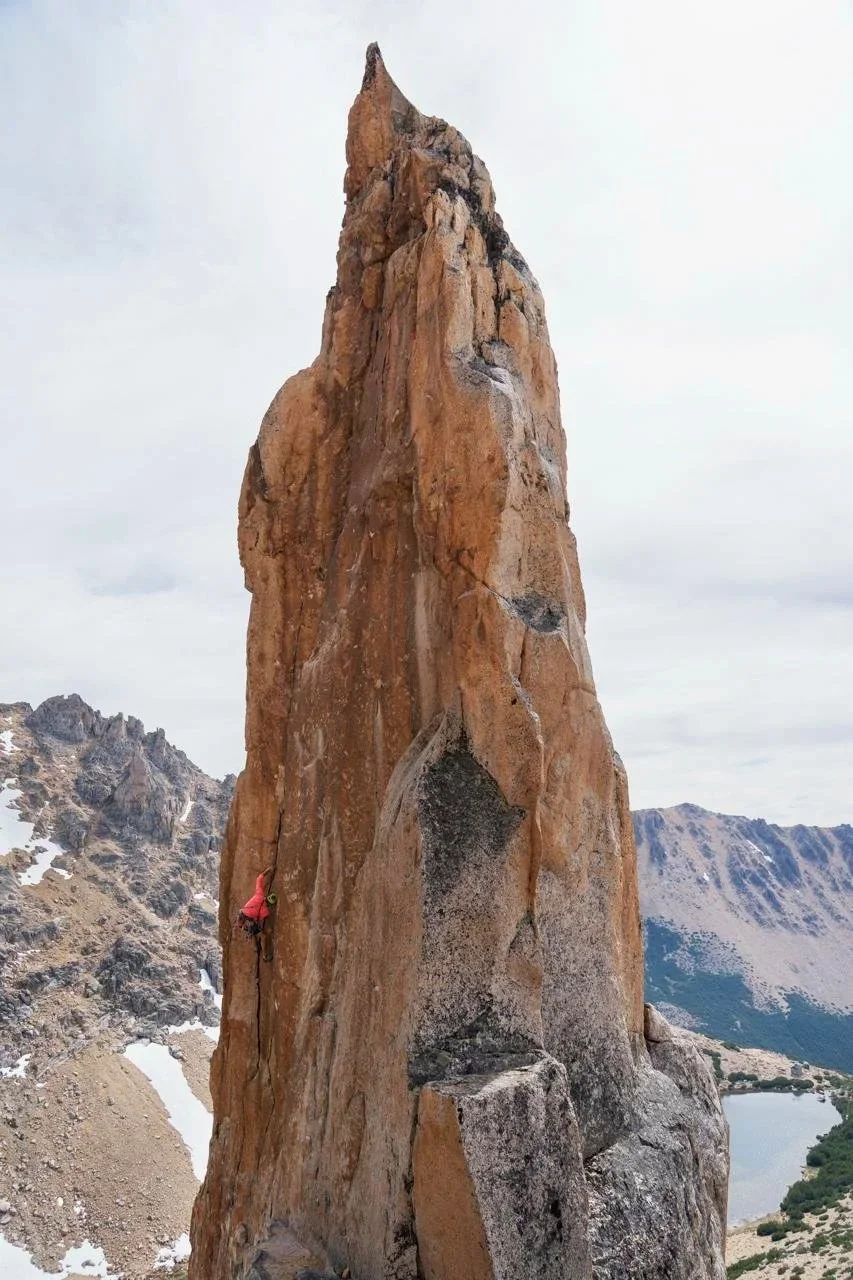
Vianney climbing the hand crack of Socotroco © Nelson Klein
Socotroco
Grade: 5.10c (YDS) / 6b+ (French)
Length: 25 m (82 ft)
Pitches: 1
Orientation : West - get some sun in the afternoon. It’s usually windy at the base.
Why climb it: Powerful crack climbing with just enough face climbing to keep things interesting.
Best for: Advanced climbers wanting a hard single pitch or moderate climbers wanting a top-rope project.
A fun and challenging single pitch that's well worth combining with Del Diedro. The climbing is mostly crack climbing, with a few technical face moves protected by bolts and pitons on exceptionally good rock.
If you're not comfortable leading the grade, it's easy to set up a top rope from the top of Del Diedro, making it an excellent way to experience one of Frey's best hard single pitches.
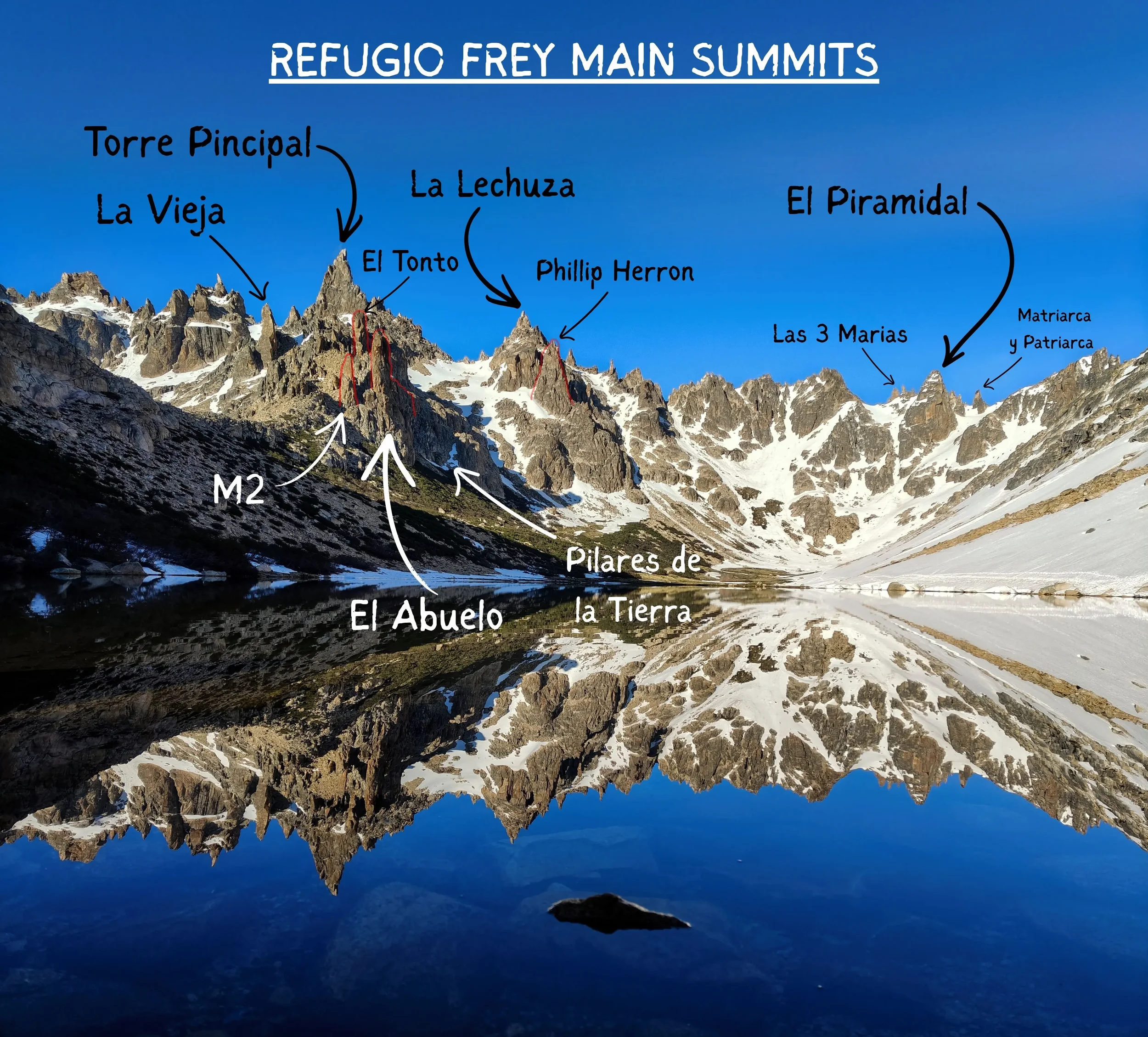
Aguja El Abuelo
Home to some of Frey’s best rock, offers everything from outstanding moderate routes to some of the basin's hardest pitches. If you want a short approach and great climbing, this is a summit you won't want to miss. The north face of the Abuelo have some really good 5.12/+ single pitch.
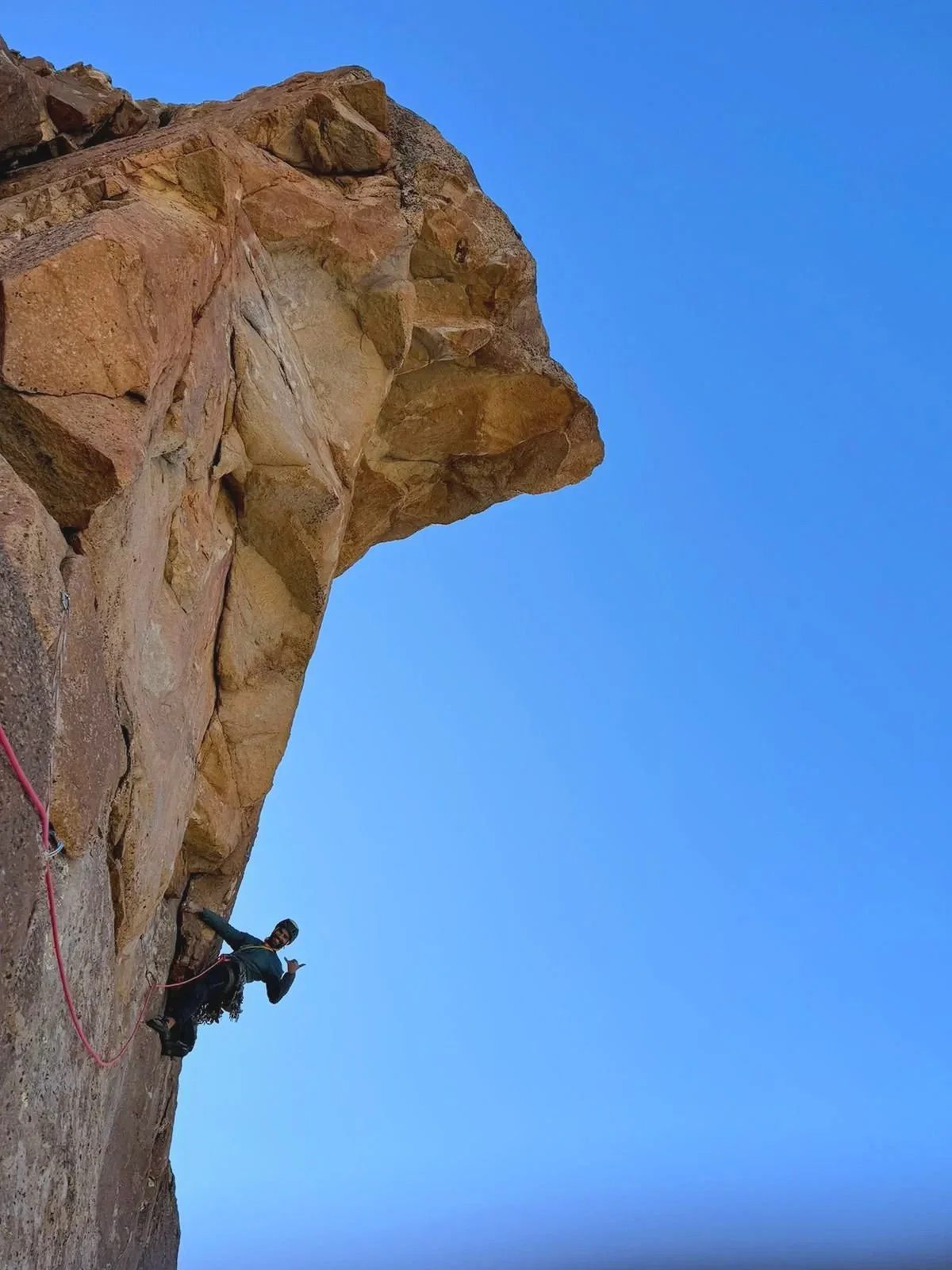
Vianney on the second pitch of the Link-Up ©Juli Lopez
Aprendiendo a Volar → Conflicto de Generaciones → Anónimo Yankee
Grade: 5.11a (YDS) / 6c (French)
Length: 70 m (230 ft)
Pitches: 2–3
Orientation : From SE to N
Why climb it: Three outstanding crack pitches linked into one unforgettable climb.
Best for: Climbers who love sustained cracks and logical link-ups.
If you love crack climbing, this link-up is hard to beat.
Start with the first pitch of Aprendiendo a Volar to the bolted anchor, then traverse right beneath the flakes to the roof that leads into the sustained 6c finger crack of Conflicto de Generaciones. Finish by traversing right into the perfect splitter crack of Anónimo Yankee.
One of my favorite combinations in Frey, the three pitches flow together so naturally that they feel like a single route.
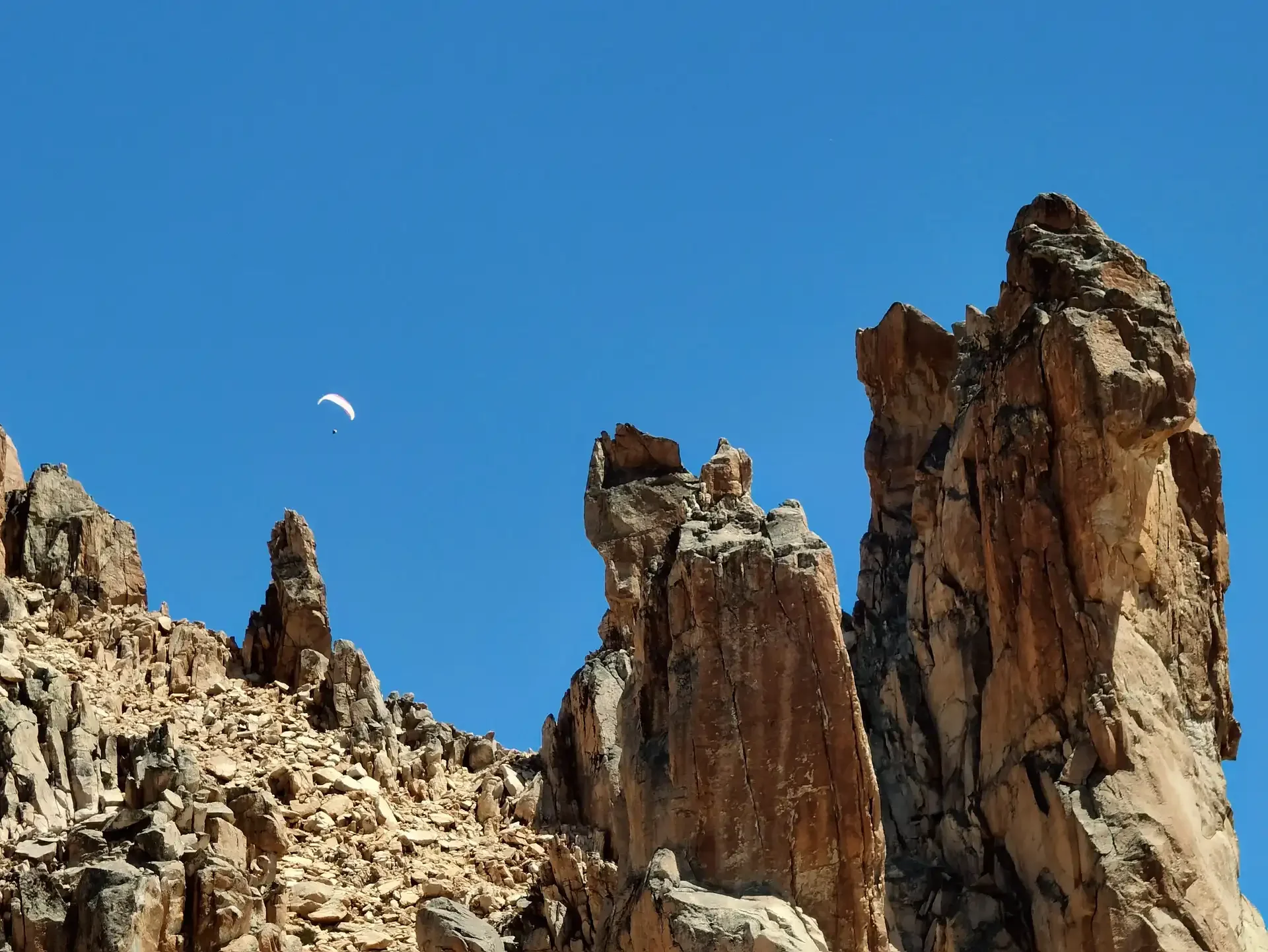
Para-glider “aprendiendo a volar” over Abuelo and M2 spires © Vianney Lhoumeau
Aguja El Tonto
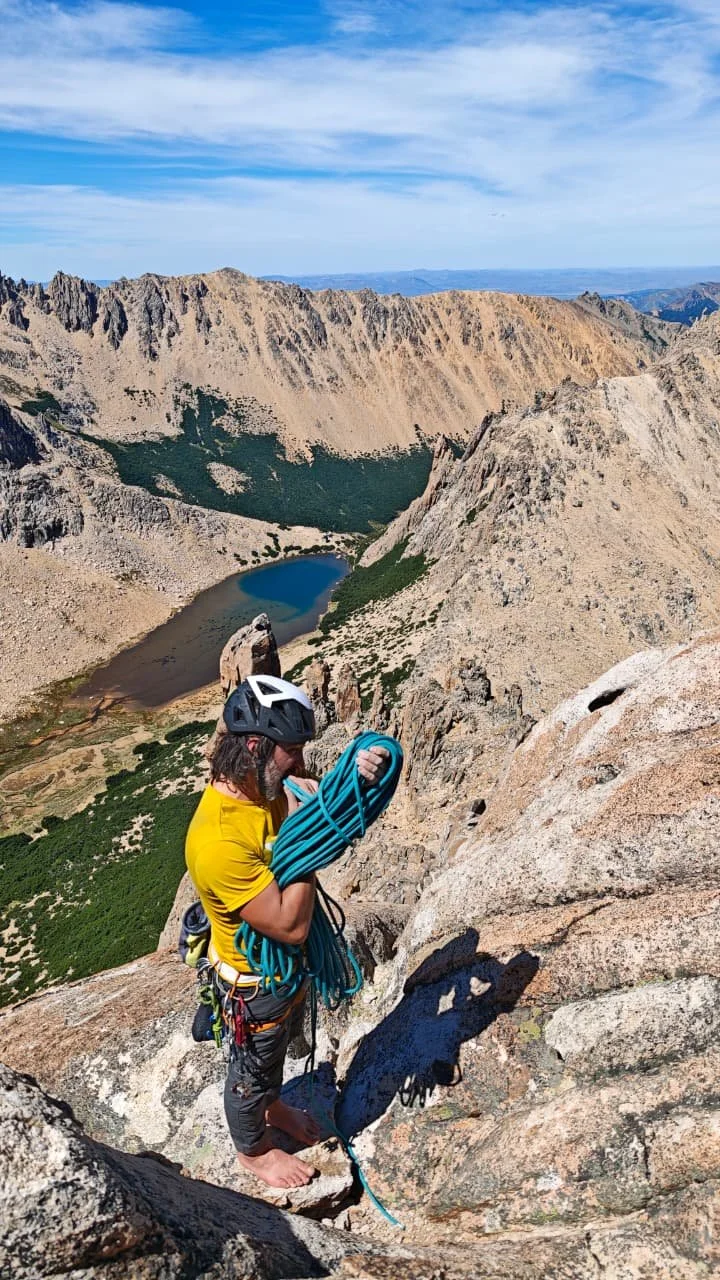
Juan, getting ready to go down, on the summit of El Tonto © Abril Fontana
Despite its modest size, El Tonto packs an incredible amount of quality climbing into a compact summit. Its routes combine steep crack climbing, delicate slabs, overhanging huecos and airy summits, making it one of the most rewarding places in Frey to spend a day.
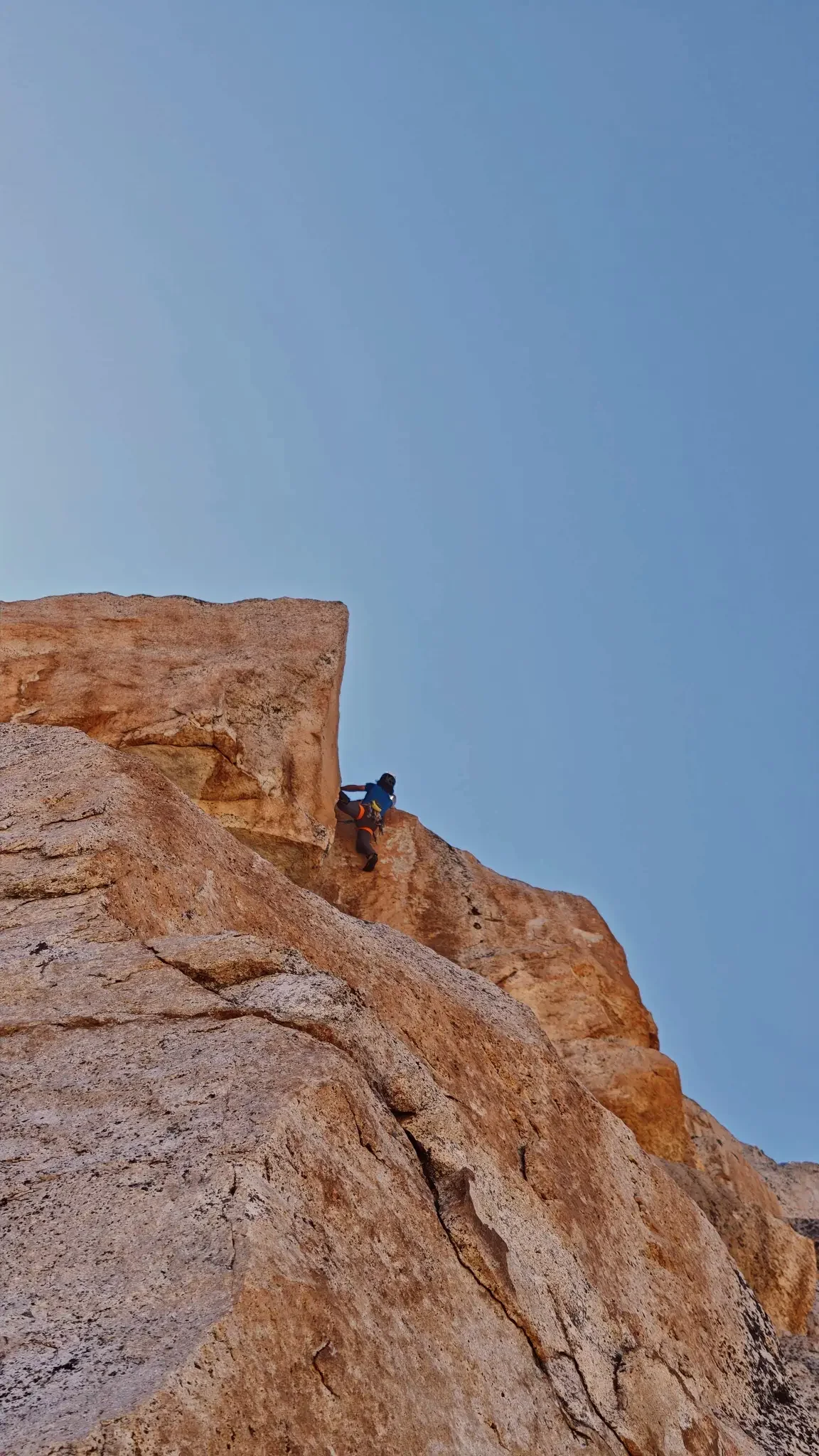
Nothing as good as climbing the golden Granite of Pilar de meteritos © Abril Fontana
El Pilar de los Meteoritos
Grade: 5.10b (YDS) / 6a+ (French)
Length: 48 m (160 ft)
Pitches: 2
Orientation : North
Why climb it: A unique combination of steep crack climbing and delicate slab climbing on one of Frey's most distinctive summits.
Best for: Climbers looking for varied movement and climbing in the sun.
One of the most popular routes on El Tonto, El Pilar de los Meteoritos begins with an exciting crack system leading through an airy traverse to an exposed belay. Although some guidebooks suggest a harder grade, I think the first pitch is closer to 5.10b than 5.10c/d.
The second pitch is unlike anything else in Frey, following delicate slab climbing protected by small gear, slings around tiny rock bridges, and the occasional bolt. The summit offers beautiful views over both valleys.
The route starts from a belay ledge reached by either a fun bolted 5.9 slab on the right or a steeper 5.10b face climb on the left. The descent is by rappelling the route.
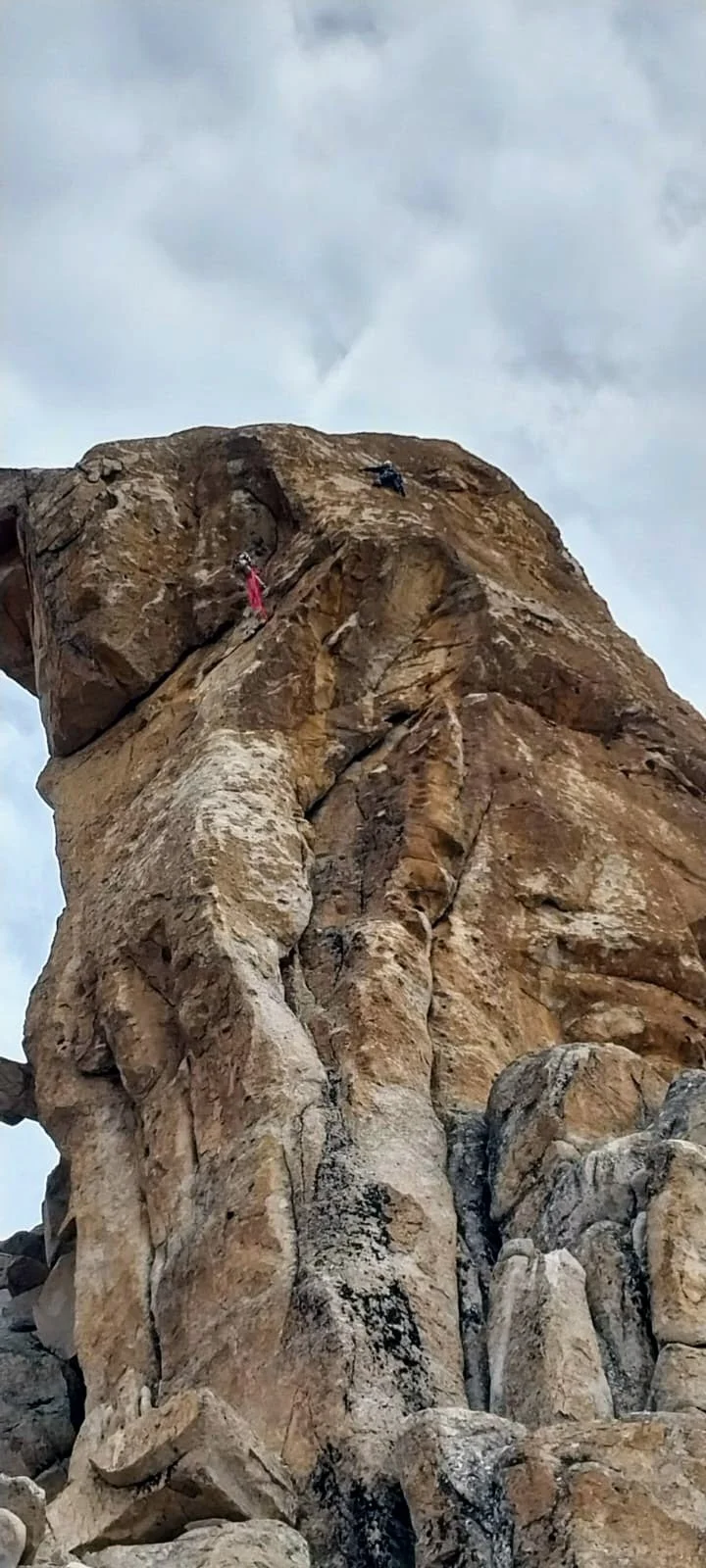
The East face of El Tonto © Abril Fontana
Baby Boom
Grade: 5.10b/c (YDS) / 6b (French)
Length: 60 m (197 ft)
Pitches: 2
Orientation : East - get afternoon shade
Why climb it: A short but spectacular route with athletic crack climbing, airy exposure, and a beautiful summit.
Best for: Climbers wanting a full-value moderate adventure in just two pitches.
A stunning two-pitch climb that feels much bigger than its 60 meters. The first pitch is the physical crux, following a crack system until a roof forces you into an adjacent crack before finishing with delicate face climbing protected by just two bolts.
The second pitch is technically easier but considerably more exposed, with airy climbing up and left from the belay before an exciting move over the lip leads to an easy stroll onto the summit.
I recommend climbing the second pitch of Lobo Blanco (5.10a / 6a) instead of the original second pitch of Baby Boom. Although slightly steeper, it's better protected and offers much high-quality climbing.
One of the best moderate adventures in Frey, Baby Boom is an excellent choice when you're looking for a memorable summit without committing to a long route.
Aguja La Vieja
Aguja La Vieja offers everything from pure cracks multi-pitch to elegant face climbing. The routes here are relatively short but packed with quality, making them easy to combine (either if you are chasing the sun or the shade) into an outstanding day.
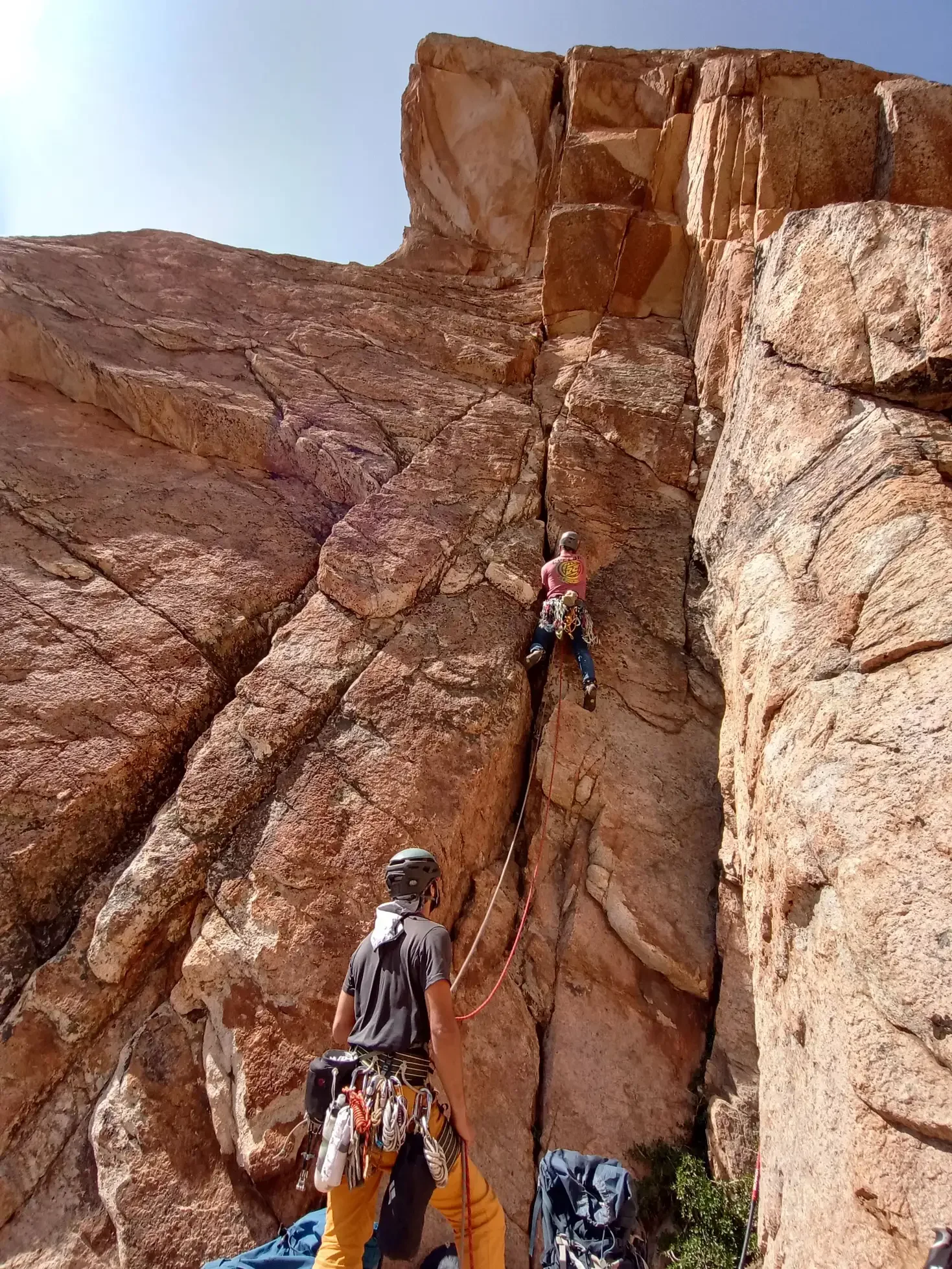
Nathan on the first Pitch of Suraficana, the second pitch is visible, it is the upper roof on the left. © Belén Prados
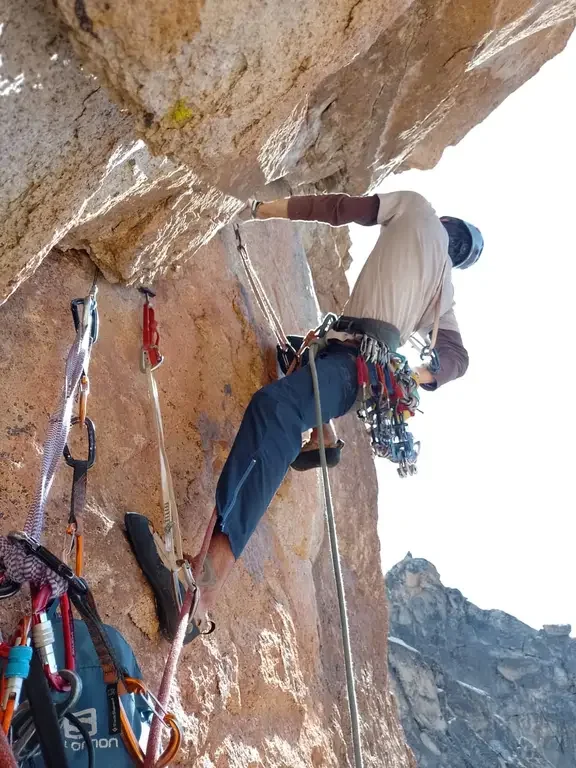
Fermín pulling into the pumpy roof traverse on SurAfricana.. © Abril Fontana
SurAfricana
Grade: 5.10c (YDS) / 6b (French)
Length: 70 m (230 ft)
Pitches: 3
Orientation : NE
Why climb it: A varied climb featuring cracks, roofs, and one of the best summits in Frey.
Best for: Climbers looking for an adventurous full trad multi-pitch with a bit of everything.
A fun and varied climb that starts with enjoyable crack climbing before reaching the route's highlight: a pumpy second pitch featuring an athletic roof followed by an offwidth crack.
If you're not comfortable in offwidths, bring a #4 or #5 Camalot. The wide section can also be supplemented with smaller gear placed in the crack beside the offwidth.
The summit is outstanding, with panoramic views over the Campanile Valley and Torre Principal. Descend by rappelling the backside of the spire with a 70 m rope. Be careful—the rappels are nearly 35 m long.
On hot summer days, I like climbing SurAfricana in the morning while it's still in the shade, then finishing the day with Aprendiendo a Volar or single pitch on M2 once the sun has moved off the wall. It's one of my favorite climbing days in Frey.
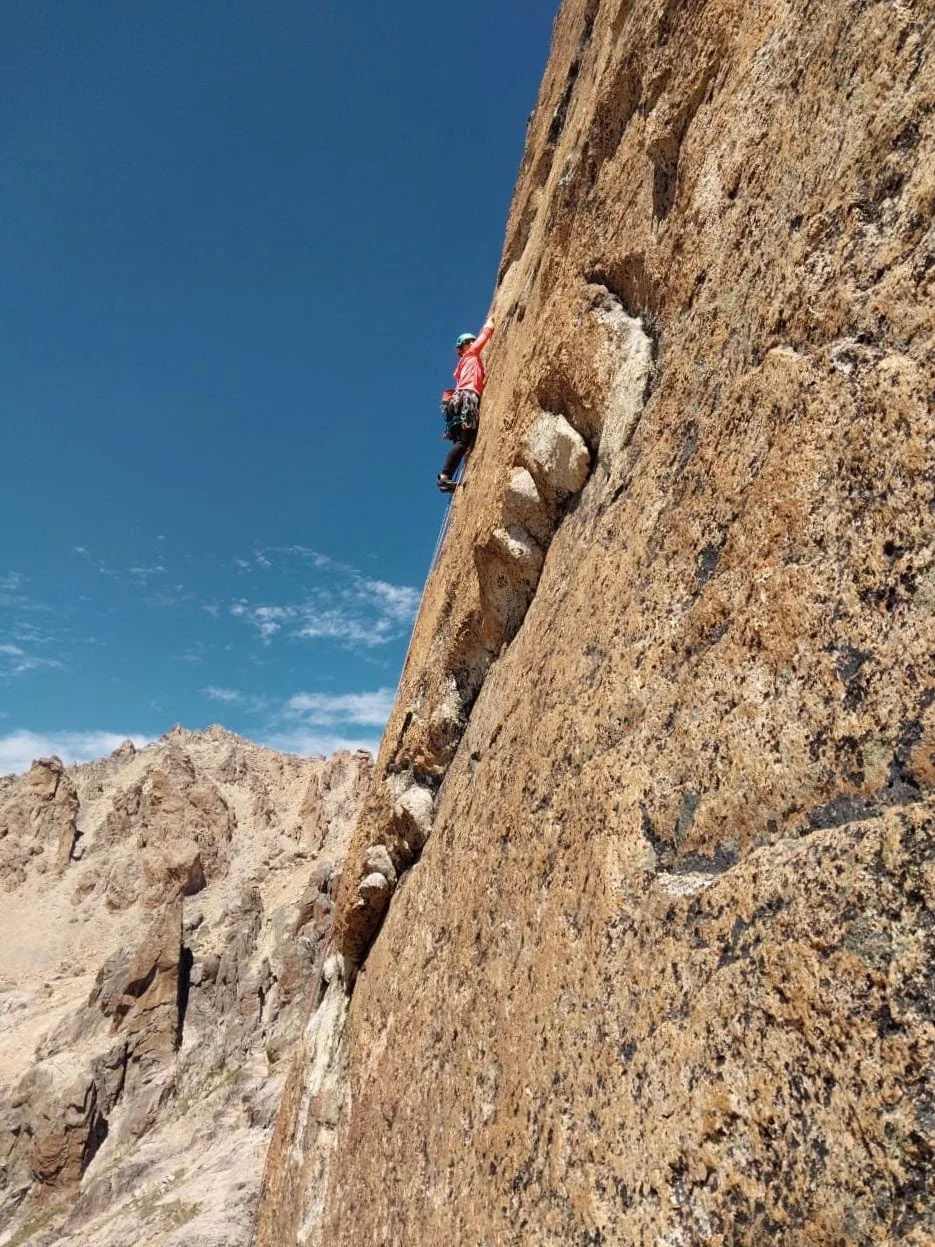
Dancing across the tiny footholds on the second pitch of Julie Pot de Colle. © Abril Fontana
Julie Pot de Colle
Grade: 5.10c (YDS) / 6b+ (French)
Length: 91 m (300 ft)
Pitches: 3
Why climb it: One of Frey's finest face climbs, following an elegant line across Aguja La Vieja.
Best for: Climbers who enjoy technical face climbing with occasional gear placements.
Orientation : East - get afternoon shade
Julie Pot de Colle is defined more by delicate face climbing than continuous crack systems. The route follows an elegant line across the face of Aguja La Vieja, linking technical sequences on flawless granite with just enough gear placements to keep things interesting.
I recommend climbing it in three pitches, as this keeps rope drag to a minimum. Expect a few runout sections around 5.9, although patient route reading often reveals opportunities to place small cams where you need them.
The descent is straightforward. You can rappel the face with a single 60 m rope by combining the anchors of Del Frente and Julie Pot de Colle, or descend the backside of Aguja La Vieja.
Torre Principal
Standing at 2,409 m (7,904 ft), Torre Principal is the highest summit in Frey and the mountain that defines the skyline above Refugio Frey. Visible from Bariloche's airport road alongside Campanile, it has become one of the most recognizable peaks in Nahuel Huapi National Park. First climbed in 1943, Torre Principal is home to some of the area's longest and most iconic routes, ranging from historic classics to sustained crack testpieces and technical face climbs. If you're spending several days in Frey, climbing at least one route on Torre Principal should be at the top of your list.
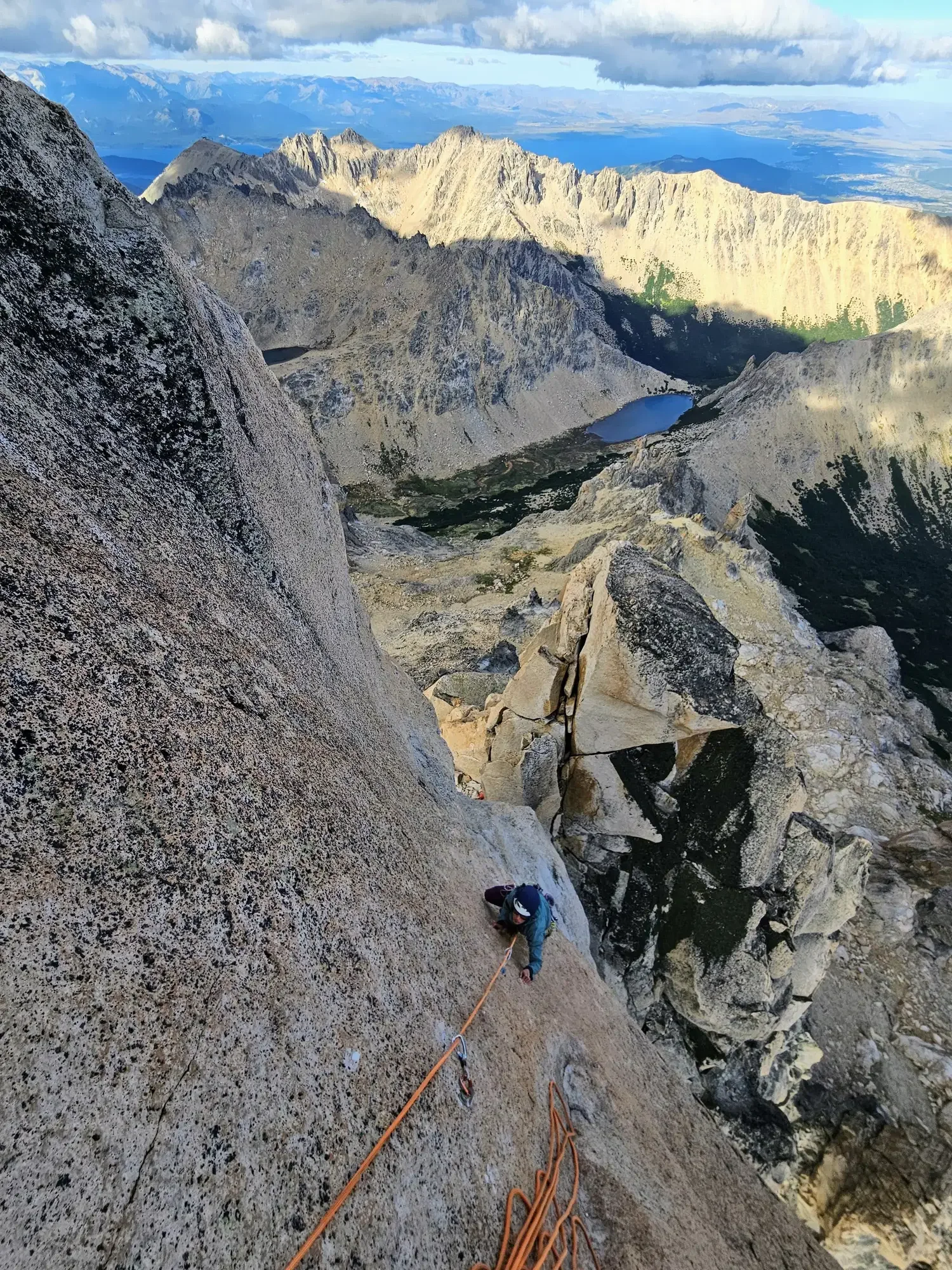
The final pitch of the Normal Route on Torre Principal—a delicate slab that makes you feel like you're levitating. © Seba Montes
Ruta Normal
Grade: 5.10a (YDS) / 6a (French)
Length: 121 m (400 ft)
Pitches: 5
Orientation : North - It’s usually quite windy as it is the higest summit in Frey
Why climb it: The historic route to the highest summit in Frey.
Best for: First-time visitors wanting to stand on Frey's most iconic summit.
The historic route to the summit of Torre Principal, first climbed in 1943 by Pablo Fisher and Gustavo Kammerer. The final slab resisted repeated attempts until they eventually hand-drilled a series of metal rods to overcome it.
The climbing follows an elegant line up the skyline, combining enjoyable crack climbing, technical face moves, and an unforgettable summit. If it's your first trip to Frey, this is one of the climbs you simply shouldn't miss.
Fonrouge–Insúa / Común y Silvestre
Grade: 5.11a (YDS) / 6c (French)
Length: 210 m climbing (250 m to the summit)
Orientation : NW - get sun from midday. It’s usually quit cold during the first pitches.
Why climb it: A brilliant link-up combining classic crack climbing with one of Torre Principal's best face pitches.
Best for: Climbers looking for a varied long route
Start on Fonrouge–Insúa, a beautiful route featuring enjoyable crack and corner climbing on excellent granite (only the first pitch have not-so-good rock and few places to protect). Once you reach the middle of the wall, instead of following the somewhat awkward 5+ crack of the original route, go right onto the beautifully bolted 6c pitch of Común y Silvestre.
The 6c pitch is one of the finest face pitches on Torre Principal, with sustained, technical movement on flawless granite. Continue following Común y Silvestre to the large ledge, then finish via the upper pitches of the Ruta Normal to reach the summit.
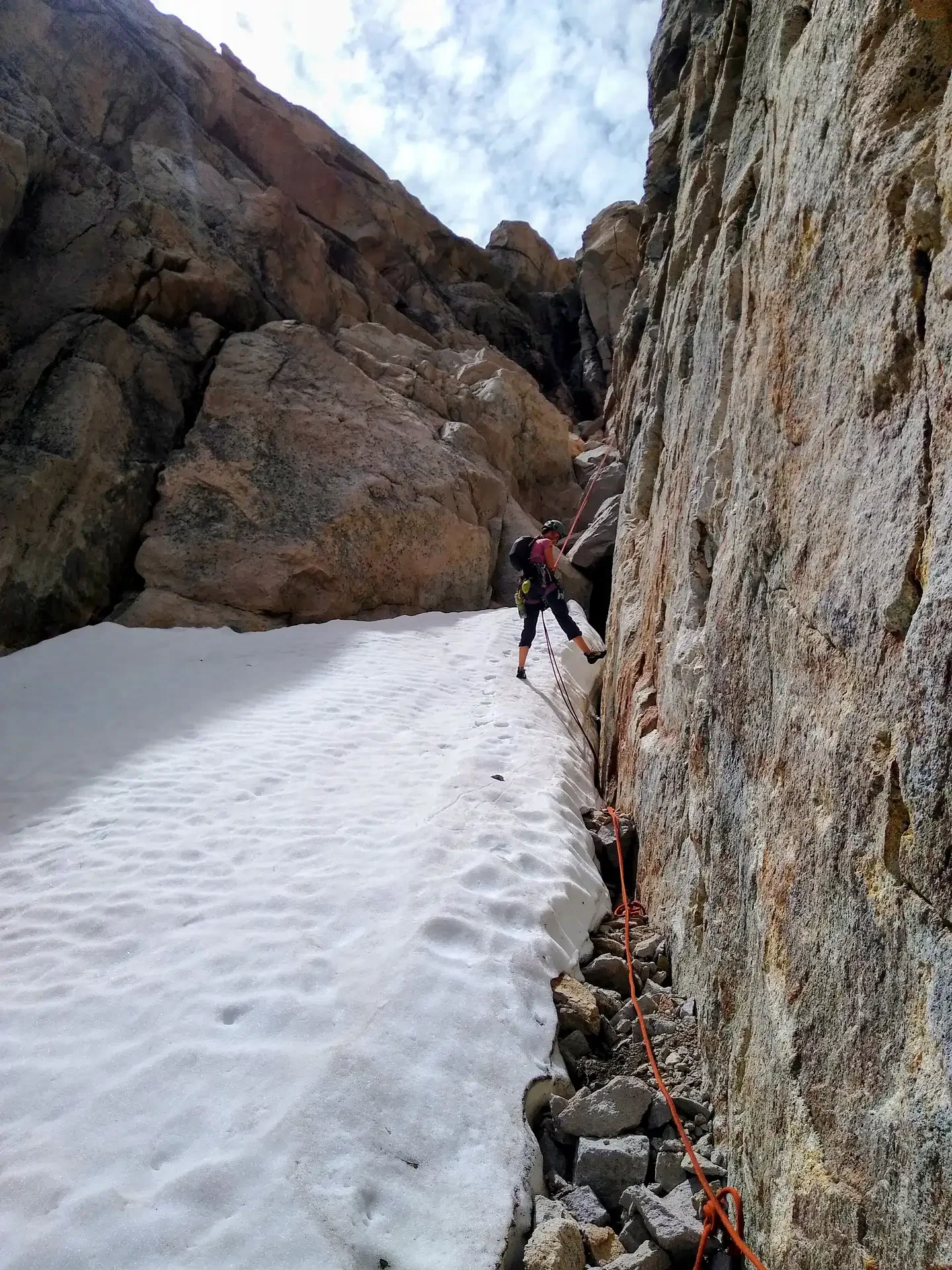
Rappelling into the Torre Pincipal’s west face gully. Watch for loose rocks during the descent. Early in the season, the gully is often filled with snow. © Vianney Lhoumeau
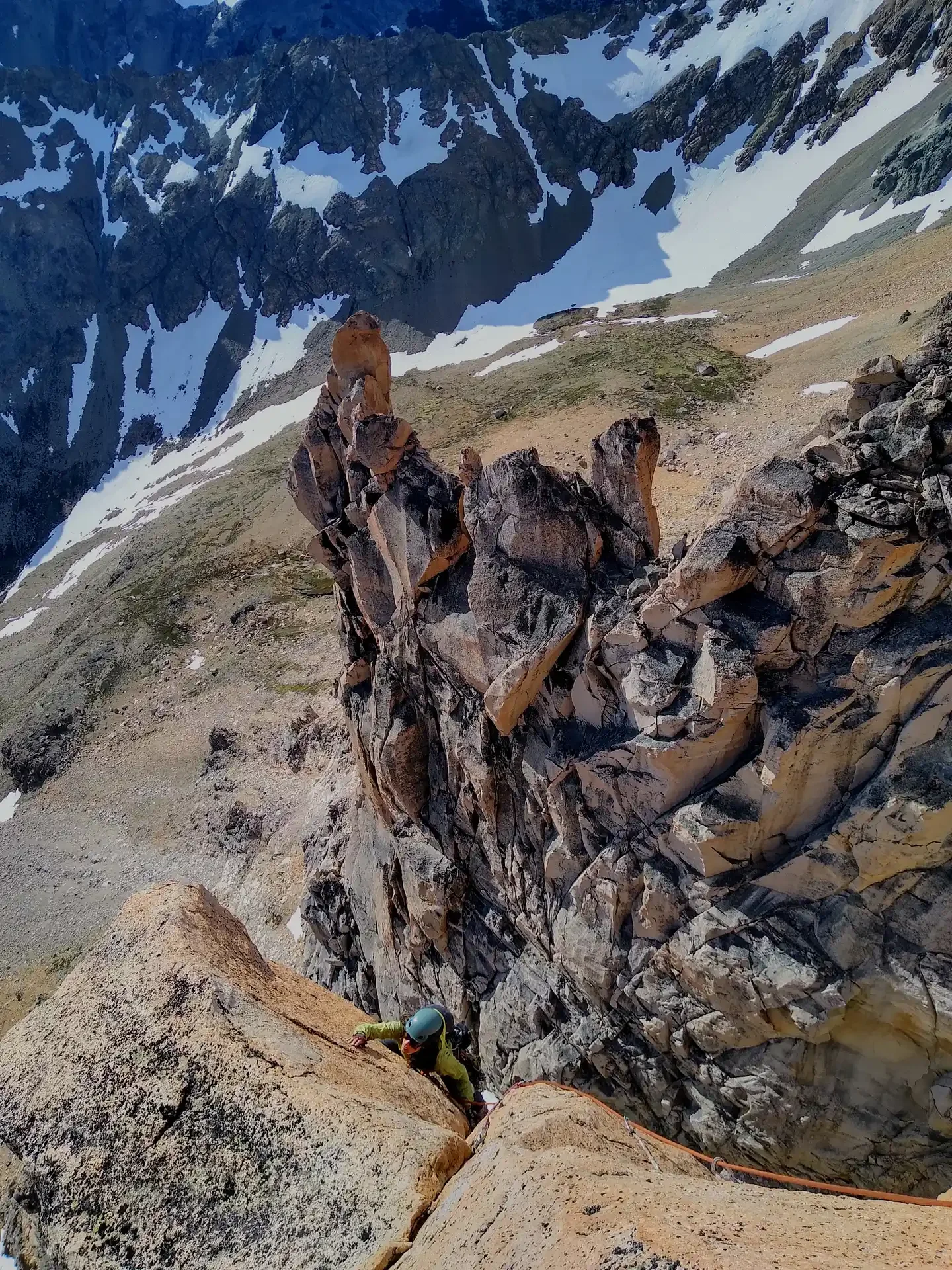
Almost at the top! One of the best times to climb in Frey is during a football World Cup final—you'll have the mountains all to yourself. © Vianney Lhoumeau
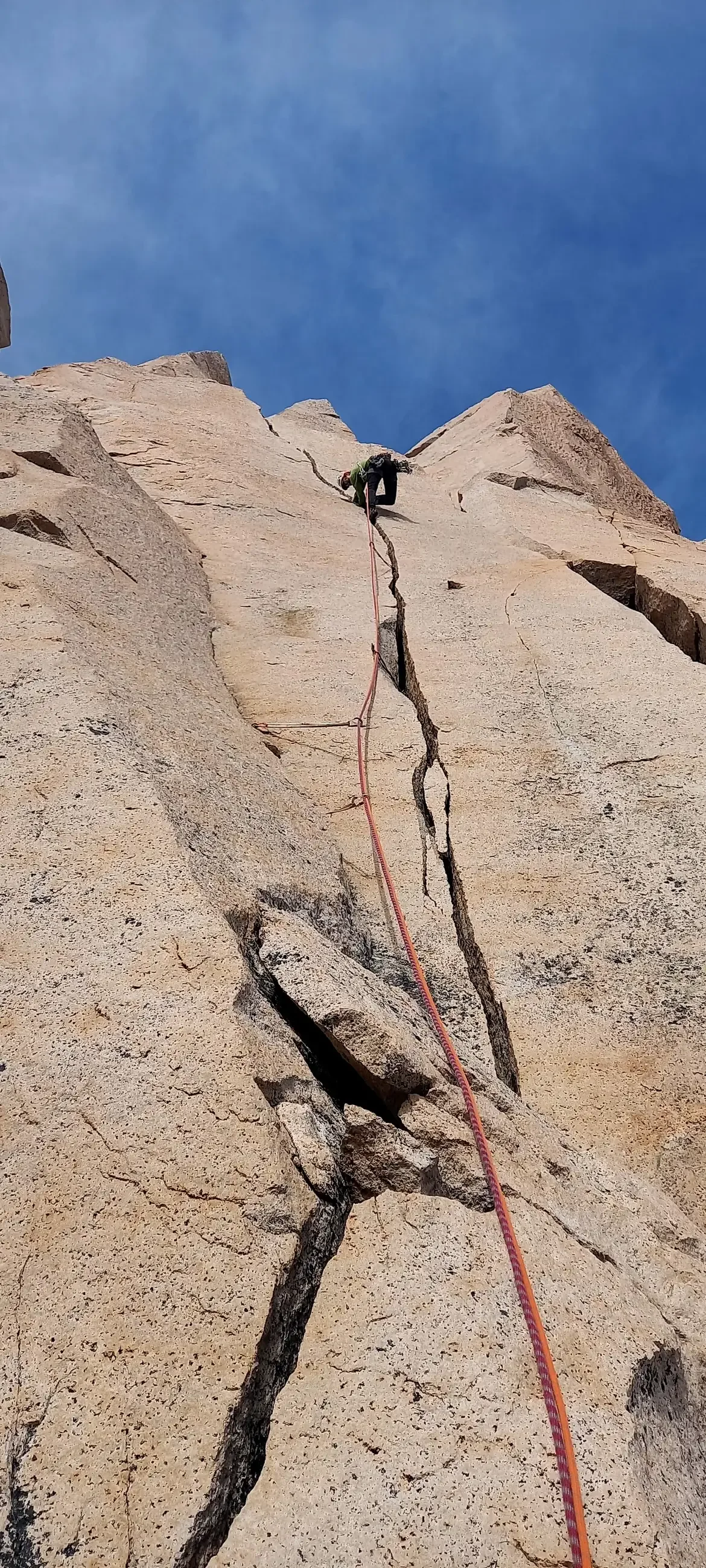
Splitter alert! Wide hands for somes, thight fist for others, that #3 crack on Siniestro Total is epic. © Abril Fontana
Siniestro Total
Grade: 5.10d (YDS) / 6b+ (French)
Length: 150 m (250 m to the summit)
Pitches: 5
Orientation : West - get sun in the afternoon.
Why climb it: One of Frey's best long crack climbs, finishing on the highest summit in the cirque.
Best for: Climbers looking for sustained traditional crack climbing on a classic alpine objective.
One of the longest climbs in Frey, Siniestro Total takes you all the way to the summit of Torre Principal. It's almost entirely crack climbing, and about as good as it gets.
I recommend bringing three #3 Camalots for the stellar hand-to-fist splitter on the upper part of the route.
It's also worth climbing the 6b+ first-pitch variation instead of the original 5+ crack. The climbing is much better and makes for a more enjoyable start to the route.
Even on a warm summer day, don't underestimate how cold this route can feel. The wall stays in the shade until the afternoon and is often exposed to the wind. The first time I climbed it, I was surprised by how chilly it was despite the warm weather, so it's worth bringing an extra layer.
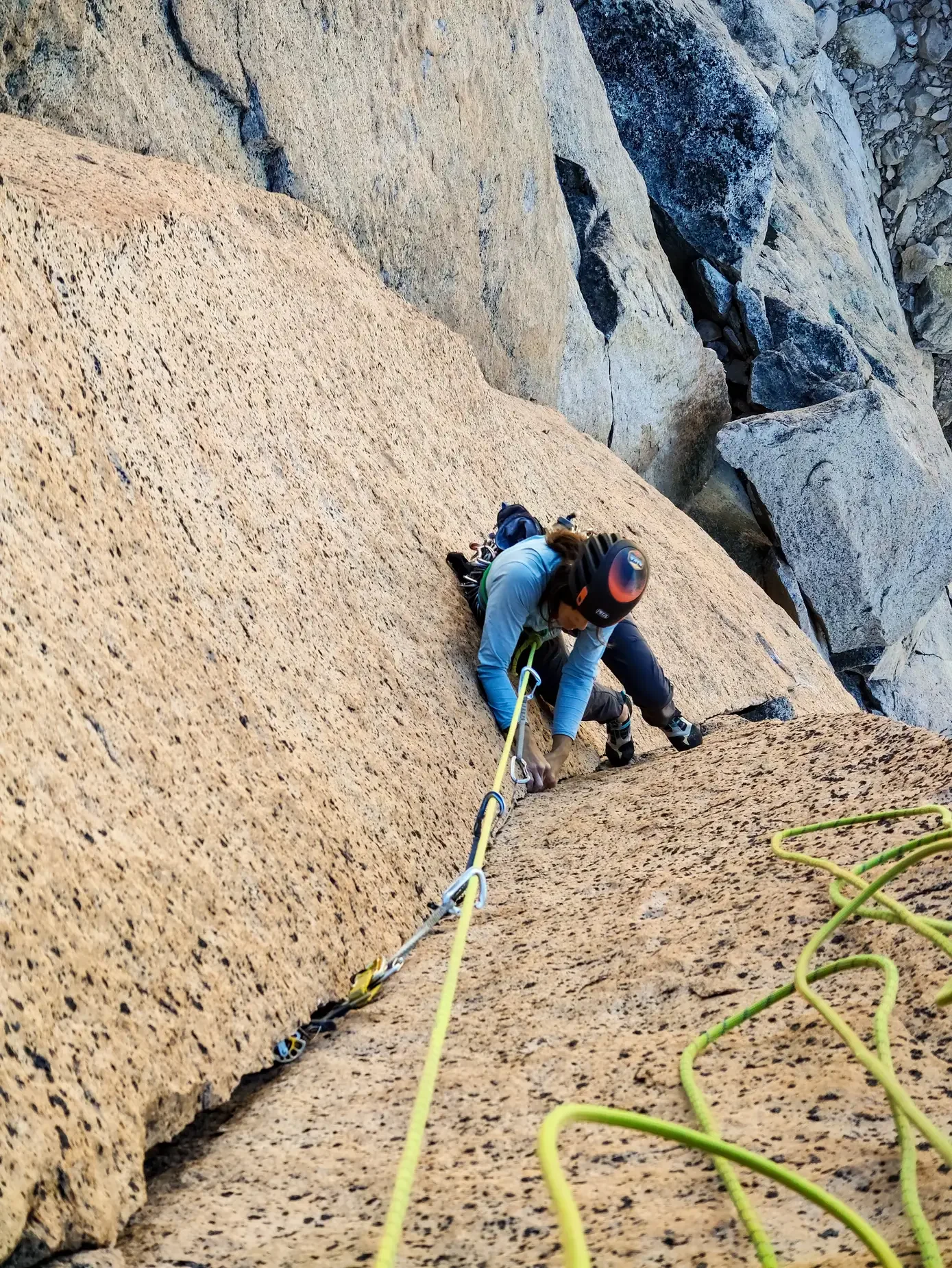
Belén following the beautifull thin finger splitter on the second pitch of NoTeOlvidaremos © Vianney Lhoumeau
No Te Olvidaremos
Grade: 5.12a (YDS) / 7a+ (French)
Length: 106 m (350 ft)
Pitches: 5
Orientation : South - It’s a perfect clim for extra hot days
Why climb it: One of the finest crack climbs in Frey, featuring a spectacular sustained finger crack.
Best for: Experienced crack climbers looking for one of Frey's absolute classics.
One of the very best routes in Frey and, in my opinion, worth every bit of its five-star reputation. The climbing is sustained from start to finish, following beautiful corners, roofs, cracks, huecos, and arêtes to the summit of El Pilastro.
The second pitch is the undeniable highlight: a stunning sustained finger crack corner that is as aesthetic as it is demanding. I recommend doubling up on finger-size cams (0.1 to 0.5) for this pitch, which makes protecting the climbing much more enjoyable.
If you can climb the grade, this route is simply a must-do.
Muralla China
Hidden away from the crowds, Muralla China is one of Frey's quieter walls, offering excellent granite, beautiful crack systems, and a more adventurous atmosphere. The approach is a little longer than many of the classic walls around the hut, but you'll often have the place to yourself.
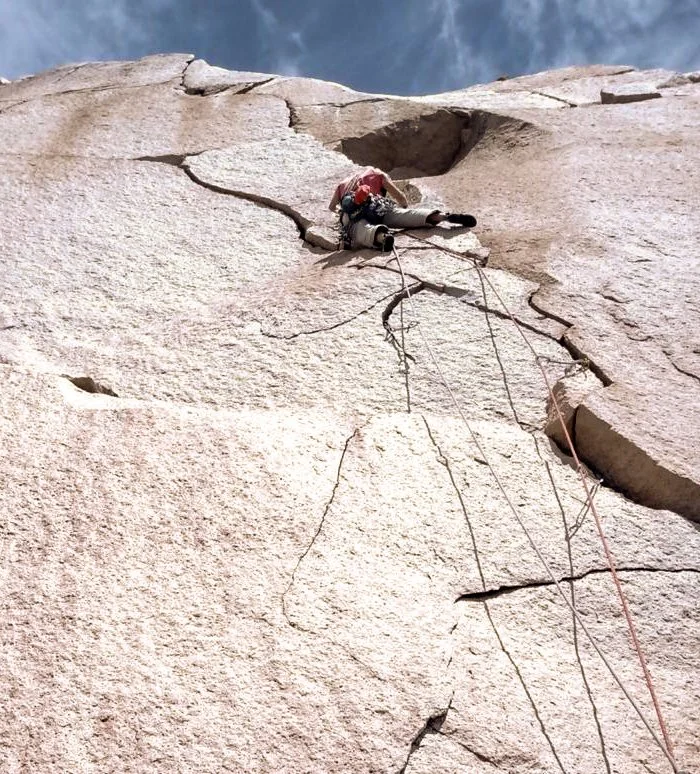
Enjoying the last pitch of Perdido en Shangai © Facu Jios
Perdido en Shangái
Grade: 5.11b (YDS) / 6c (French)
Length: 220 m (720 ft)
Pitches: 6
Orientation : North
Why climb it: A spectacular long crack route on one of Frey's most secluded walls.
Best for: Climbers looking to escape the crowds and enjoy sustained traditional climbing.
Perdido en Shangái is one of Frey's hidden gems. The climbing follows an obvious system of cracks and corners up the impressive east face of Muralla China, offering sustained traditional climbing on excellent granite with very little traffic.
The quality of the climbing is high for the first and last pitch (second pitch have some loose blocks), with a great mix of finger cracks, hands, and technical face climbing where the cracks disappear. Although never excessively steep, every pitch keeps you engaged, making it a rewarding climb from bottom to top.
If you've already climbed the famous classics around the Frey cirque and are looking for something a little more adventurous, this is an excellent choice. It's the kind of route that makes you wonder why more people don't climb it.
Aguja Piramidal
With its steep granite wall, Aguja Piramidal Frey's best place if you want pure crack climbing. Whether you're looking for splitter finger cracks, off width or long sustained pitches, the routes here reward, solid trad skills and good crack technique. Usually the routes offer solid placement for camming device.
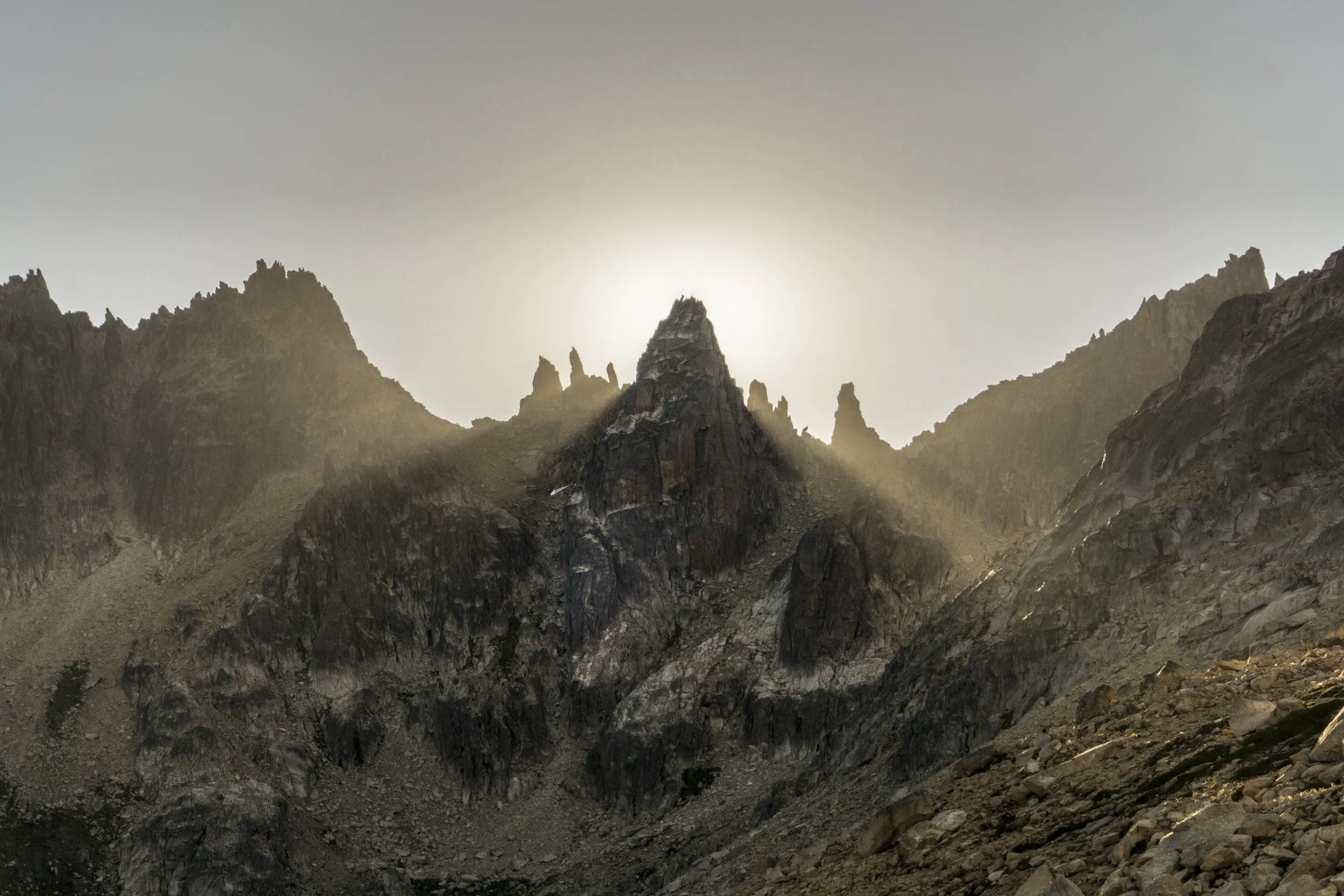
Aguja Piramidal in the sunset glow © Vianney
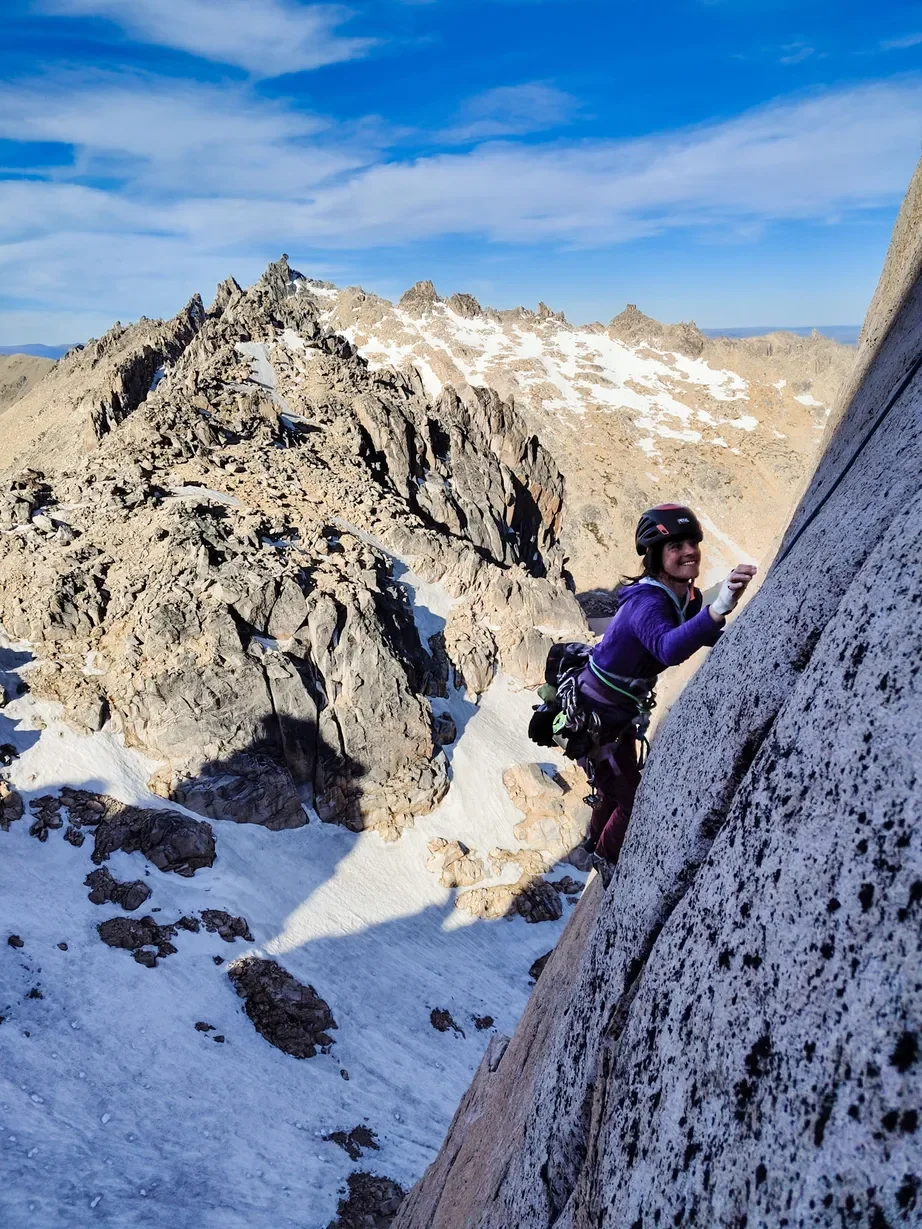
Climbing the traverse pitch of 2112. During Spring you have to cross a big neve to get to the base of Piramidal. © Vianney Lhoumeau
2112
Grade: 5.11d (YDS) / 7a (French)
Length: 150 m (490 ft)
Pitches: 5
Orientation : N - Somehow sheltered from the wind and in the shade for the first pitches.
Why climb it: A beautiful combination of technical face climbing and splitter cracks on one of Frey's most elegant walls.
Best for: Climbers looking for sustained climbing with plenty of variety.
2112 follows a logical line up the south face of Aguja Piramidal, linking technical face climbing, clean cracks, and exposed positions into a memorable outing. No single pitch dominates the route—it's the consistency of the climbing that makes it so enjoyable.
If you're comfortable at the grade, this is one of those routes where every pitch leaves you wanting another.
Gémido de buitre / Bolsonero
Grade: 5.10b (YDS) / 6a+ (French)
Length: 180 m (590 ft)
Pitches: 4
Orientation : NE
Why climb it: A brilliant link-up combining two excellent routes into one outstanding climb.
Best for: Climbers looking for sustained crack climbing with varied movement.
Starting on Gémino before joining Bolsonero creates a much more continuous and enjoyable route than climbing either independently. The climbing flows naturally through corners, cracks, and technical face sections, with excellent rock quality throughout.
The line feels surprisingly adventurous while remaining well protected, making it one of the best link-ups on Aguja Piramidal.
Fuego de Poder
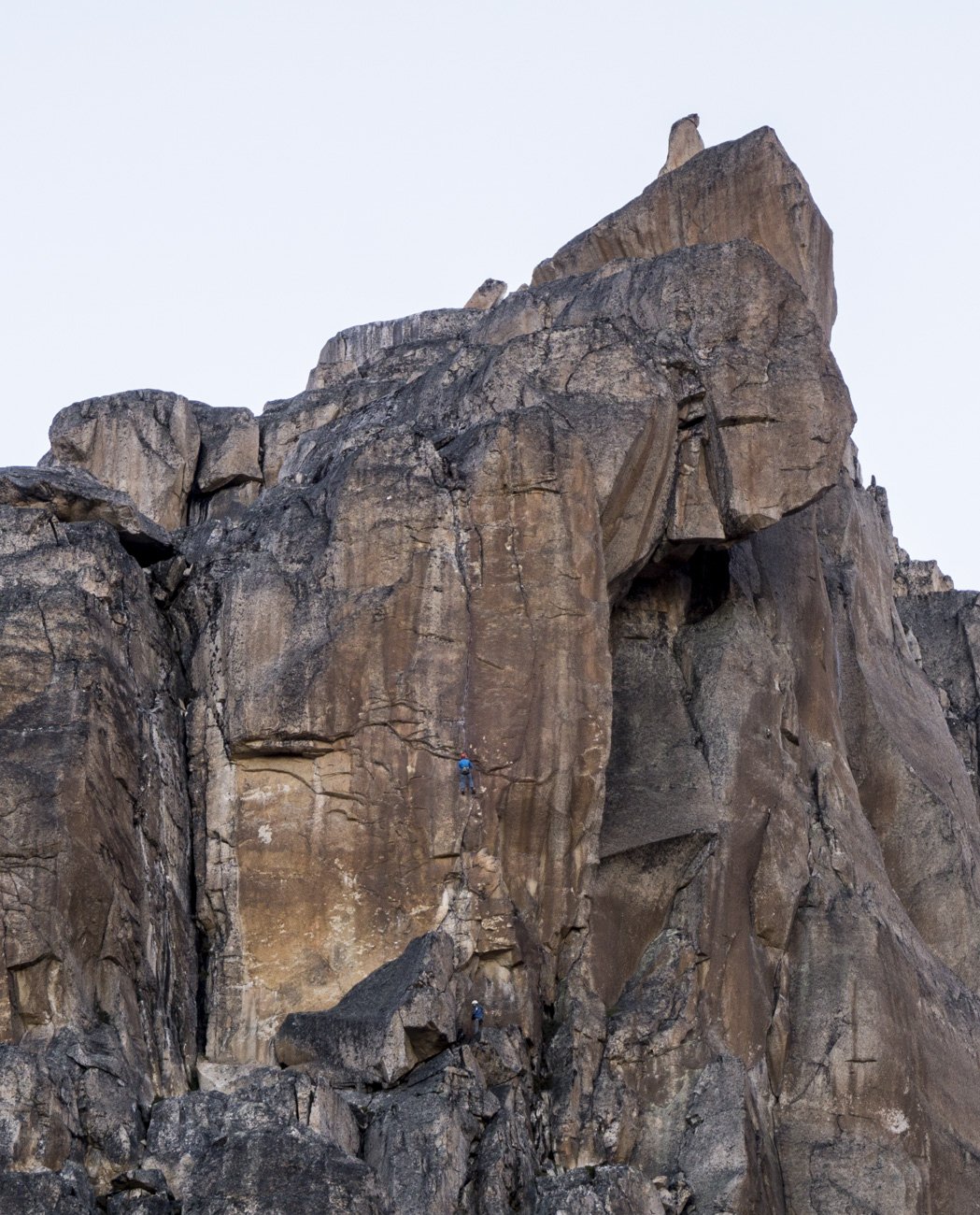
Fuego de Poder split a perfect orange wall. 5 stars granite © Vianney Lhoumeau
Grade: 5.12a (YDS) / 7a+ (French)
Length: 30 m (395 ft)
Pitches: 1
Orientation : East - It can be quite chilly belaying
Why climb it: Home to one of the best finger crack pitches in Frey.
Best for: Experienced crack climbers looking for a fun challenge.
If finger cracks are your favorite style of climbing, Fuego de Poder deserves a place near the top of your all-time tick list. The route builds steadily before reaching an unforgettable splitter finger crack that is both technical and sustained.
The climbing demands precise footwork, solid jamming technique, and efficient gear placements, but the quality of the granite makes every move a pleasure. It's one of those pitches you'll still be thinking about long after you've hiked back to the hut.
To acces the route you can climb the first pitch of the route “Cara Este” (there is two variations of that route, the 5+ is more fun). It’s more comfortable to belay Fuego de Poder from the right of the big boulder that creat the chimney.
Pilares de la Tierra
Located lower in the valley, Pilares de la Tierra is one of the most sheltered climbing areas in Frey, making it a great choice on windy days. The approach is short, with very little elevation gain compared to the main cirque, so you can spend more time climbing and less time hiking.
Another advantage is that after topping out on Pilares de la Tierra, it's only a few minutes' walk to the base of Aguja El Tonto, making it easy to link two multi-pitch routes into one excellent day.
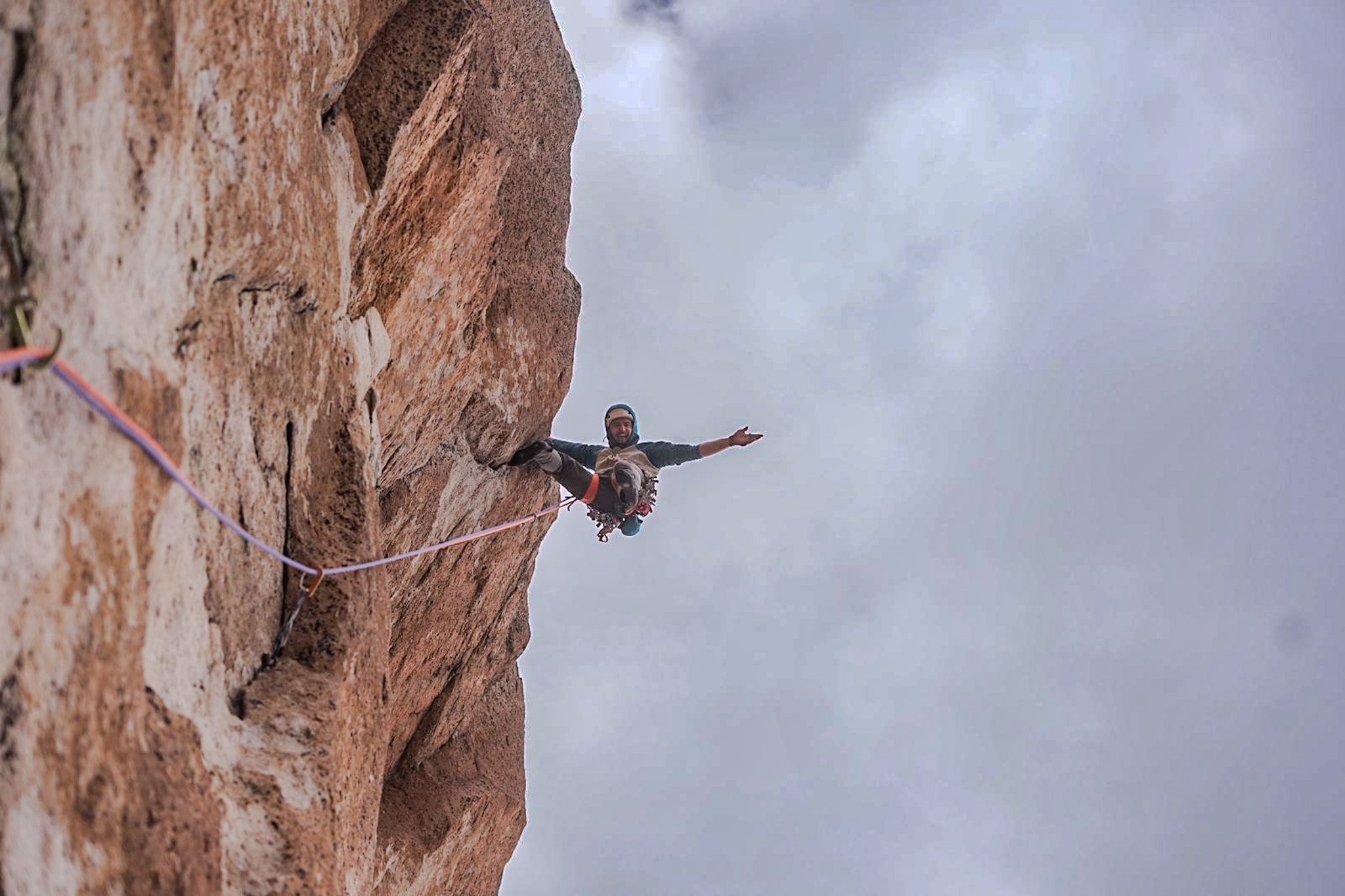
Who said that you could not climb during windy days in Patagonia? Luke Antonia enjoying Anticiclica second pitch on the sheltered from the wind Pilares De La Tierra wall. © Ignacio Arrate
Anticíclica
Grade: 5.10a (YDS) / 6a (French)
Length: 90 m (300 ft)
Pitches: 3
Orientation : North
Why climb it: Great option for windy or cold days
Best for: Climbers for a moderate classic away from the crowed routes
A fun and varied route on the Pilares de la Tierra wall. The first pitch follows a beautiful stemming corner where good footwork is the key to climbing efficiently. If you're not completely comfortable at the grade, it's worth splitting this pitch into two shorter ones to reduce rope drag and keep the crux close to the belay.
The second pitch offers excellent face climbing, while the final pitch finishes with an enjoyable crack to the summit.
For the descent, you can rappel Cruz del Sur with a single 70 m rope or Barón Rampante with two 50 m ropes. Even better, continue to the summit of Pilares de la Tierra and walk a few minutes to climb one of the classic routes on El Tonto before heading back to the valley.
Cohete Lunar & Cara Banana
Located in a separate valley, Cohete Lunar and Cara Banana are hidden from view of Refugio Frey, giving them a more remote and peaceful atmosphere. Their isolation is part of their charm, and you'll often find far fewer climbers here than on the walls surrounding the hut.
Despite feeling more remote, both walls are easily accessible as a day trip from the hut, with an approach of an hour or less.
Cohete Lunar is home to one of the longest climbs in Frey, rivaling Torre Principal in length, while the sunny walls of Cara Banana offer outstanding face climbing on excellent granite.
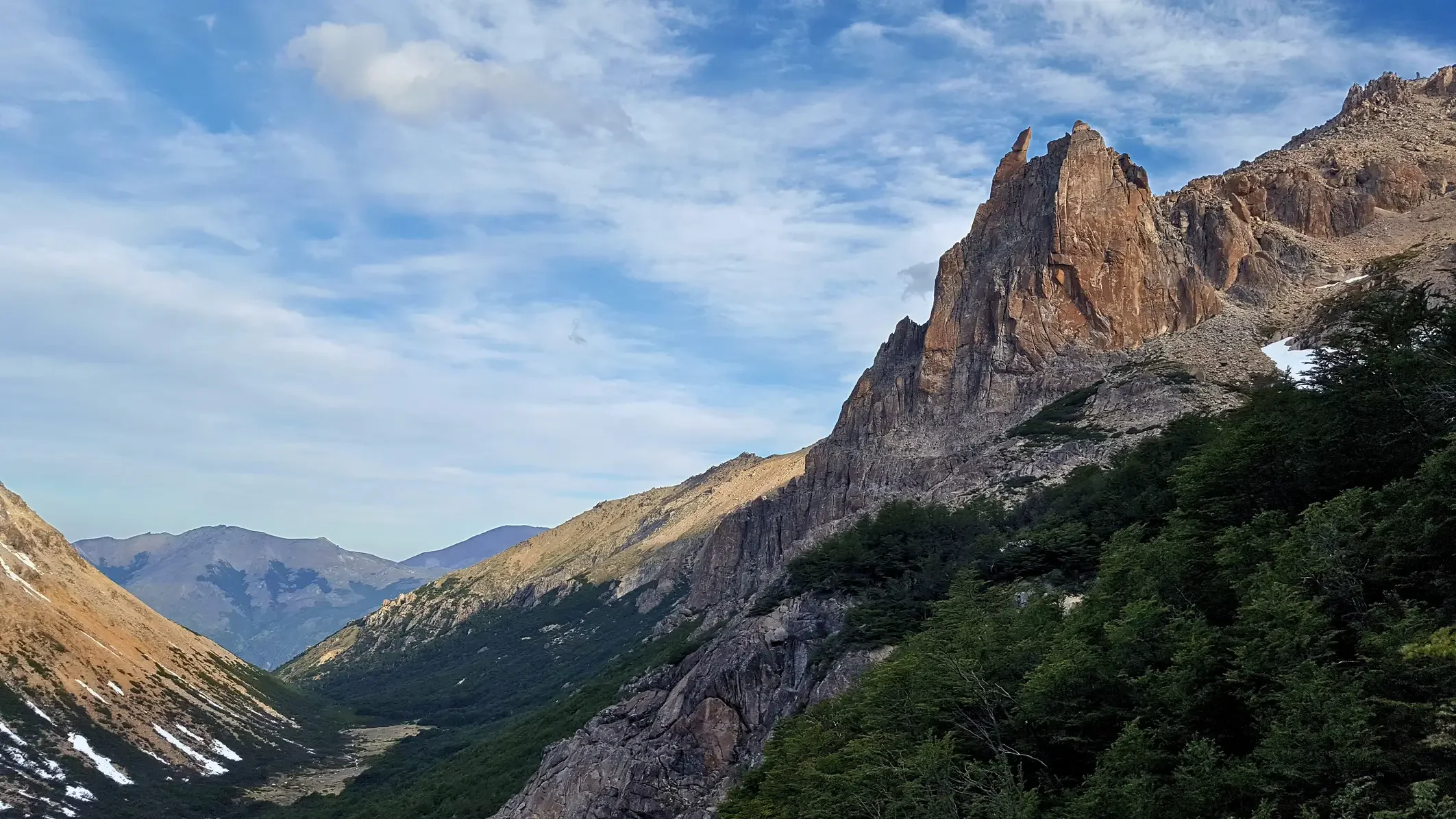
Cohete Lunar seen from hike in, the summit is a massive boulder that look like a rocket. The wall that is in the sun is Cara Banana. © Vianney Lhoumeau
Objetivo Luna
Aguja Cohete Lunar
Grade: 5.10c (YDS) / 6b+ (French)
Length: 273 m (900 ft)
Pitches: 8
Orientation : NEE
Why climb it: One of Frey's longest and most varied routes, with excellent climbing from the first pitch to the summit.
Best for: Climbers looking for a full-day adventure on one of Frey's biggest walls, less exposed to the wind than Torre Principal.
Opened by Michel Piola, one of the greatest route developers of all time, Objetivo Luna is a masterpiece and one of the finest long routes in Frey. The climbing is incredibly varied, combining beautiful laybacks, crack climbing, technical slabs, and short overhanging sections on impeccable granite. The line flows naturally from bottom to top, culminating on a tiny, airy summit where you may find yourself sharing the view with soaring Andean condors. The most crazy part is that after climbing 8 pitches you only need to do one 30mt rappel to get down from the tower.
A must-climb for anyone looking for a memorable full-day adventure in Frey.
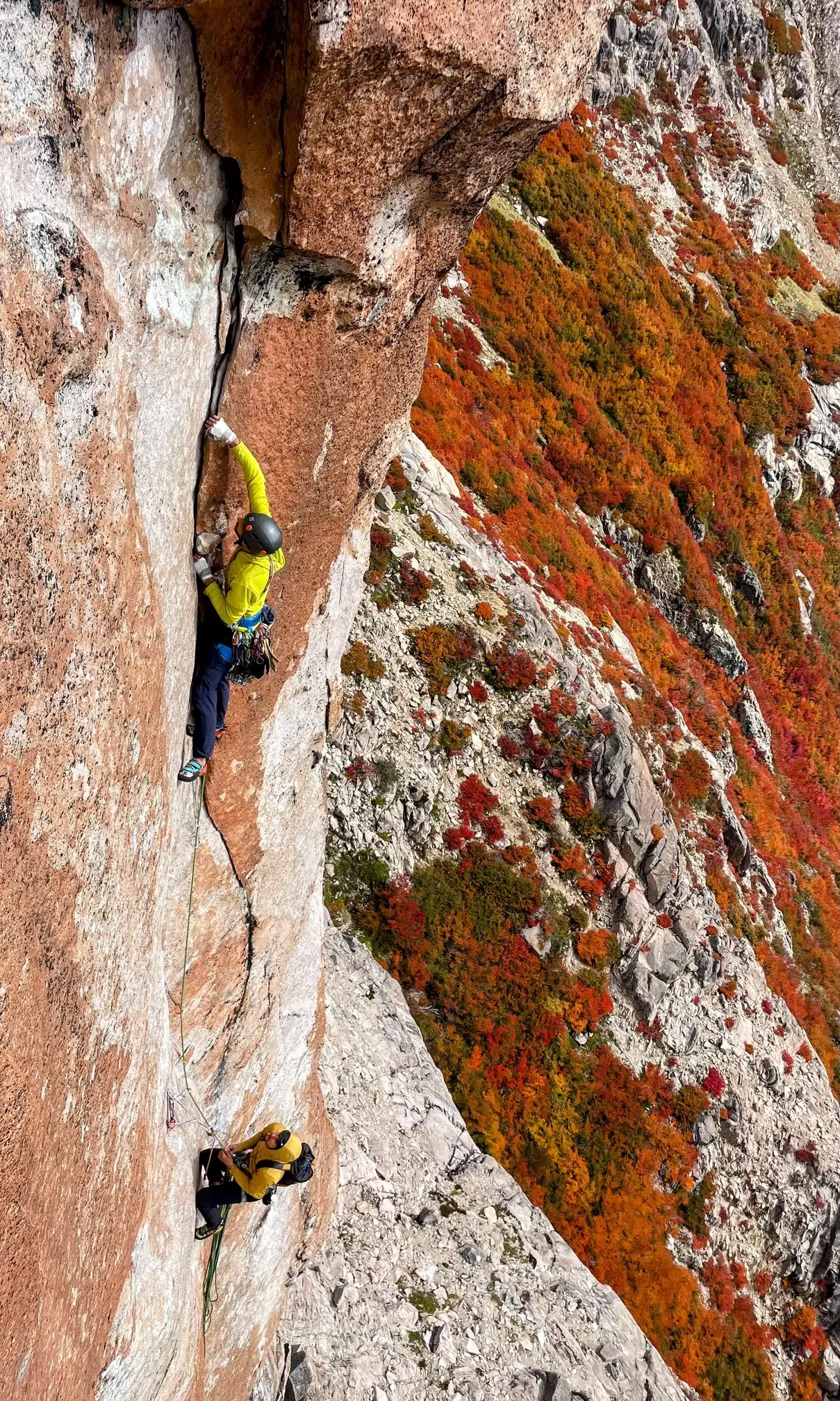
The so good second pitch of Objetivo Luna. Going to Frey during fall is quite an experience © Facu Saubidet
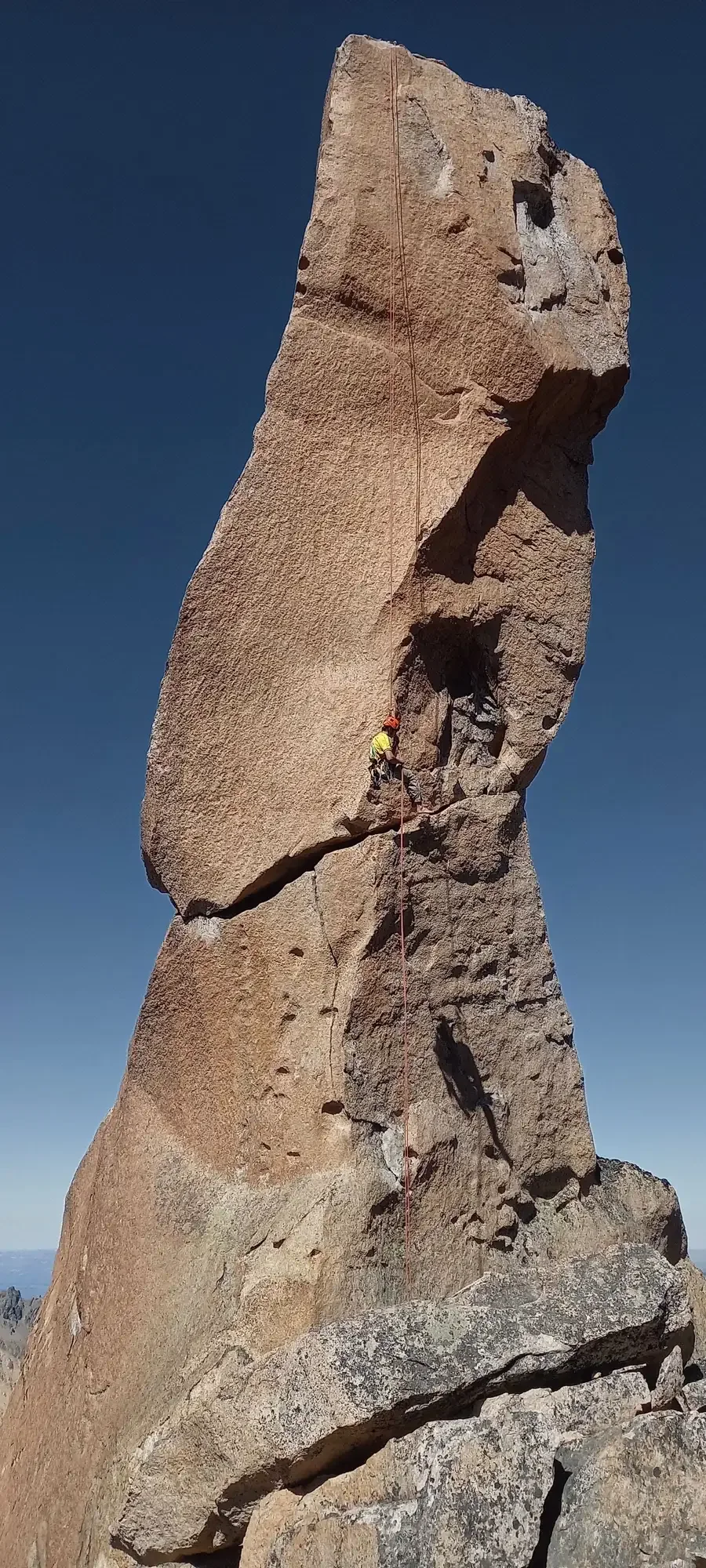
Climb eight pitches, then make a single 30 m hanging rappel. That's what Cohete Lunar feels like.. © Abril Fontana
Espejito Retrovisor
Grade: 5.10c (YDS) / 6b (French)
Length: 120 m (394 ft)
Pitches: 3
Orientation : North
One of the best 6b routes in Frey. The second pitch is a little stout for the grade but absolutely worth the effort. From the first belay, avoid the dirty wide crack and follow the bolts out right instead. You'll be rewarded with a spectacular five-star corner that blends crack climbing with technical face moves on impeccable granite.
The final pitches join one of Michel Piola's routes, following airy face climbing along an exposed arête to the summit. The last pitch is a little runout in places, but the climbing is on positive holds and never feels too serious.
A brilliant route with sustained quality from start to finish.
La Tapia
La Tapia sits in the same valley as Cohete Lunar, the Campanile Valley, but is much closer to Refugio Frey. The base of the wall can be reached in 30 minutes or less, making it one of the quickest long-route objectives in the area.
The wall looks as if it had been sliced with a giant knife. Glaciers sculpted the granite into a smooth, slightly less-than-vertical face of incredibly compact and solid rock. Face climbing is the predominant style, with long pitches on exceptionally high-quality granite.
Facing east and located lower in the valley, La Tapia is well sheltered from the wind. It's an excellent choice on windy days or on colder days if you start climbing in the morning.
La jungle en folie
Grade: 5.11a (YDS) / 6c (French)
Length: 120 m (394 ft)
Pitches: 4
Orientation : East
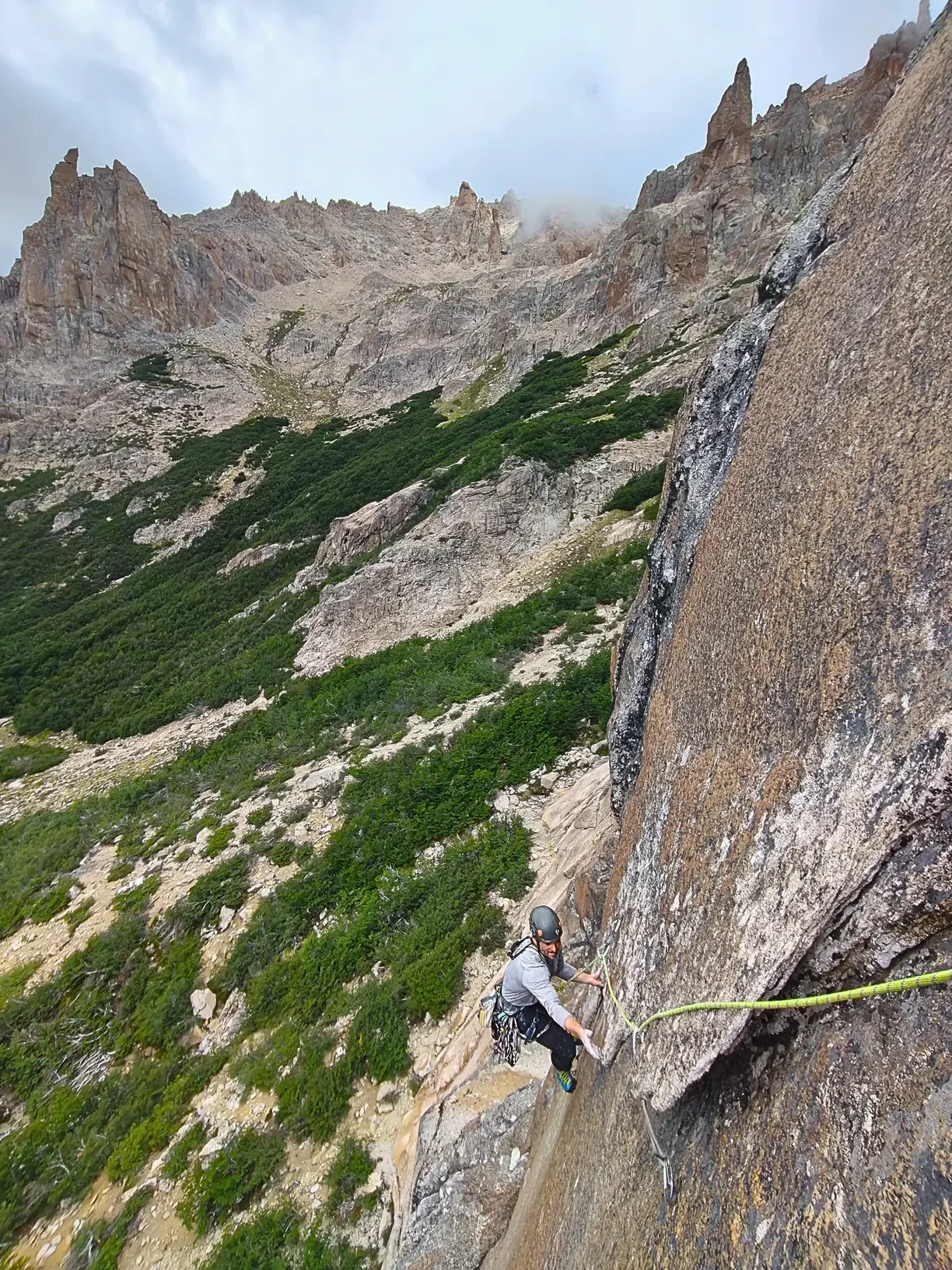
Juan Jorda following the soo good flake pitch of La jungle en folie © Vianney
Why climb it: Outstanding face climbing on incredibly compact granite.
Best for: Climbers who enjoy technical face climbing and slab with a little bit crack climbing.
A fantastic route that combines technical slab climbing with excellent crack pitches on impeccable granite. Although the cruxes are protected by bolts, you'll still want a standard rack and a set of micro nuts for the crack sections.
There are two options for the first pitch. The original start follows a beautifully protected slab that traverses diagonally left to the first belay and is well worth climbing. The alternative is a fun 5.8 hand crack that starts directly below the first belay and joins the route there.
The crux slab moves on pitches two and three are technical and well protected, and the move off the third belay can be easily aided if you're not quite climbing at the grade. The final pitch is the highlight, finishing with a steep hand crack through a roof before continuing up perfect granite to the belay.
Facing east, the wall is sheltered from the prevailing westerly winds, making this an excellent choice when it's blowing hard elsewhere in the Frey.
If you enjoy delicate slab climbing and technical crack sequences, this is one of Frey's finest mid-5.11 routes.
Campanile Esloveno
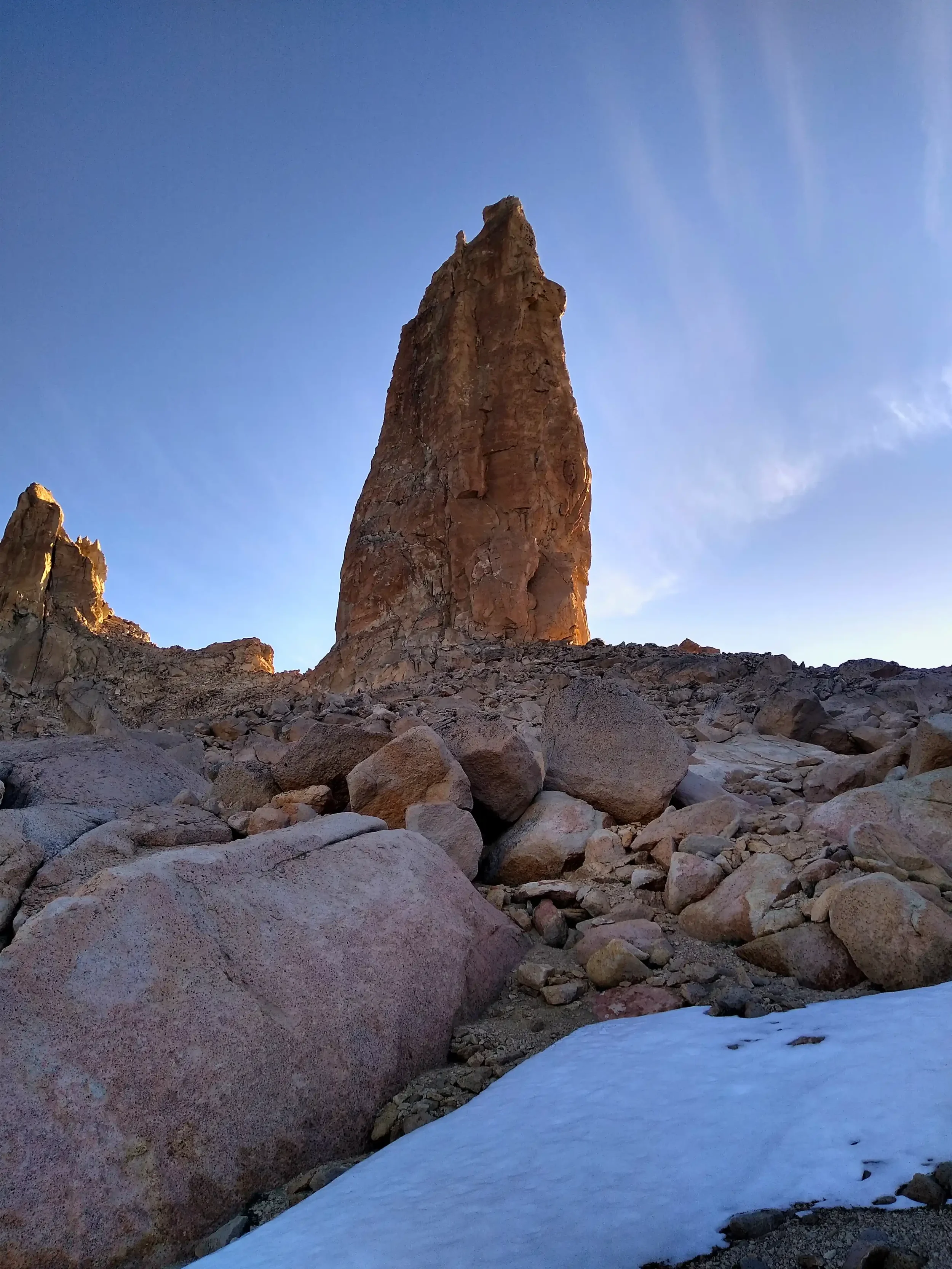
The stunning Aguja Campanile. Opportunities to climb a spire like this are rare.
Campanile is the most striking rock formation around Bariloche. Although smaller than Torre Principal, its incredibly slender shape makes it look like a giant sewing needle rising above the valley. Constantly exposed to wind and storms, the granite has been sculpted into incredible features, with wind-carved huecos and a summit no bigger than a living room table.
If I could climb on only one formation in Frey, it would be Campanile.
The approach from the hut takes around 2 hours. I recommend first climbing in Cohete Lunar or Cara Banana, then leaving your gear for the following day near the base of Cara Banana. The next morning, return to climb Campanile, picking up your gear on the hike in. Not only will you already know the approach, but you'll also hike half of it carrying a much lighter pack.
Buch-Goin
Grade: 5.9+ (YDS) / 5c+ (French)
Length: 130 m (430 ft)
Pitches: 4
Orientation : South
One of the best moderate multi-pitch routes in Frey. Buch-Goin follows a series of flawless laser-cut corners on exceptional granite, with sustained crack and corner climbing in an outstanding position. The climbing is consistently enjoyable, and the final pitch joins the Normal Route for a beautiful crack that leads directly to the summit. A true Frey classic and an easy 10/10 in my book.
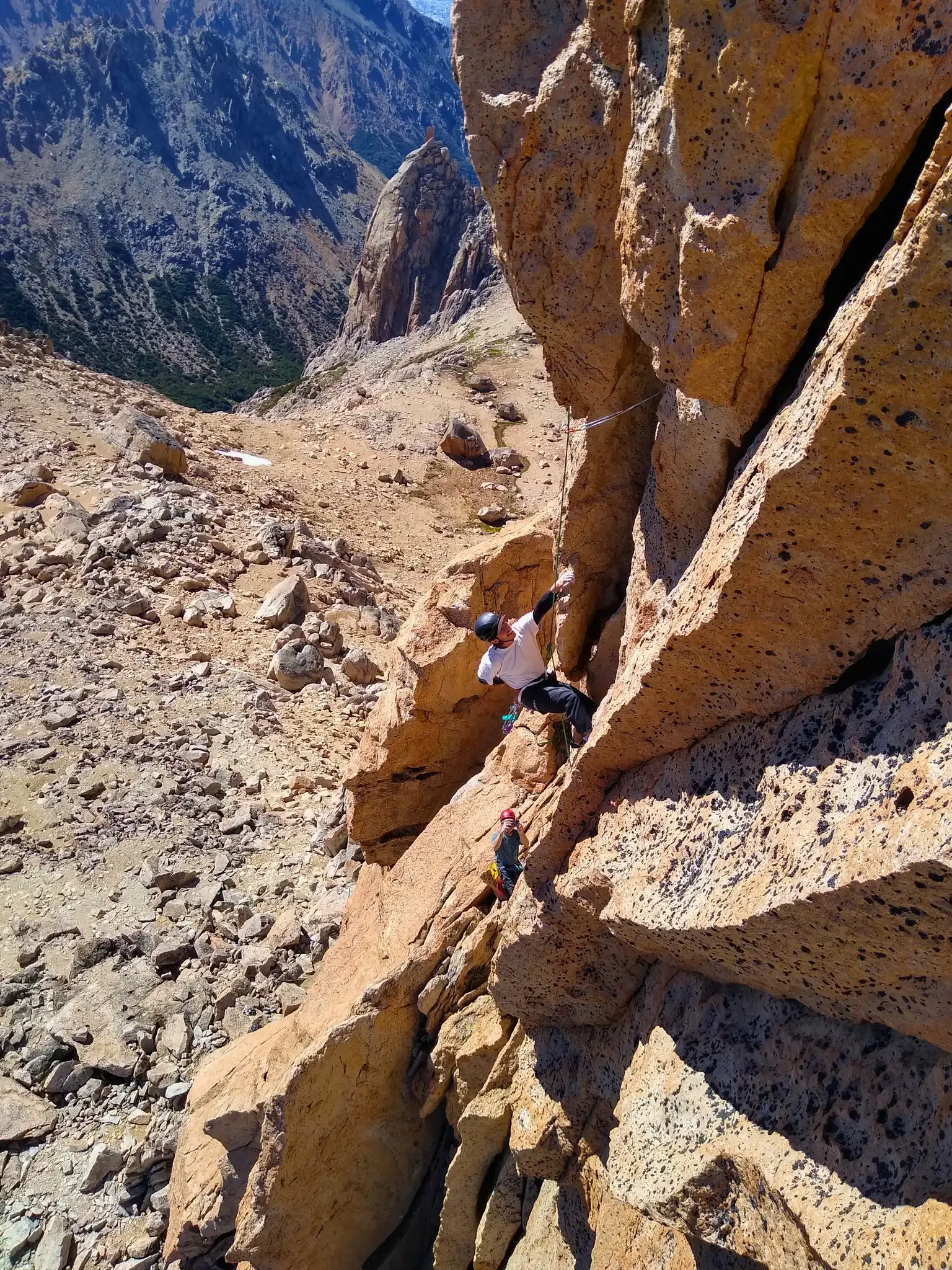
Sawn Raboutou cruising the second pitch of Imaginate © Vianney Lhoumeay
Imagínate
Grade: 5.10b (YDS) / 6a+ (French)
Length: 130 m (430 ft)
Pitches: 4
Orientation : North
Why climb it: One of Frey's mega classics with sustained climbing from bottom to top, with an ideal mix of cracks, face climbing, and outstanding views.
Best for: Climbers looking for a classic all-around Frey experience
One of the hidden gems of Frey. The longer approach is rewarded with five outstanding pitches of varied face and crack climbing on impeccable granite. Campanile Esloveno sits in its own secluded valley, giving the climb a completely different atmosphere from the rest of the cirque, with plenty of streams along the approach to refill your water.
The third pitch feels a little runout, but the climbing is easier than the rest of the route, and patient gear hunting usually pays off. Crack lovers shouldn't miss the Califa Fósil roof variation, which can be climbed instead of the original final pitch. The spectacular hand crack through the roof is much easier than it looks and, in my opinion, is one of the best crack pitches in Frey. If you're short on time, I'd climb this route before Torre Principal without hesitation.
Excuse Me Señora, Give Me la Hora
Grade: 5.11d (YDS) / 7a (French)
Length: 139 m (460 ft)
Pitches: 4
Orientation : North
Why climb it: Technical, pumpy face climbing that makes you feel like a hero.
Best for: Climbers looking for a demanding face climb with spectacular scenery.
One of the most striking line in the Frey, this route follows the northwest arête of Campanile on impeccable granite. I highly recommend linking the first two pitches together by continuing past the first two-bolt belay—it's a much more enjoyable way to climb the route. The original second pitch is the undeniable highlight, following an incredibly exposed arête with spectacular movement and unforgettable positions high above the valley. The route finishes with enjoyable climbing on giant huecos to a fantastic summit.
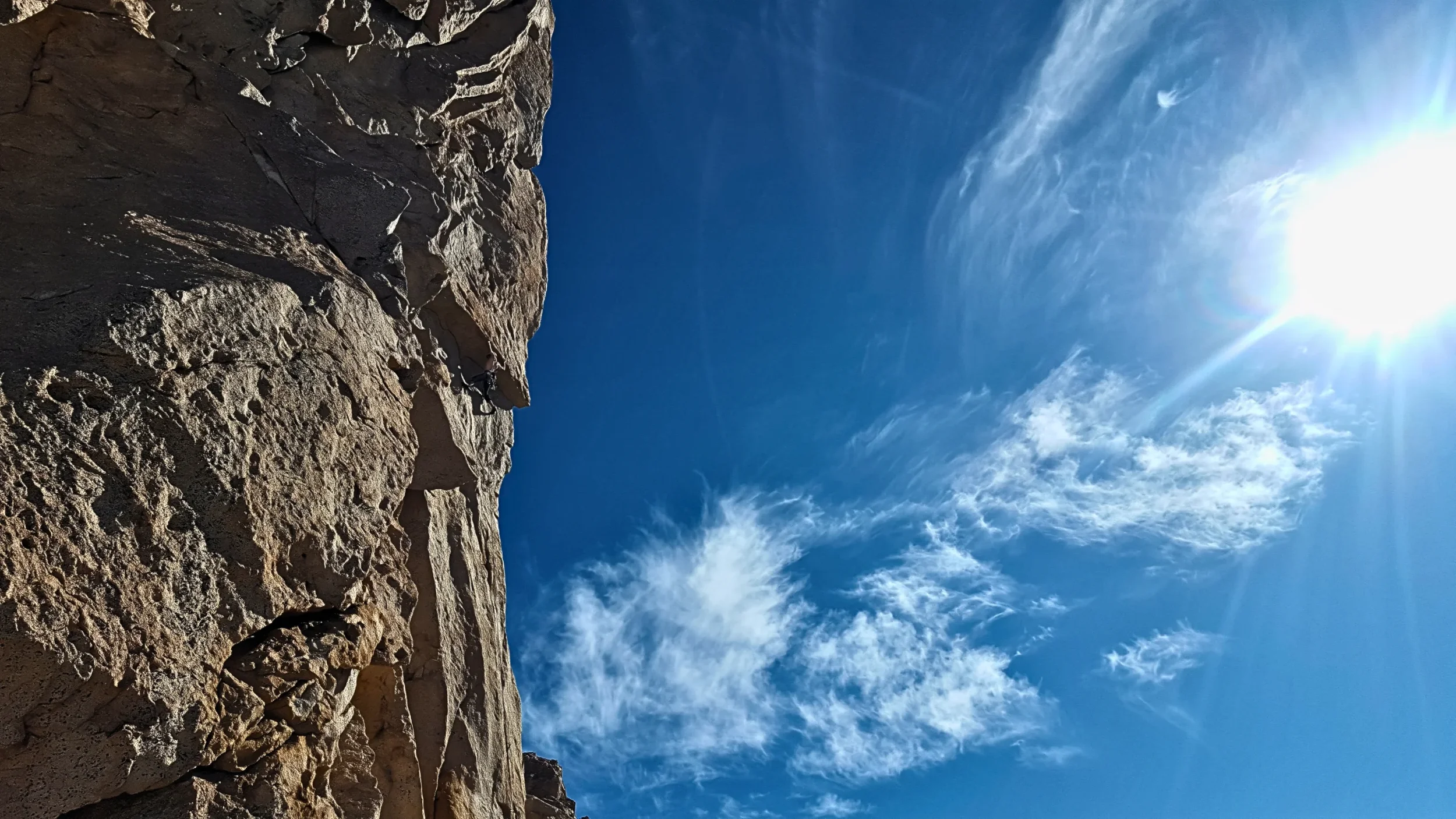
“Can you spot the climber?” - Mati Korten fighting the pump on the crux of Excuse Me Señora Give Me la Hora. © Vianney Lhoumeau
Bonus Cracks
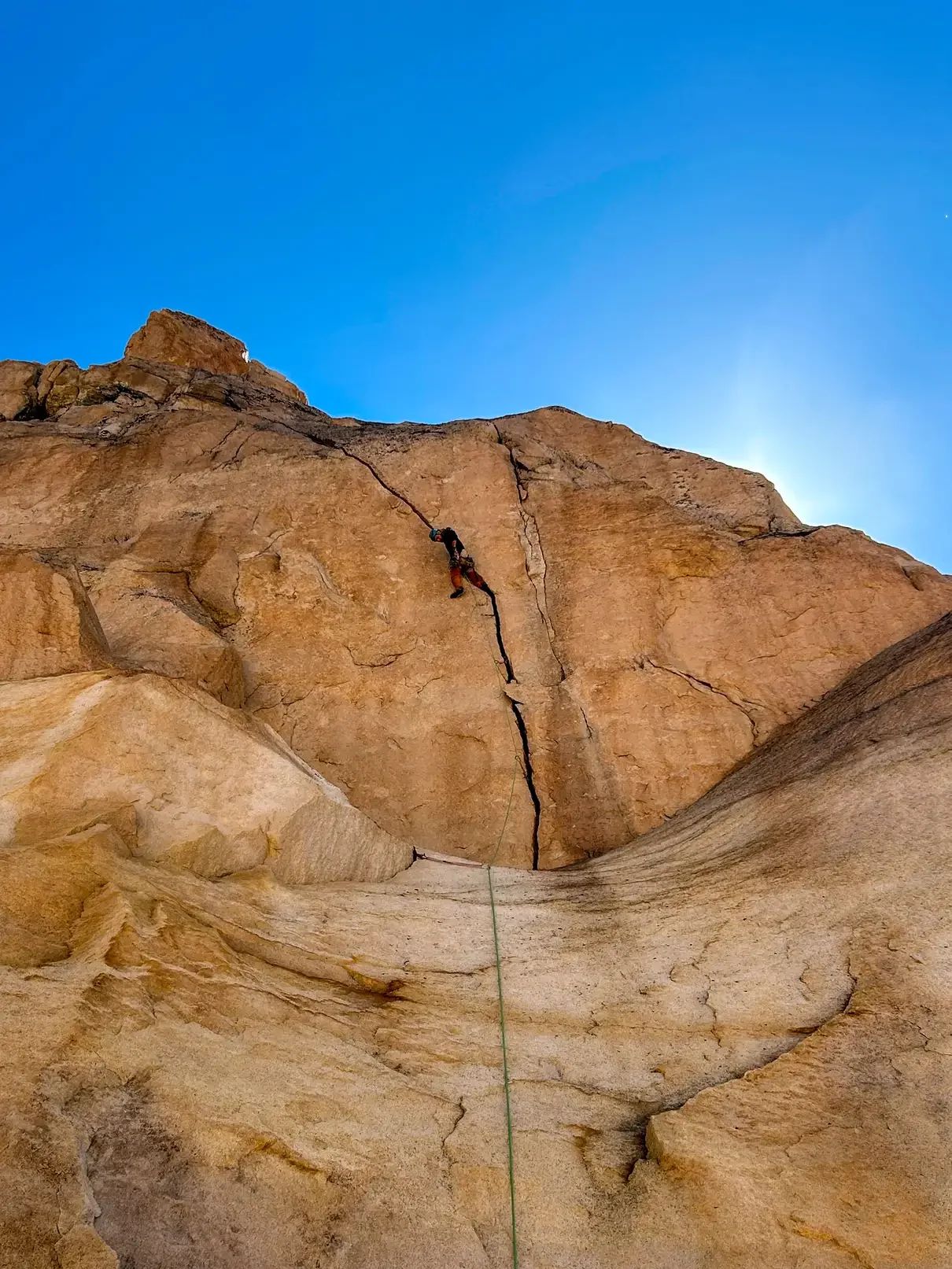
Thiago fighting the pump on the steep wide hand splitter of Ella la SanguinariaI ©Thiago
Ella la Sanguinaria - Laguna Toncek
Grade: 5.12a+ (YDS) / 7a+ (French)
Length: 50 m (164 ft)
Pitches: 1
Orientation : South - Perfect for extra hot days
Why climb it: Sustained, athletic wide crack climbing leading to a fun baggy finger crack crux.
Best for: Climbers looking for a quiet crack-climbing objective, a refreshing swim in an alpine lake, and one unforgettable ring lock.
Possibly the most spectacular splitter crack in Frey, Ella la Sanguinaria is an absolute must for anyone who loves crack climbing. After a technical start and an easier warm-up section, the route launches into an incredible sustained crack that begins with overhanging offwidths before gradually narrowing to perfect hand jams and finally thin hands near the top.
From Laguna Schmoll, looking northeast, you can clearly see the line of the route, and it makes for a great climb on hot days thanks to its favorable aspect.
If possible, bring two #4 and #3 Camalots for the lower offwidth section—it makes the climbing much more enjoyable. There is currently no fixed anchor at the top, so you'll need to continue up an easy but loose second pitch to reach the descent. Despite this slightly awkward finish, the quality of the climbing easily makes it one of Frey's best hard crack pitches.
Misticismo Ateo - Aguja La Lechuza
Grade: 5.10a (YDS) / 6a (French)
Length: 100 m (300 ft)
Pitches: 3
Orientation : SE
A great crack climb featuring one particularly outstanding pitch. The route has a true alpine cragging feel, combining traditional climbing with an adventurous atmosphere.
To reach the summit of La Lechuza, you'll need to climb one final pitch that is a little more exposed. If you're not completely comfortable at the grade, it's worth rappelling from the previous belay and skipping the final pitch.
If you have questions while planning your trip, feel free to get in touch. I'm always happy to help fellow climbers make the most of their time in Frey.
About the Author
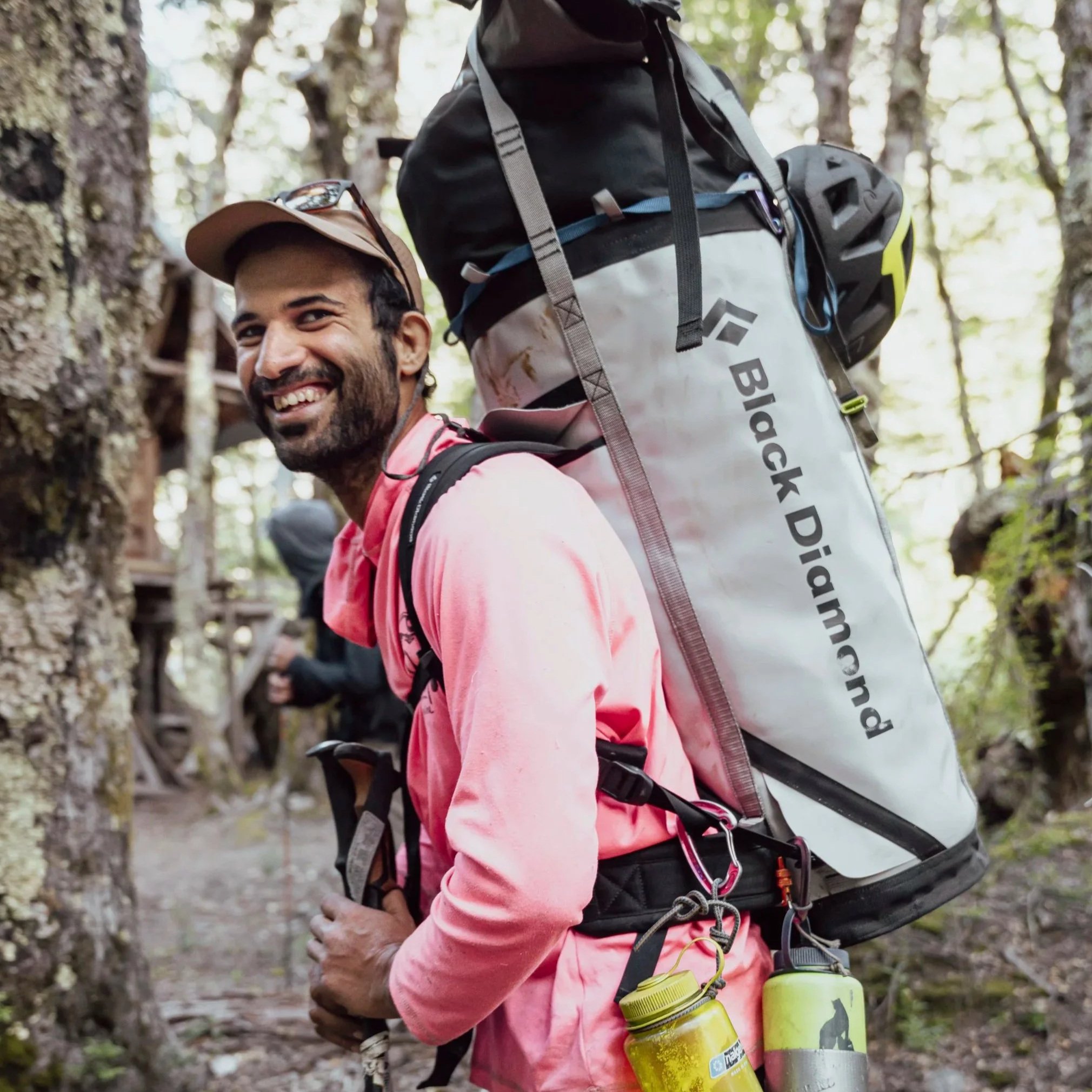
Vianney Lhoumeau is an AAGM-certified climbing guide and mountain guide based in Bariloche and co-founder of Peak Patagonia, he guides climbers throughout Northern Patagonia and South America, including Frey and Cochamó. He has spent hundreds of days climbing in Refugio Frey and shares the local knowledge, practical tips, and firsthand experience he has gained over years of exploring the area.
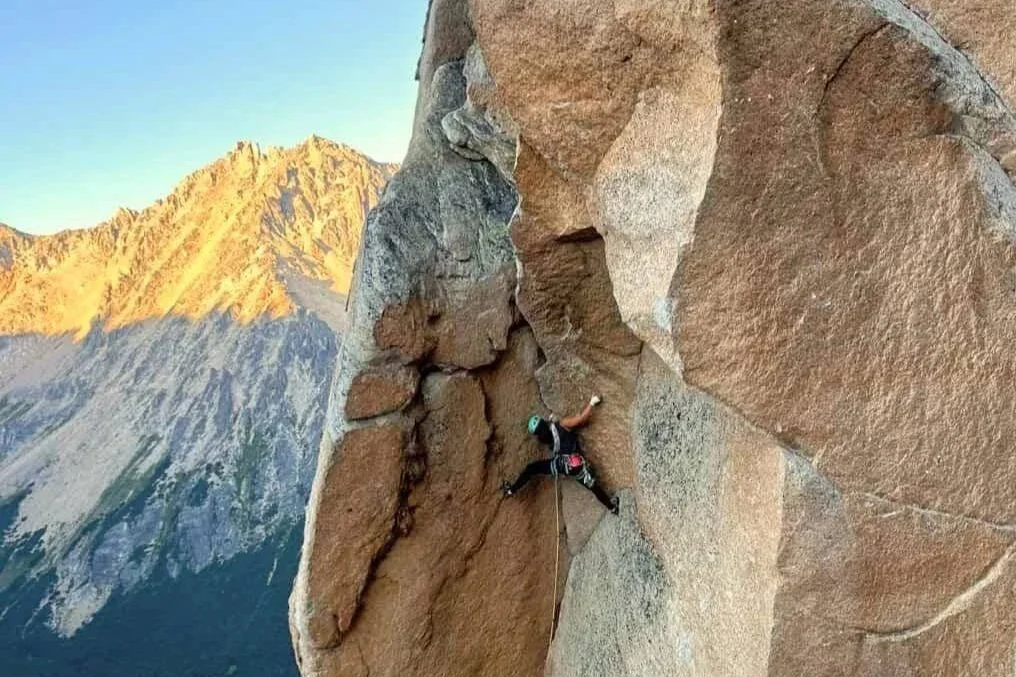
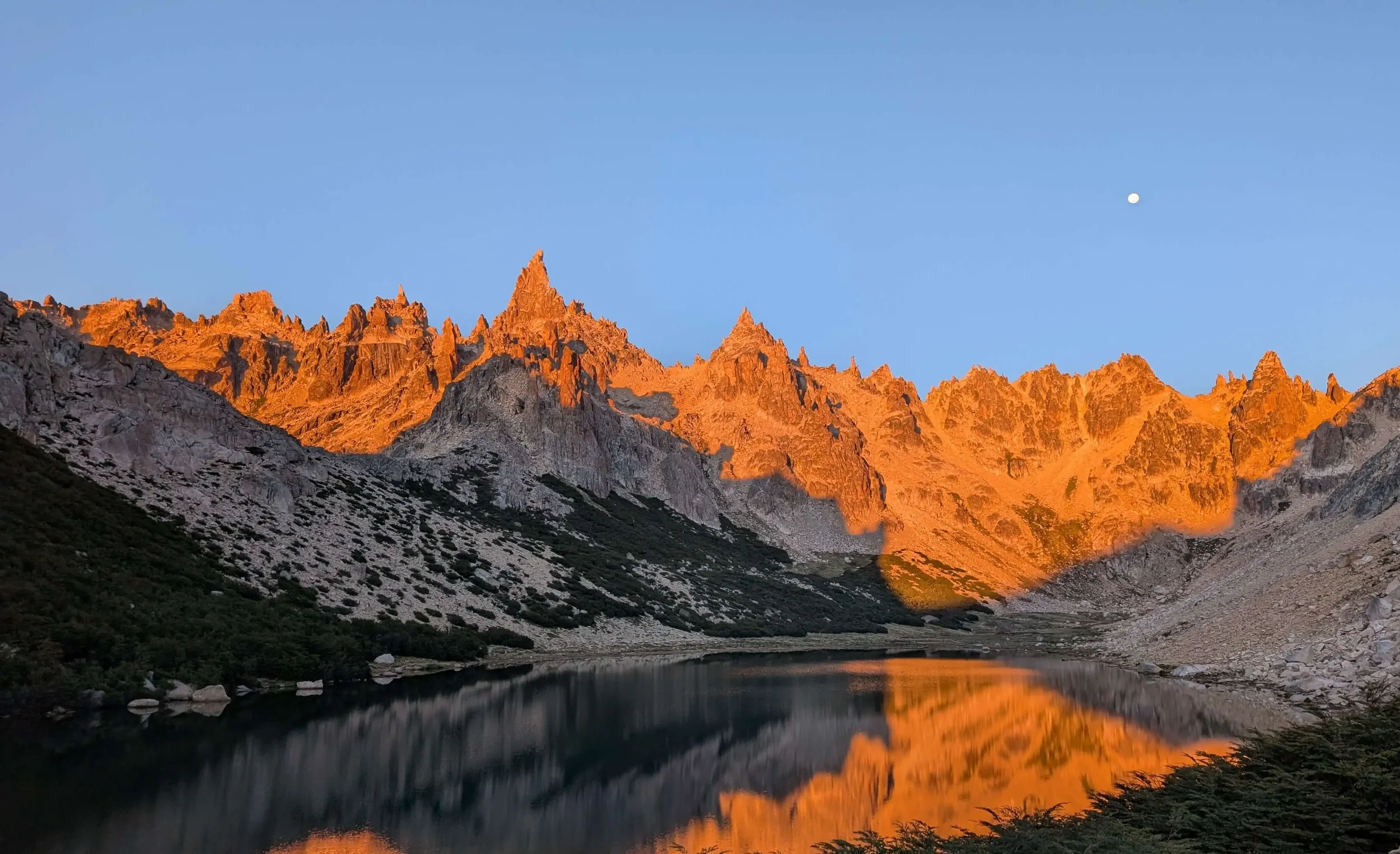
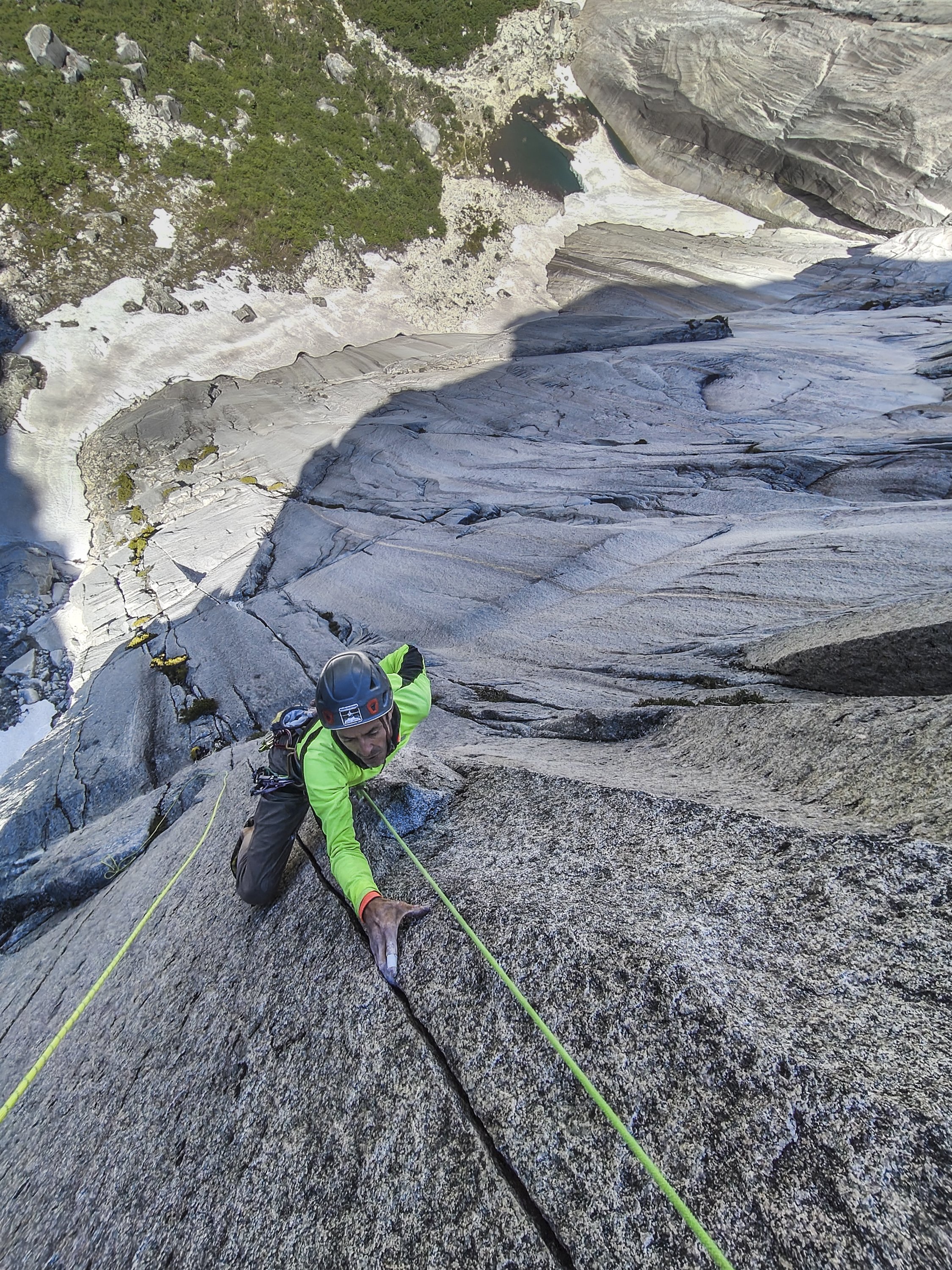


Every year people flock to the south to enjoy one of the most gorgeous mountainous regions on Earth. Here are some ideas for those looking for trips that are just a little more off the beaten path in Chilean and Argentinian Patagonia.